
Most ebook files are in PDF format, so you can easily read them using various software such as Foxit Reader or directly on the Google Chrome browser.
Some ebook files are released by publishers in other formats such as .awz, .mobi, .epub, .fb2, etc. You may need to install specific software to read these formats on mobile/PC, such as Calibre.
Please read the tutorial at this link. https://ebooknice.com/page/post?id=faq
We offer FREE conversion to the popular formats you request; however, this may take some time. Therefore, right after payment, please email us, and we will try to provide the service as quickly as possible.
For some exceptional file formats or broken links (if any), please refrain from opening any disputes. Instead, email us first, and we will try to assist within a maximum of 6 hours.
EbookNice Team
Status:
Available4.3
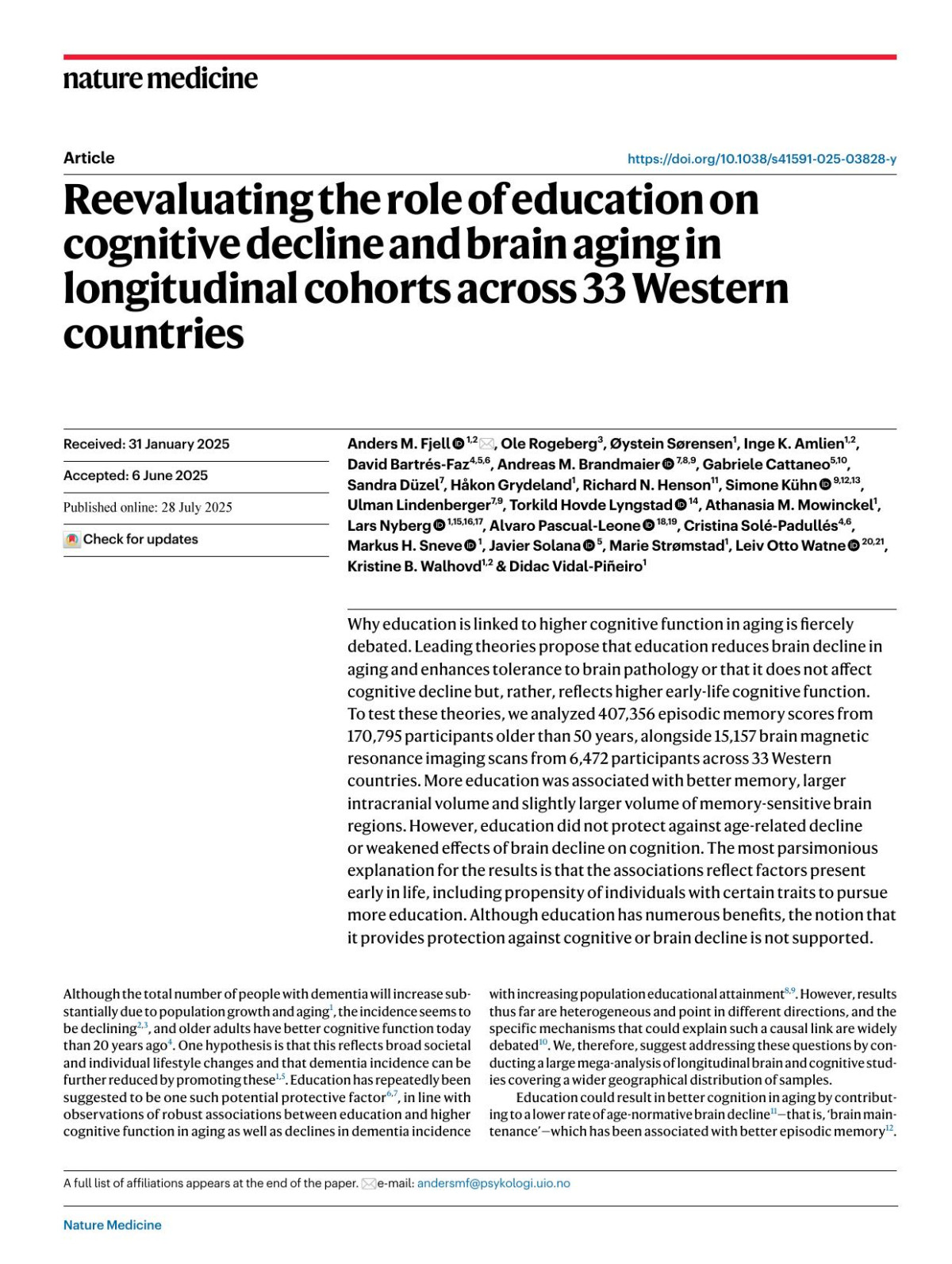
13 reviewsWhy education is linked to higher cognitive function in aging is fercely debated. Leading theories propose that education reduces brain decline in aging and enhances tolerance to brain pathology or that it does not afect cognitive decline but, rather, refects higher early-life cognitive function. To test these theories, we analyzed 407,356 episodic memory scores from 170,795 participants older than 50 years, alongside 15,157 brain magnetic resonance imaging scans from 6,472 participants across 33 Western countries. More education was associated with better memory, larger intracranial volume and slightly larger volume of memory-sensitive brain regions. However, education did not protect against age-related decline or weakened efects of brain decline on cognition. The most parsimonious explanation for the results is that the associations refect factors present early in life, including propensity of individuals with certain traits to pursue more education. Although education has numerous benefts, the notion that it provides protection against cognitive or brain decline is not supported.