
Most ebook files are in PDF format, so you can easily read them using various software such as Foxit Reader or directly on the Google Chrome browser.
Some ebook files are released by publishers in other formats such as .awz, .mobi, .epub, .fb2, etc. You may need to install specific software to read these formats on mobile/PC, such as Calibre.
Please read the tutorial at this link. https://ebooknice.com/page/post?id=faq
We offer FREE conversion to the popular formats you request; however, this may take some time. Therefore, right after payment, please email us, and we will try to provide the service as quickly as possible.
For some exceptional file formats or broken links (if any), please refrain from opening any disputes. Instead, email us first, and we will try to assist within a maximum of 6 hours.
EbookNice Team
Status:
Available4.8
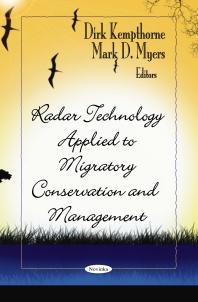
31 reviews(Ebook) Radar Technology Applied to Migratory Conservation and Management 1st Edition by Dirk Kempthorne, Mark D Myers - Ebook PDF Instant Download/Delivery: 9781617285738 ,1617285730
Full download (Ebook) Radar Technology Applied to Migratory Conservation and Management 1st Edition after payment
Product details:
ISBN 10: 1617285730
ISBN 13: 9781617285738
Author: Dirk Kempthorne, Mark D Myers
(Ebook) Radar Technology Applied to Migratory Conservation and Management 1st Edition Table of contents:
Primer on Radar Biology and Applications to Conservation Issues
Broad-Scale Habitat Relations for Birds
Nocturnal Migration through the Central Appalachians, with Stopovers on Lower Delmarva
Regional Structure in Migratory Patterns across the Southwest
Comment on a New Approach to Modeling Migratory Behavior
Can Artificial Intelligence Be Used to Detect Birds in NEXRAD Data?
Incorporating NEXRAD Weather Radar into Migration Studies in the Upper Mississippi River System
The Use of Thermal Imaging and Vertically-Pointing Fixed-Beam Radar to Quantify Bird Movements Displayed on Radar
Applications of Pencil‑Beam and Tracking Radar to Understanding Flying Biota
Adapting a Military Tracking Radar for Ornithological Research—the Case of the “Superfledermaus”
Application of WSR‑88D (NEXRAD) to Quantify Bird Distributions during Migratory Stopover
Characterizing Bird and Bat Movement Patterns Using Portable X‑Band Radar
Wildlife Radar Research and Development
Past, Present, and Future Uses of Radar for Studying Bats
NEXRAD Program Update
Detection of Birds and Insects with a Polarimetric WSR‑88D Radar
Radar Ornithology—The Past, Present, and Future: A Personal Viewpoint
Radar Workshop—Key Issues, Themes, and Questions
Agency Needs and Challenges
Radar Technology and Applications—Technical Questions and Issues
Tools and Resources for Managers and Researchers
Standardization of Protocols
Collaborative Opportunities
Action Items Endorsed by Workshop Participants
Summary Observations from the Workshop
A Research Perspective of the 2006 Radar Biology Workshop
Reflections on the Albuquerque Radar Ornithology Workshop
People also search for (Ebook) Radar Technology Applied to Migratory Conservation and Management 1st Edition:
mit radar lecture
mit radar systems
mit radar theory
radar new technology
radar technology insertion program
Tags: Dirk Kempthorne, Mark D Myers, Radar Technology, Migratory Conservation, Management

4.5
31 reviews
5.0
18 reviews
4.4
15 reviews
4.8
38 reviews
5.0
18 reviews
5.0
27 reviews
4.5
19 reviews
4.4
39 reviews