Most ebook files are in PDF format, so you can easily read them using various software such as Foxit Reader or directly on the Google Chrome browser.
Some ebook files are released by publishers in other formats such as .awz, .mobi, .epub, .fb2, etc. You may need to install specific software to read these formats on mobile/PC, such as Calibre.
Please read the tutorial at this link. https://ebooknice.com/page/post?id=faq
We offer FREE conversion to the popular formats you request; however, this may take some time. Therefore, right after payment, please email us, and we will try to provide the service as quickly as possible.
For some exceptional file formats or broken links (if any), please refrain from opening any disputes. Instead, email us first, and we will try to assist within a maximum of 6 hours.
EbookNice Team
Status:
Available0.0
0 reviews
ISBN 10: 030909951X
ISBN 13: 978-0309099516
Author: Institute of Medicine, Board on Population Health and Public Health Practice, Board on Global Health
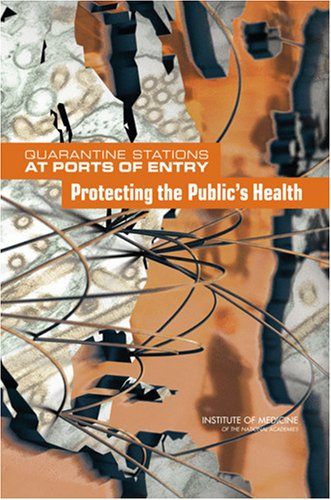
To mitigate the risks posed by microbial threats of public health significance originating abroad, the Centers for Disease Control and Prevention (CDC) places small groups of staff at major U.S. airports. These staff, their offices, and their patient isolation rooms constitute quarantine stations, which are run by CDC's Division of Global Migration and Quarantine (DGMQ).
Congress began to allocate funds in fiscal 2003 for the establishment of new quarantine stations at 17 major U.S. ports of entry that comprise airports, seaports, and land-border crossings. In a significant departure from the recent past, both the preexisting 8 quarantine stations and the new 17 are expected to play an active, anticipatory role in nationwide biosurveillance. Consequently, DGMQ asked the Institute of Medicine (IOM) to convene an expert committee to assess the present CDC quarantine stations and recommend how they should evolve to meet the challenges posed by microbial threats at the nation's gateways. DGMQ specifically requested "an assessment of the role of the federal quarantine stations, given the changes in the global environment including large increases in international travel, threats posed by bioterrorism and emerging infections, and the movement of animals and cargo." To conduct this assessment and provide recommendations, IOM convened, in October 2004, the Committee on Measures to Enhance the Effectiveness of the CDC Quarantine Station Expansion Plan for U.S. Ports of Entry.
At the sponsor's request, the committee released the interim letter report Human Resources at U.S. Ports of Entry to Protect the Public's Health in January 2005 to provide preliminary suggestions for the priority functions of a modern quarantine station, the competences necessary to carry out those functions, and the types of health professionals who have the requisite competences (Appendix A). This, the committee's final report, assesses the present role of the CDC quarantine stations and articulates a vision of their future role as a public health intervention.
Chapter1 : Introduction
Chapter 2: Content
Chapter 3: Conclusion
Chapter 4: Appendices
Chapter 5: Glossary
Chapter 6: References
Chapter 7: Index
quarantine stations cdc
cdc quarantine stations and their jurisdictions
quarantine station southport nc
a quarantine is in place to stop the movement of
quarantine port
Tags: Institute of Medicine, Board on Population Health and Public Health Practice, Board on Global Health, Quarantine Stations


4.6
17 reviews
4.6
29 reviews

4.6
12 reviews
4.5
28 reviews
4.7
31 reviews