
Most ebook files are in PDF format, so you can easily read them using various software such as Foxit Reader or directly on the Google Chrome browser.
Some ebook files are released by publishers in other formats such as .awz, .mobi, .epub, .fb2, etc. You may need to install specific software to read these formats on mobile/PC, such as Calibre.
Please read the tutorial at this link. https://ebooknice.com/page/post?id=faq
We offer FREE conversion to the popular formats you request; however, this may take some time. Therefore, right after payment, please email us, and we will try to provide the service as quickly as possible.
For some exceptional file formats or broken links (if any), please refrain from opening any disputes. Instead, email us first, and we will try to assist within a maximum of 6 hours.
EbookNice Team
Status:
Available0.0
0 reviews
ISBN 10: 0429062265
ISBN 13: 9780429062261
Author: Weidong Zhang
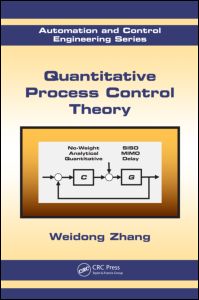
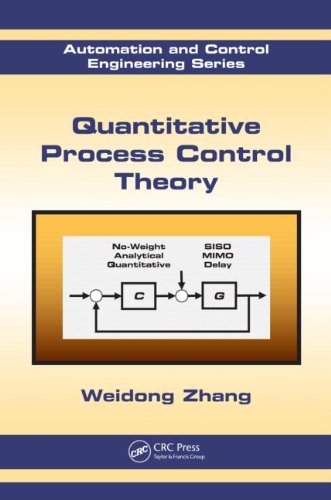
Quantitative Process Control Theory explains how to solve industrial system problems using a novel control system design theory. This easy-to-use theory does not require designers to choose a weighting function and enables the controllers to be designed or tuned for quantitative engineering performance indices such as overshoot.
In each chapter, a summary highlights the main problems and results and exercises improve and test your understanding of the material. Mathematical proofs are provided for almost all the results while examples are based on actual situations in industrial plants involving a paper-making machine, heat exchanger, hot strip mill, maglev, nuclear reactor, distillation column/heavy oil fractionator, jacket-cooled reactor, missile, helicopter/plane, and anesthesia.
Developed from the author’s many years of research, this book takes a unique, practical approach for efficiently solving single-input and single-output (SISO) and multiple-input and multiple-output (MIMO) control system design issues for quantitative performance indices. With much of the material classroom-tested, the text is suitable for advanced undergraduate and graduate students in engineering, beginning researchers in robust control, and more seasoned engineers wanting to learn new design techniques.
Introduction
A Brief History of Control Theory
Design of Feedback Control Systems
Consideration on Control System Design
What This Book Is About
Classical Analysis Methods
Process Dynamic Responses
Rational Approximations of Time Delay
Time Domain Performance Indices
Frequency Response Analysis
Transformation of Two Commonly Used Models
Design Requirements and Controller Comparison
Essentials of the Robust Control Theory
Norms and System Gains
Internal Stability and Performance
Controller Parameterization
Robust Stability and Robust Performance
Robustness of the System with Time Delay
H∞ PID Controllers for Stable Plants
Traditional Design Methods
H∞ PID Controller for the First-Order Plant
The H∞ PID Controller and the Smith Predictor
Quantitative Performance and Robustness
H∞ PID Controller for the Second-Order Plant
All Stabilizing PID Controllers for Stable Plants
H2 PID Controllers for Stable Plants
H2 PID Controller for the First-Order Plant
Quantitative Tuning of H2 PID Controller
H2 PID Controller for the Second-Order Plant
Control of Inverse Response Processes
PID Controller Based on the Maclaurin Series Expansion
PID Controller with the Best Achievable Performance
Choice of the Filter
Control of Stable Plants
The Quasi-H∞ Smith Predictor
The H2 Optimal Controller and the Smith Predictor
Equivalents of the Optimal Controller
PID Controller and High-Order Controllers
Choice of the Weighting Function
Simplified Tuning for Quantitative Robustness
Control of Integrating Plants
Feature of Integrating Systems
H∞ PID Controller for Integrating Plants
H2 PID Controller for Integrating Plants
Controller Design for General Integrating Plants
Maclaurin PID Controller for Integrating Plants
The Best Achievable Performance of a PID Controller
Control of Unstable Plants
Controller Parameterization for General Plants
H∞ PID Controller for Unstable Plants
H2 PID Controller for Unstable Plants
Performance Limitation and Robustness
Maclaurin PID Controller for Unstable Plants
PID Design for the Best Achievable Performance
All Stabilizing PID Controllers for Unstable Plants
Complex Control Strategies
The 2DOF Structure for Stable Plants
The 2DOF Structure for Unstable Plants
Cascade Control
An Anti-Windup Structure
Feedforward Control
Optimal Input Disturbance Rejection
Control of Plants with Multiple Time Delays
Analysis of MIMO Systems
Zeros and Poles of a MIMO Plant
Singular Values
Norms for Signals and Systems
Nominal Stability and Performance
Robust Stability of MIMO Systems
Robust Performance of MIMO Systems
Classical Design Methods for MIMO Systems
Interaction Analysis
Decentralized Controller Design
Decoupler Design
Quasi-H∞ Decoupling Control
Diagonal Factorization for Quasi- H∞ Control
Quasi- H∞ Controller Design
Analysis for Quasi- H∞ Control Systems
Increasing Time Delays for Performance Improvement
A Design Example for Quasi- H∞ Control
Multivariable PID Controller Design
H2 Decoupling Control
Controller Parameterization for MIMO Systems
Diagonal Factorization for H2 Control
H2 Optimal Decoupling Control
Analysis for H2 Decoupling Control Systems
Design Examples for H2 Decoupling Control
Multivariable H2 Optimal Control
Factorization for Simple RHP Zeros
Construction Procedure of Factorization
Factorization for Multiple RHP Zeros
Analysis and Computation
Solution to the H2 Optimal Control Problem
Filter Design
Examples for H2 Optimal Controller Designs
quantitative process
process control theory
quantitative theory
control process psychology
process control quizlet
Tags: Weidong Zhang, Quantitative, Process Control, Theory


4.6
12 reviews

4.7
9 reviews


4.6
24 reviews
4.7
14 reviews