Most ebook files are in PDF format, so you can easily read them using various software such as Foxit Reader or directly on the Google Chrome browser.
Some ebook files are released by publishers in other formats such as .awz, .mobi, .epub, .fb2, etc. You may need to install specific software to read these formats on mobile/PC, such as Calibre.
Please read the tutorial at this link. https://ebooknice.com/page/post?id=faq
We offer FREE conversion to the popular formats you request; however, this may take some time. Therefore, right after payment, please email us, and we will try to provide the service as quickly as possible.
For some exceptional file formats or broken links (if any), please refrain from opening any disputes. Instead, email us first, and we will try to assist within a maximum of 6 hours.
EbookNice Team
Status:
Available0.0
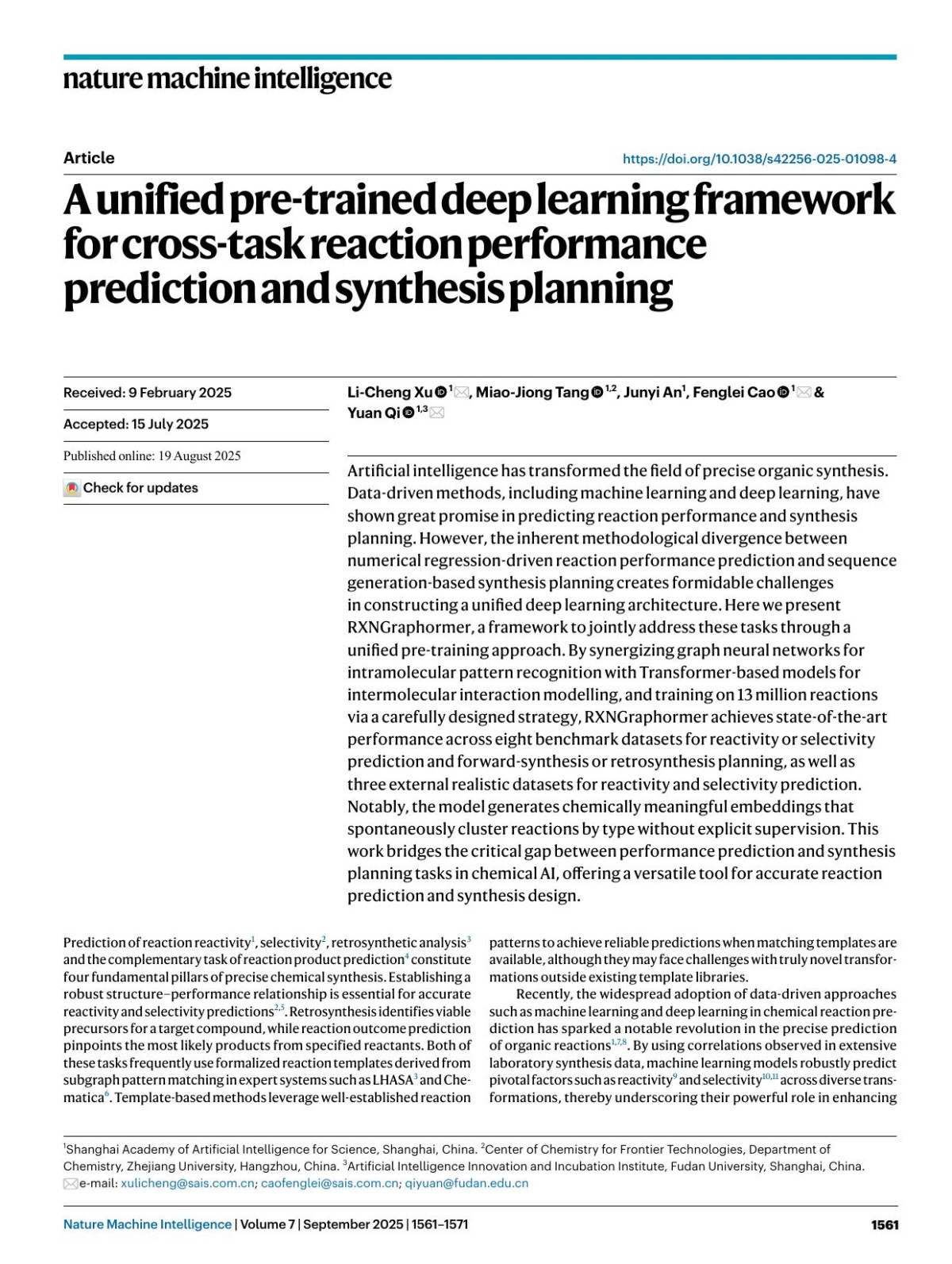
0 reviewsPublished online: 30 June 2025The rapid emergence of combination pharmacotherapies ofers substantial Check for updatestherapeutic advantages but also poses risks of adverse drug reactions (ADRs). The accurate prediction of ADRs with interpretable computational methods is crucial for clinical medication management, drug development and precision medicine. Machine-learning and recently developed deep learning architectures struggle to efectively elucidate the key protein–protein interactions underlying ADRs from an organ perspective and to explicitly represent ADR associations. Here we propose OrganADR, an associative learning-enhanced model to predict ADRs at the organ level for emerging combination pharmacotherapy. It incorporates ADR information at the organ level, drug information at the molecular level and network-based biomedical knowledge into integrated representations with multi-interpretable modules. Evaluation across 15 organs demonstrates that OrganADR not only achieves state-of-the-art performance but also delivers both interpretable insights at the organ level and network-based perspectives. Overall, OrganADR represents a useful tool for cross-scale biomedical information integration and could be used to prevent ADRs during clinical precision medicine.
4.7
20 reviews
4.4
25 reviews
4.8
27 reviews
4.4
40 reviews
4.5
21 reviews
5.0
28 reviews
5.0
11 reviews