
Most ebook files are in PDF format, so you can easily read them using various software such as Foxit Reader or directly on the Google Chrome browser.
Some ebook files are released by publishers in other formats such as .awz, .mobi, .epub, .fb2, etc. You may need to install specific software to read these formats on mobile/PC, such as Calibre.
Please read the tutorial at this link. https://ebooknice.com/page/post?id=faq
We offer FREE conversion to the popular formats you request; however, this may take some time. Therefore, right after payment, please email us, and we will try to provide the service as quickly as possible.
For some exceptional file formats or broken links (if any), please refrain from opening any disputes. Instead, email us first, and we will try to assist within a maximum of 6 hours.
EbookNice Team
Status:
Available0.0
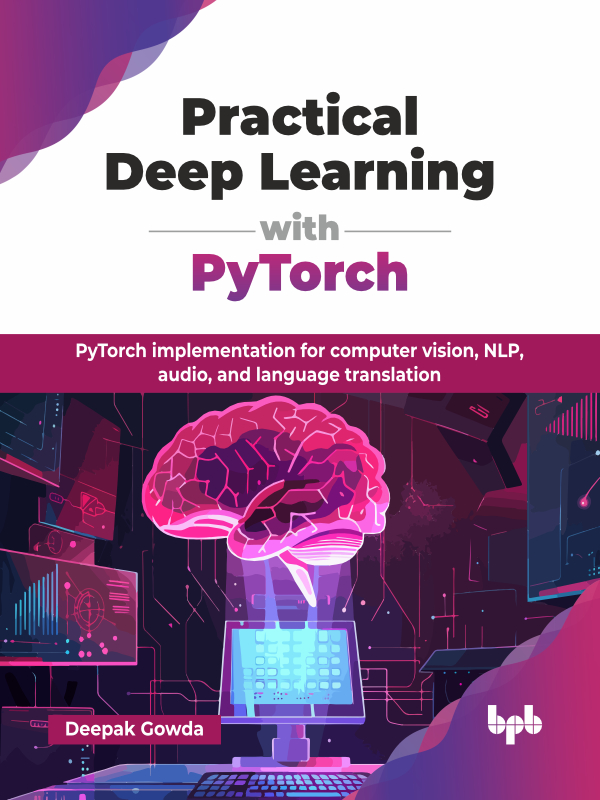
0 reviewsThe book begins with foundational deep learning concepts and guides you through setting up PyTorch. You will learn to manipulate tensors, load data, build models, and understand computer vision with multi-object detection using YOLO to enhance image recognition through transfer learning techniques. You will also analyze generative models with GANs for data augmentation and venture into audio processing with text-to-speech and speech-to-text using TorchAudio. Learn NLP tasks like text classification, summarization, sentiment analysis, and question answering with pre-trained models like BERT. Finally, learn to tackle time series forecasting using RNNs, LSTMs, CNNs, and transformers.
By the end of this book, you will be equipped with the practical skills and knowledge to confidently build and deploy deep learning solutions across various domains, helping you innovate in the ever-evolving field of artificial intelligence.
What you will learn
● Implement deep learning models for image, text, and speech tasks.
● Build and optimize AI workflows using PyTorch efficiently.
● Apply transfer learning techniques for improved model performance.
● Develop GANs for generating high-quality synthetic data.
● Use NLP techniques for language processing and sentiment analysis.
● Forecast time series data using LSTMs and deep learning models.
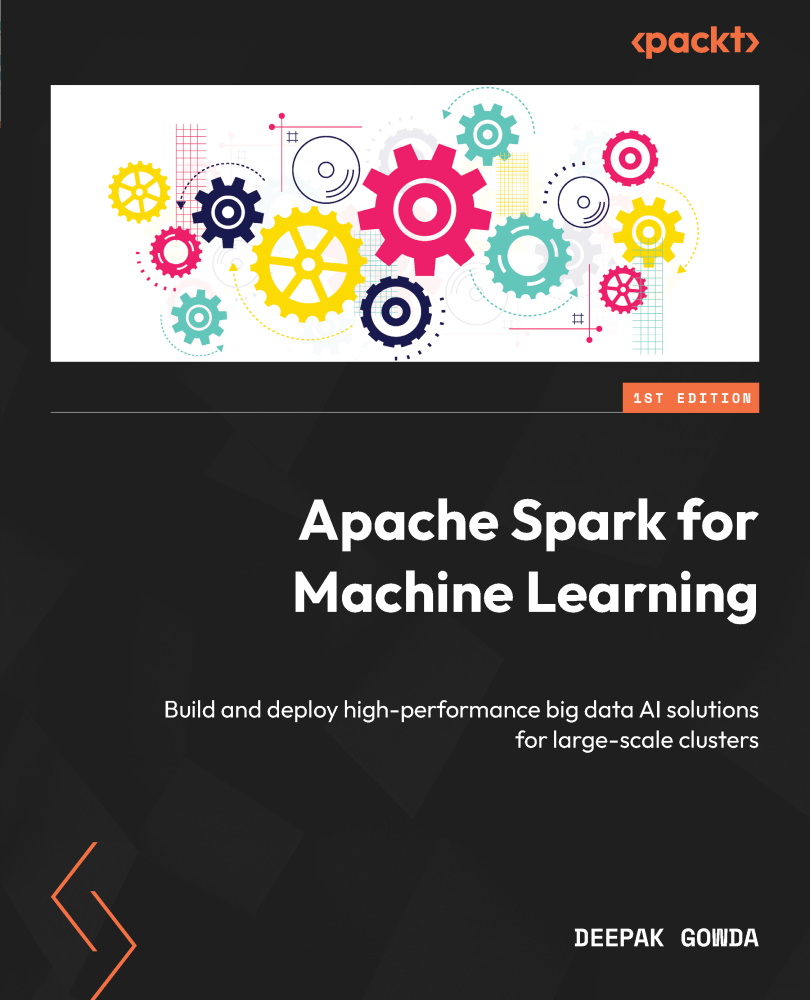
4.8
38 reviews
4.5
21 reviews
4.8
15 reviews
4.4
14 reviews
4.3
8 reviews
5.0
14 reviews
4.5
13 reviews
5.0
28 reviews