
logo
Product categories

EbookNice.com

Most ebook files are in PDF format, so you can easily read them using various software such as Foxit Reader or directly on the Google Chrome browser.
Some ebook files are released by publishers in other formats such as .awz, .mobi, .epub, .fb2, etc. You may need to install specific software to read these formats on mobile/PC, such as Calibre.

Please read the tutorial at this link.  https://ebooknice.com/page/post?id=faq


We offer FREE conversion to the popular formats you request; however, this may take some time. Therefore, right after payment, please email us, and we will try to provide the service as quickly as possible.


For some exceptional file formats or broken links (if any), please refrain from opening any disputes. Instead, email us first, and we will try to assist within a maximum of 6 hours.

EbookNice Team
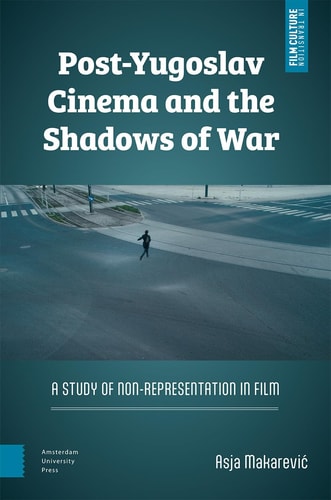
Post-Yugoslav Cinema and the Shadows of War: A Study of Non-Representation in Film by Asja Makarevic ISBN 9781003701859, 9781041184591, 9789048559572, 100370185X, 104118459X, 904855957X instant download

  • SKU: EBN-239953814
Zoomable Image
$ 32 $ 40 (-20%)

Status:

Available

4.5

9 reviews
Instant download (eBook) Post-Yugoslav Cinema and the Shadows of War: A Study of Non-Representation in Film after payment.
Authors:Asja Makarevic
Pages:240 pages
Year:2025
Publisher:Amsterdam University Press
Language:english
File Size:11.04 MB
Format:pdf
ISBNS:9781003701859, 9781041184591, 9789048559572, 100370185X, 104118459X, 904855957X
Categories: Ebooks

Product desciption

Post-Yugoslav Cinema and the Shadows of War: A Study of Non-Representation in Film by Asja Makarevic ISBN 9781003701859, 9781041184591, 9789048559572, 100370185X, 104118459X, 904855957X instant download

Bosnia-Herzegovina is still considered a post-war country. The concept of "post-war" implies that the country and its people are tied more strongly to the past than they are oriented towards the future. Paradoxically, as long as the future is kept at bay and the post-war condition kept alive, Bosnia maintains a certain significance on the global scene. However, living in the temporal vacuum of the post-war condition cannot be a long-term perspective. A range of post-Yugoslav films provides spectators with images that offer innovative approaches to the collective past, while simultaneously reframing contemporary experience. What the author proposes to call non-representational images appears to offer a more dynamic relationship to the past and the present, while reflecting complex processes of the formation of identity, memory, guilt, and responsibility. But if these dynamics are inherent in non-representational images, is there a way in which they can contribute to overcoming the post-war condition?
*Free conversion of into popular formats such as PDF, DOCX, DOC, AZW, EPUB, and MOBI after payment.

Related Products