logo
Product categories

EbookNice.com

Most ebook files are in PDF format, so you can easily read them using various software such as Foxit Reader or directly on the Google Chrome browser.
Some ebook files are released by publishers in other formats such as .awz, .mobi, .epub, .fb2, etc. You may need to install specific software to read these formats on mobile/PC, such as Calibre.

Please read the tutorial at this link.  https://ebooknice.com/page/post?id=faq


We offer FREE conversion to the popular formats you request; however, this may take some time. Therefore, right after payment, please email us, and we will try to provide the service as quickly as possible.


For some exceptional file formats or broken links (if any), please refrain from opening any disputes. Instead, email us first, and we will try to assist within a maximum of 6 hours.

EbookNice Team
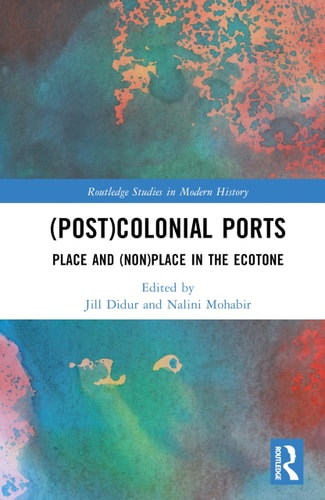
(Post)Colonial Ports: Place and (Non)Place in the Ecotone by Jill Didur (editor), Nalini Mohabir (editor) ISBN 9781032427195, 03242719, 978103242720, 104324/9781003363941 instant download

  • SKU: EBN-238569112
Zoomable Image
$ 32 $ 40 (-20%)

Status:

Available

0.0

0 reviews
Instant download (eBook) (Post)Colonial Ports: Place and (Non)Place in the Ecotone after payment.
Authors:Jill Didur (editor), Nalini Mohabir (editor)
Pages:270 pages
Year:2025
Publisher:Routledge
Language:english
File Size:14.93 MB
Format:pdf
ISBNS:9781032427195, 03242719, 978103242720, 104324/9781003363941
Categories: Ebooks

Product desciption

(Post)Colonial Ports: Place and (Non)Place in the Ecotone by Jill Didur (editor), Nalini Mohabir (editor) ISBN 9781032427195, 03242719, 978103242720, 104324/9781003363941 instant download

This book examines the role of (post)colonial ports in creating and shaping the ecotonal, cultural, historical, material, environmental, socio-political, and economic contexts in formerly colonized regions, spanning the Caribbean, Africa, North America, Europe, and the Pacific. The essays assess the role that literature, visual culture, architecture, archives, and ethnography can play in enriching our understanding of the complex histories of ports and port cities. They present the relation between ports and colonial infrastructure such as immigration checkpoints, detention centers, mines, plantations, shipping containers, canals, sewers, and rivers, and their impact on human and more-than-human environments. The volume approaches (post)colonial ports through the "ecotone," a concept borrowed from geography and ecology to describe a transition zone where two biological communities meet and mix--such as a forest and a grassland--to bring attention to port (non)spaces as a hinge between their environments, communities, and colonial infrastructure. It foregrounds postcolonial and decolonial approaches to the ecotone to draw attention to the cultural, ecological, and geographical dynamics that inform the social fabric of contemporary ports and port cities in the wake of the empire. This volume is aimed at scholars and postgraduates across disciplines such as literature, geography, fine arts, cultural studies, and history.
*Free conversion of into popular formats such as PDF, DOCX, DOC, AZW, EPUB, and MOBI after payment.

Related Products