
Most ebook files are in PDF format, so you can easily read them using various software such as Foxit Reader or directly on the Google Chrome browser.
Some ebook files are released by publishers in other formats such as .awz, .mobi, .epub, .fb2, etc. You may need to install specific software to read these formats on mobile/PC, such as Calibre.
Please read the tutorial at this link. https://ebooknice.com/page/post?id=faq
We offer FREE conversion to the popular formats you request; however, this may take some time. Therefore, right after payment, please email us, and we will try to provide the service as quickly as possible.
For some exceptional file formats or broken links (if any), please refrain from opening any disputes. Instead, email us first, and we will try to assist within a maximum of 6 hours.
EbookNice Team
Status:
Available4.4
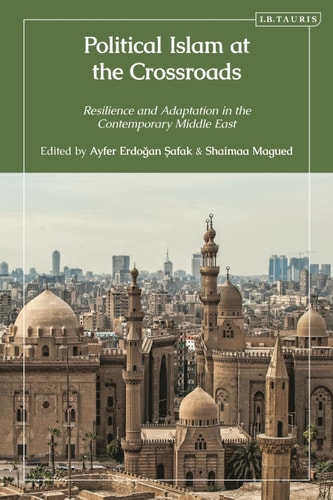
28 reviewsAuthoritarian reassertion following the Arab uprisings in the Middle East has restrained Islamists' political participation and challenged their survival as both opposition groups and rulers. In light of national sociopolitical variations across the region, this book explores Islamists' means of adaptation and resilience in the face of this political exclusion, unpacking Islamists' sociopolitical persistence and ideological sustainability.
In doing so this book sheds light on the following questions: How did Islamists adapt to contextual restrictions in terms of repression and stigmatization? How did the Arab uprisings impact their internal debates, ideological revisions, and reconsideration of tools of action? Individual chapters explore similarities and divergences among Islamist groups and parties in terms of ideological affiliations, means of survival and political participation strategies, drawing on comparative cases from across the MENA region. Examples include the Muslim Brotherhood in Egypt, Al-Nahda in Tunisia, the AKP (Justice and Development Party) in Turkey, Hezbollah in Lebanon, Hamas in Palestine, and the Islamic State in Syria and Iraq. These studies engage critically with conceptual debates related to Islamism, post-Islamism, Jihadist Islam, and the Islamic nation/community (ummah) to determine the trajectory of political Islam in the MENA.
DOI: 10.5040/9780755652426
5.0
41 reviews
4.4
9 reviews
4.8
23 reviews
4.7
24 reviews
5.0
17 reviews
4.7
31 reviews
4.6
27 reviews
5.0
30 reviews
5.0
41 reviews