logo
Product categories

EbookNice.com

Most ebook files are in PDF format, so you can easily read them using various software such as Foxit Reader or directly on the Google Chrome browser.
Some ebook files are released by publishers in other formats such as .awz, .mobi, .epub, .fb2, etc. You may need to install specific software to read these formats on mobile/PC, such as Calibre.

Please read the tutorial at this link.  https://ebooknice.com/page/post?id=faq


We offer FREE conversion to the popular formats you request; however, this may take some time. Therefore, right after payment, please email us, and we will try to provide the service as quickly as possible.


For some exceptional file formats or broken links (if any), please refrain from opening any disputes. Instead, email us first, and we will try to assist within a maximum of 6 hours.

EbookNice Team
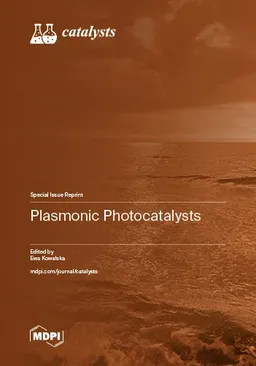
Plasmonic Photocatalysts by Ewa Kowalska ISBN 9783725833979, 9783725833986, 3725833974, 3725833982 instant download

  • SKU: EBN-235408844
Zoomable Image
$ 32 $ 40 (-20%)

Status:

Available

0.0

0 reviews
Instant download (eBook) Plasmonic Photocatalysts after payment.
Authors:Ewa Kowalska
Pages:234 pages
Year:2025
Publisher:MDPI
Language:english
File Size:32.61 MB
Format:pdf
ISBNS:9783725833979, 9783725833986, 3725833974, 3725833982
Categories: Ebooks

Product desciption

Plasmonic Photocatalysts by Ewa Kowalska ISBN 9783725833979, 9783725833986, 3725833974, 3725833982 instant download

Plasmonic properties of noble metals (NMs) have been used to activate wide-band-gap semiconductors. Although plasmonic properties were observed more than a century ago, scientifically explained, ca., 40 years ago, and have been commercially used in many fields, the examination of their application for photocatalysis is quite new. 
-
Despite the novelty of plasmonic photocatalysis, many studies have already been performed to improve photocatalytic activity and stability and to clarify the mechanism.Although desirable photoabsorption properties of plasmonic photocatalysts can be easily achieved by the preparation of nanoparticles of different sizes and shapes, their photocatalytic activities under vis are still low, and thus must be improved for possible commercialization. Therefore, various studies have been performed to obtain stable and highly active materials. 
-
Moreover, the mechanism of plasmonic photocatalysis has not been clarified yet. It is thought that the mechanism depends directly on the morphology of plasmonic photocatalysts and reaction conditions.Despite the novelty, plasmonic photocatalysts have already proven promising activity for environmental purification, solar energy conversion, and organic compound synthesis. This Special Issue describes the significant and increasing role of plasmonic materials in catalysis.
*Free conversion of into popular formats such as PDF, DOCX, DOC, AZW, EPUB, and MOBI after payment.

Related Products