logo
Product categories

EbookNice.com

Most ebook files are in PDF format, so you can easily read them using various software such as Foxit Reader or directly on the Google Chrome browser.
Some ebook files are released by publishers in other formats such as .awz, .mobi, .epub, .fb2, etc. You may need to install specific software to read these formats on mobile/PC, such as Calibre.

Please read the tutorial at this link.  https://ebooknice.com/page/post?id=faq


We offer FREE conversion to the popular formats you request; however, this may take some time. Therefore, right after payment, please email us, and we will try to provide the service as quickly as possible.


For some exceptional file formats or broken links (if any), please refrain from opening any disputes. Instead, email us first, and we will try to assist within a maximum of 6 hours.

EbookNice Team
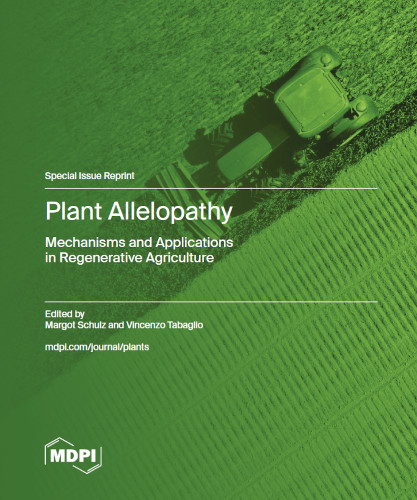
Plant Allelopathy: Mechanisms and Applications in Regenerative Agriculture by Margot Schulz, Vincenzo Tabaglio ISBN 9783725834969, 9783725834952, 3725834962, 3725834954 instant download

  • SKU: EBN-235821520
Zoomable Image
$ 32 $ 40 (-20%)

Status:

Available

4.5

22 reviews
Instant download (eBook) Plant Allelopathy: Mechanisms and Applications in Regenerative Agriculture after payment.
Authors:Margot Schulz, Vincenzo Tabaglio
Pages:248 pages
Year:2025
Publisher:MDPI
Language:english
File Size:25.78 MB
Format:pdf
ISBNS:9783725834969, 9783725834952, 3725834962, 3725834954
Categories: Ebooks

Product desciption

Plant Allelopathy: Mechanisms and Applications in Regenerative Agriculture by Margot Schulz, Vincenzo Tabaglio ISBN 9783725834969, 9783725834952, 3725834962, 3725834954 instant download

Sustainable agriculture aims to minimize or to avoid the contamination of ecosystems with harmful, long-lasting chemicals for improving food safety and quality, and to protect and maintain species diversity and soil fertility. 
-
An important and innovative approach of regenerative agriculture addresses weed control by using plant and microbial secondary metabolites, which function as biodegradable allelochemicals with short dwelling- times in ecosystems. To accomplish the goal, it is necessary to identify the compounds and to elucidate their allelochemical potential. The research articles of this Special Issue present recent research of species/accession-specific allelochemicals, and the extraction and identification of the compounds. 
-
Suitable methods are two-phase partitioning, column chromatography, hydro-distillation, HPLC-MS, GC-MS, and NMR-spectroscopy. Diverse methods are utilized for the description of effects in target plants, emphasizing on physiological and biochemical effects, on defined gene expression responses. Characterization of effects include determination of radical scavenging reactions, relative electrolyte leakage, chlorophyll content, ROS localization, and real time PCR for relative transcript abundance determination. 
-
The reviews present insights in the allelochemical potential of microalgae with specialized metabolites such as alkaloids and terpenoids, compounds of Solidago species, and of Cyperus esculentus. One review addresses the translocation of allelochemicals between plants, and another review considers microorganisms as protectors of Abutilon theophrasti against benzoxazinoids.
*Free conversion of into popular formats such as PDF, DOCX, DOC, AZW, EPUB, and MOBI after payment.

Related Products