logo
Product categories

EbookNice.com

Most ebook files are in PDF format, so you can easily read them using various software such as Foxit Reader or directly on the Google Chrome browser.
Some ebook files are released by publishers in other formats such as .awz, .mobi, .epub, .fb2, etc. You may need to install specific software to read these formats on mobile/PC, such as Calibre.

Please read the tutorial at this link.  https://ebooknice.com/page/post?id=faq


We offer FREE conversion to the popular formats you request; however, this may take some time. Therefore, right after payment, please email us, and we will try to provide the service as quickly as possible.


For some exceptional file formats or broken links (if any), please refrain from opening any disputes. Instead, email us first, and we will try to assist within a maximum of 6 hours.

EbookNice Team
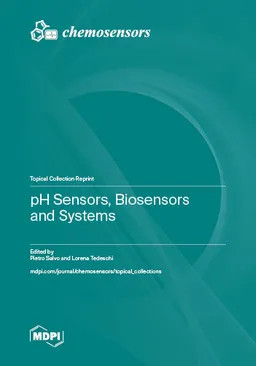
pH Sensors, Biosensors and Systems by Pietro Salvo, Lorena Tedeschi ISBN 9783725837687, 9783725837670, 3725837686, 3725837678 instant download

  • SKU: EBN-235361368
Zoomable Image
$ 32 $ 40 (-20%)

Status:

Available

4.9

6 reviews
Instant download (eBook) pH Sensors, Biosensors and Systems after payment.
Authors:Pietro Salvo, Lorena Tedeschi
Pages:314 pages
Year:2025
Publisher:MDPI
Language:english
File Size:85.76 MB
Format:pdf
ISBNS:9783725837687, 9783725837670, 3725837686, 3725837678
Categories: Ebooks

Product desciption

pH Sensors, Biosensors and Systems by Pietro Salvo, Lorena Tedeschi ISBN 9783725837687, 9783725837670, 3725837686, 3725837678 instant download

This Topical Collection Reprint has gathered the latest findings in sensors, biosensors, and technologies, with a special attention systems where the pH plays a prominent role. 
-
The pH value is crucial for many living systems and chemical reactions in nature. Biology and microbiology (e.g., monitoring of bacteria, DNA, enzymes, aminoacids, and cells), environmental protection (e.g., characterization of waste and sea water), food and beverage quality control (e.g., monitoring of fermentation processes and the characterization of fruit, drinking water, and vegetables), pharmaceutics, cosmetics (quality control of creams, gels, and shampoos), medicine (e.g., monitoring and analysis of culture media, cancer, blood, and cytoplasm), and industry (e.g., chemical baths for paints and plating) are some of the fields where pH sensors have been extensively used to understand the nature of chemical processes, as well as to monitor quality and control safety.
-
Although paper test strips and glass electrodes are the most common pH sensors, many studies have focused on developing less fragile, miniaturized, and biocompatible sensors with higher sensitivity. The pH value can be measured through various approaches and materials, including electrochemical and optical sensors, ion-selective field effect transistors (ISFETs), quantum dots, 2D materials, and organic compounds.
*Free conversion of into popular formats such as PDF, DOCX, DOC, AZW, EPUB, and MOBI after payment.

Related Products