
Most ebook files are in PDF format, so you can easily read them using various software such as Foxit Reader or directly on the Google Chrome browser.
Some ebook files are released by publishers in other formats such as .awz, .mobi, .epub, .fb2, etc. You may need to install specific software to read these formats on mobile/PC, such as Calibre.
Please read the tutorial at this link. https://ebooknice.com/page/post?id=faq
We offer FREE conversion to the popular formats you request; however, this may take some time. Therefore, right after payment, please email us, and we will try to provide the service as quickly as possible.
For some exceptional file formats or broken links (if any), please refrain from opening any disputes. Instead, email us first, and we will try to assist within a maximum of 6 hours.
EbookNice Team
Status:
Available0.0
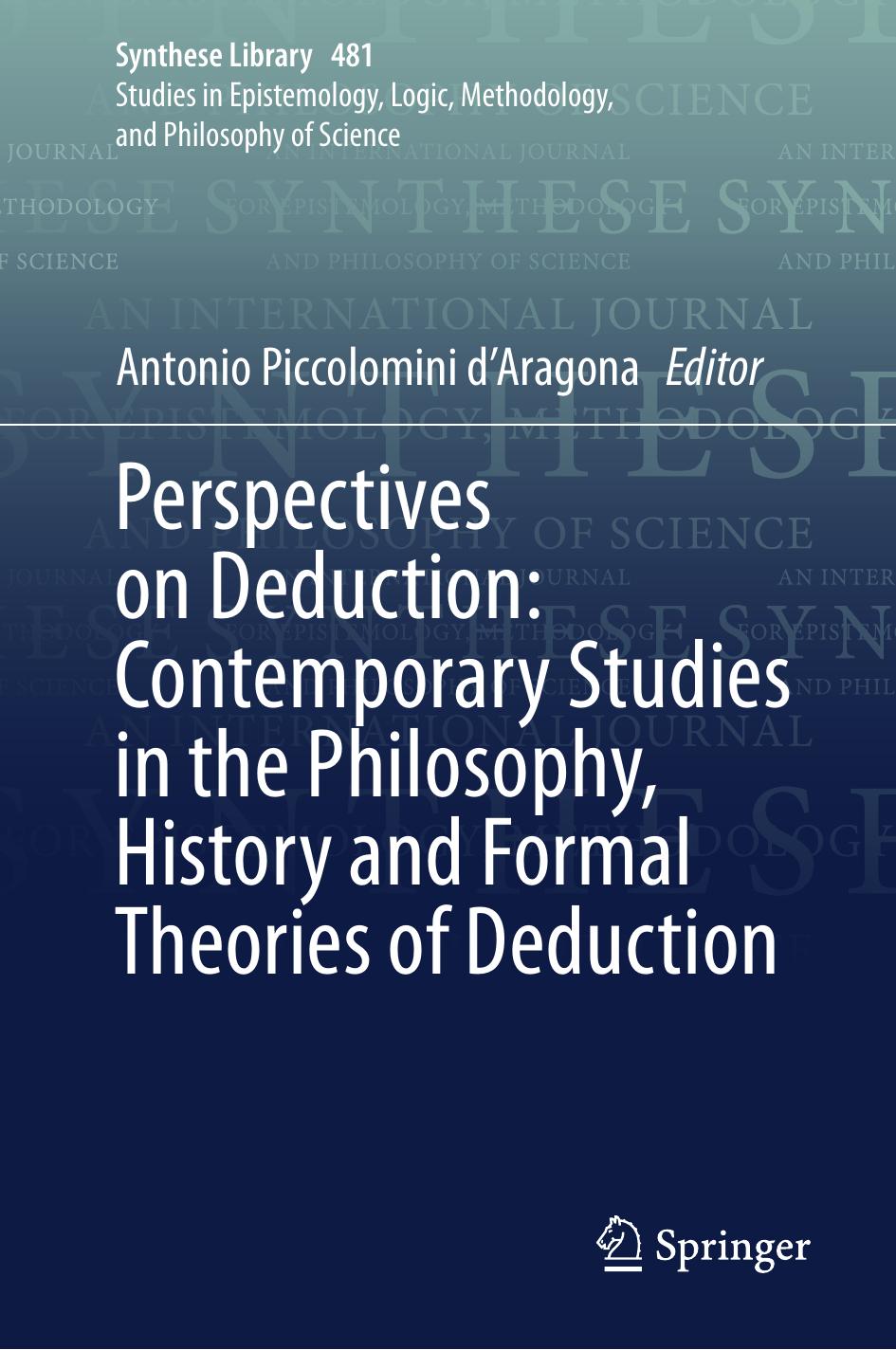
0 reviewsThe contributions concern (in a possibly intertwined way) three major perspectives in logic: philosophical, historical, formal. The philosophical perspective has to do with the relationship between deductive validity and truth, and questions the alleged conclusiveness of deduction and its epistemic contribution. It also discusses the role of linguistic acts in deductive practice, and provides a cognitive-didactic contribution on how we may learn through deduction. In the historical perspective, the contributions discuss the ideas of some major historical figures, such as Bolzano, Girard, Gödel, and Peano. Finally, in the formal perspective, the mathematics of deduction is dealt with mainly from an intuitionistic-constructivist or proof-theoretic point of view, with focus on “ecumenic” or internalistic approaches to logical validity, on the nature and identity of proofs, and on dialogical setups.
Chapter [14] is available open access under a Creative Commons Attribution 4.0 International License via link.springer.com.

4.5
16 reviews
5.0
14 reviews
4.6
22 reviews
4.8
10 reviews
4.6
7 reviews
5.0
15 reviews
4.6
30 reviews
4.6
29 reviews