logo
Product categories

EbookNice.com

Most ebook files are in PDF format, so you can easily read them using various software such as Foxit Reader or directly on the Google Chrome browser.
Some ebook files are released by publishers in other formats such as .awz, .mobi, .epub, .fb2, etc. You may need to install specific software to read these formats on mobile/PC, such as Calibre.

Please read the tutorial at this link.  https://ebooknice.com/page/post?id=faq


We offer FREE conversion to the popular formats you request; however, this may take some time. Therefore, right after payment, please email us, and we will try to provide the service as quickly as possible.


For some exceptional file formats or broken links (if any), please refrain from opening any disputes. Instead, email us first, and we will try to assist within a maximum of 6 hours.

EbookNice Team
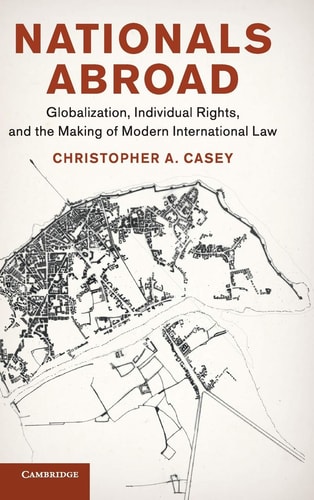
Nationals Abroad: Globalization, Individual Rights, and the Making of Modern International Law by Christopher A. Casey ISBN 9781108489454, 9781108746557, 9781108784047, 1108489451, 1108746551, 1108784046 instant download

  • SKU: EBN-239307720
Zoomable Image
$ 32 $ 40 (-20%)

Status:

Available

5.0

8 reviews
Instant download (eBook) Nationals Abroad: Globalization, Individual Rights, and the Making of Modern International Law after payment.
Authors:Christopher A. Casey
Pages:318 pages
Year:2020
Publisher:Cambridge University Press
Language:english
File Size:1.4 MB
Format:pdf
ISBNS:9781108489454, 9781108746557, 9781108784047, 1108489451, 1108746551, 1108784046
Categories: Ebooks

Product desciption

Nationals Abroad: Globalization, Individual Rights, and the Making of Modern International Law by Christopher A. Casey ISBN 9781108489454, 9781108746557, 9781108784047, 1108489451, 1108746551, 1108784046 instant download

It is a fundamental term of the social contract that people trade allegiance for protection. In the nineteenth century, as millions of people made their way around the world, they entangled the world in web of allegiance that had enormous political consequences. Nationality was increasingly difficult to define. Just who was a national in a world where millions lived well beyond the borders of their sovereign state? As the nineteenth century gave way to the twentieth, jurists and policymakers began to think of ways to cut the web of obligation that had enabled world politics. They proposed to modernize international law to include subjects other than the state. Many of these experiments failed. But, by the mid-twentieth century, an international legal system predicated upon absolute universality and operated by intergovernmental organizations came to the fore. Under this system, individuals gradually became subjects of international law outside of their personal citizenship, culminating with the establishment of international courts of human rights after the Second World War.

Explores the concept of nationality and its changing role in organizing the international legal order

Provides a thorough exploration of the history of diplomatic protection

Contrasts the success of international property rights against the seeming failure of other international individual rights regimes

DOI: 10.1017/9781108784047
*Free conversion of into popular formats such as PDF, DOCX, DOC, AZW, EPUB, and MOBI after payment.

Related Products