Most ebook files are in PDF format, so you can easily read them using various software such as Foxit Reader or directly on the Google Chrome browser.
Some ebook files are released by publishers in other formats such as .awz, .mobi, .epub, .fb2, etc. You may need to install specific software to read these formats on mobile/PC, such as Calibre.
Please read the tutorial at this link. https://ebooknice.com/page/post?id=faq
We offer FREE conversion to the popular formats you request; however, this may take some time. Therefore, right after payment, please email us, and we will try to provide the service as quickly as possible.
For some exceptional file formats or broken links (if any), please refrain from opening any disputes. Instead, email us first, and we will try to assist within a maximum of 6 hours.
EbookNice Team
Status:
Available4.5
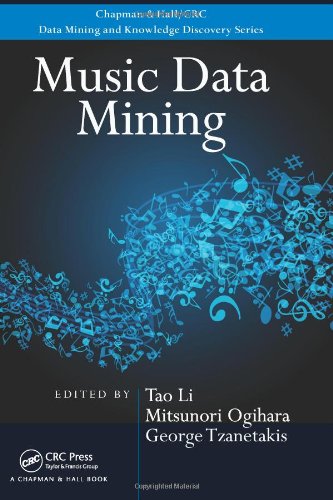
41 reviewsThe research area of music information retrieval has gradually evolved to address the challenges of effectively accessing and interacting large collections of music and associated data, such as styles, artists, lyrics, and reviews. Bringing together an interdisciplinary array of top researchers, Music Data Mining presents a variety of approaches to successfully employ data mining techniques for the purpose of music processing.
The book first covers music data mining tasks and algorithms and audio feature extraction, providing a framework for subsequent chapters. With a focus on data classification, it then describes a computational approach inspired by human auditory perception and examines instrument recognition, the effects of music on moods and emotions, and the connections between power laws and music aesthetics. Given the importance of social aspects in understanding music, the text addresses the use of the Web and peer-to-peer networks for both music data mining and evaluating music mining tasks and algorithms. It also discusses indexing with tags and explains how data can be collected using online human computation games. The final chapters offer a balanced exploration of hit song science as well as a look at symbolic musicology and data mining.
The multifaceted nature of music information often requires algorithms and systems using sophisticated signal processing and machine learning techniques to better extract useful information. An excellent introduction to the field, this volume presents state-of-the-art techniques in music data mining and information retrieval to create novel ways of interacting with large music collections.


4.6
12 reviews

4.7
9 reviews
5.0
26 reviews
4.7
41 reviews