logo
Product categories

EbookNice.com

Most ebook files are in PDF format, so you can easily read them using various software such as Foxit Reader or directly on the Google Chrome browser.
Some ebook files are released by publishers in other formats such as .awz, .mobi, .epub, .fb2, etc. You may need to install specific software to read these formats on mobile/PC, such as Calibre.

Please read the tutorial at this link.  https://ebooknice.com/page/post?id=faq


We offer FREE conversion to the popular formats you request; however, this may take some time. Therefore, right after payment, please email us, and we will try to provide the service as quickly as possible.


For some exceptional file formats or broken links (if any), please refrain from opening any disputes. Instead, email us first, and we will try to assist within a maximum of 6 hours.

EbookNice Team
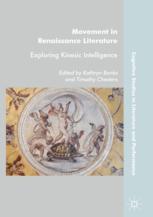
(Ebook) Movement in Renaissance Literature: Exploring Kinesic Intelligence by Kathryn Banks, Timothy Chesters (eds.) ISBN 9783319691992, 9783319692005, 3319691996, 3319692003

  • SKU: EBN-6842138
Zoomable Image
$ 32 $ 40 (-20%)

Status:

Available

0.0

0 reviews
Instant download (eBook) Movement in Renaissance Literature: Exploring Kinesic Intelligence after payment.
Authors:Kathryn Banks, Timothy Chesters (eds.)
Pages:256 pages.
Year:2018
Editon:1
Publisher:Palgrave Macmillan
Language:english
File Size:2.62 MB
Format:pdf
ISBNS:9783319691992, 9783319692005, 3319691996, 3319692003
Categories: Ebooks

Product desciption

(Ebook) Movement in Renaissance Literature: Exploring Kinesic Intelligence by Kathryn Banks, Timothy Chesters (eds.) ISBN 9783319691992, 9783319692005, 3319691996, 3319692003

This book investigates how writers and readers of Renaissance literature deployed ‘kinesic intelligence’, a combination of pre-reflective bodily response and reflective interpretation. Through analyses of authors including Petrarch, Rabelais, and Shakespeare, the book explores how embodied cognition, historical context, and literary style interact to generate and shape responses to texts. It suggests that what was reborn in the Renaissance was partly a critical sense of the capacities and complexities of bodily movement. The linguistic ingenuity of humanism set bodies in motion in complex and paradoxical ways. Writers engaged anew with the embodied grounding of language, prompting readers to deploy sensorimotor attunement. Actors shaped their bodies according to kinesic intelligence molded by theatrical experience and skill, provoking audiences to respond to their most subtle movements. An approach grounded in kinesic intelligence enables us to re-examine metaphor, rhetoric, ethics, gender, and violence. The book will appeal to scholars and students of English, French, and Italian Renaissance literature and to researchers in the cognitive humanities, cognitive sciences, and theatre studies.
*Free conversion of into popular formats such as PDF, DOCX, DOC, AZW, EPUB, and MOBI after payment.

Related Products