logo
Product categories

EbookNice.com

Most ebook files are in PDF format, so you can easily read them using various software such as Foxit Reader or directly on the Google Chrome browser.
Some ebook files are released by publishers in other formats such as .awz, .mobi, .epub, .fb2, etc. You may need to install specific software to read these formats on mobile/PC, such as Calibre.

Please read the tutorial at this link.  https://ebooknice.com/page/post?id=faq


We offer FREE conversion to the popular formats you request; however, this may take some time. Therefore, right after payment, please email us, and we will try to provide the service as quickly as possible.


For some exceptional file formats or broken links (if any), please refrain from opening any disputes. Instead, email us first, and we will try to assist within a maximum of 6 hours.

EbookNice Team
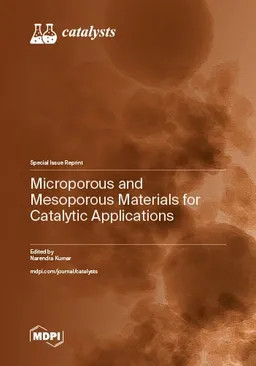
Microporous and Mesoporous Materials for Catalytic Applications by Narendra Kumar ISBN 9783725835973, 9783725835980, 3725835977, 3725835985 instant download

  • SKU: EBN-235066050
Zoomable Image
$ 32 $ 40 (-20%)

Status:

Available

4.9

38 reviews
Instant download (eBook) Microporous and Mesoporous Materials for Catalytic Applications after payment.
Authors:Narendra Kumar
Pages:284 pages
Year:2025
Publisher:MDPI
Language:english
File Size:31.36 MB
Format:pdf
ISBNS:9783725835973, 9783725835980, 3725835977, 3725835985
Categories: Ebooks

Product desciption

Microporous and Mesoporous Materials for Catalytic Applications by Narendra Kumar ISBN 9783725835973, 9783725835980, 3725835977, 3725835985 instant download

Microporous and mesoporous materials are applied in refinery processes for the production of fuel components, petro-chemicals, and fine and speciality chemicals. Furthermore, these catalytic materials are utilized in exhaust gas emission control, water purification, drug delivery, and solutions for environment-related problems. 
-
Microporous and mesoporous catalytic materials modified with transition and noble metals are synthesized via evaporation impregnation, deposition precipitation, ion exchange, chemical vapor deposition, and atomic layer deposition. Metal nanoparticle-size distributions, dispersions, metal-support interations, and acid site amounts can be designed by selecting metal modification methods. 
-
In-depth physico-chemical characterizations are carried out using nitrogen physisorption for surface area pore volume and pore size distributions, scanning electron microscopy for morphological features, transmision electron microscopy for metal nanoparticle-size distributions, X-ray powder diffraction for structural measurements, and FTIR with pyridine as the probe molecule for Brönsted and Lewis acid site amounts. Microporous and mesoporous materials will be applied to the development of green process technology for the production of renewable energy, bulk chemicals, and fine chemical manufacturing.
*Free conversion of into popular formats such as PDF, DOCX, DOC, AZW, EPUB, and MOBI after payment.

Related Products