
Most ebook files are in PDF format, so you can easily read them using various software such as Foxit Reader or directly on the Google Chrome browser.
Some ebook files are released by publishers in other formats such as .awz, .mobi, .epub, .fb2, etc. You may need to install specific software to read these formats on mobile/PC, such as Calibre.
Please read the tutorial at this link. https://ebooknice.com/page/post?id=faq
We offer FREE conversion to the popular formats you request; however, this may take some time. Therefore, right after payment, please email us, and we will try to provide the service as quickly as possible.
For some exceptional file formats or broken links (if any), please refrain from opening any disputes. Instead, email us first, and we will try to assist within a maximum of 6 hours.
EbookNice Team
Status:
Available5.0
14 reviews
ISBN-10 : 0367226006
ISBN-13 : 9780367226008
Author: Ram Chandra, RC Sobti
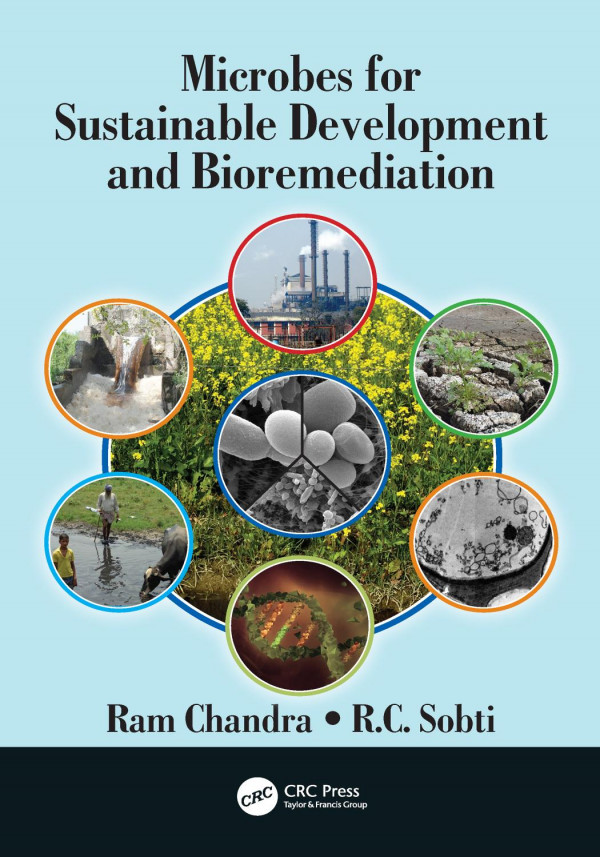
Microbes are the predominant form of life on the planet due to their broad range of adaptation and versatile nutritional behavior. The ability of some microbes to inhabit hostile environment incompatible with most forms of life means that their habitat defines the extent of the biosphere and delineates the barrier between the biosphere and geosphere. The direct and indirect role of microbes that include bacteria, fungi, actinomycetes, viruses, mycoplasma, and protozoans are very much important in development of modern human society for food, drugs, textiles, agriculture, and environment. Furthermore, microorganisms and their enzyme system are responsible for the degradation of various organic matters.
Chapter 1 Bacterial-Assisted Phytoextraction Mechanism of Heavy Metals by Native Hyperaccumulator Plants from Distillery Waste–Contaminated Site for Eco-restoration
Chapter 2 Microbial Enzymes for Eco-friendly Recycling of Waste Paper by Deinking
Chapter 3 Advances in Industrial Wastewater Treatment
Chapter 4 Microbial Degradation of Pesticides in the Environment
Chapter 5 Dissimilatory Iron-Reducing Bacteria: A Template for Iron Mineralization and Nanomaterial Synthesis
Chapter 6 Heat and Chemical Pretreatment of Bacterial Cells to Enhance Metal Removal
Chapter 7 Field-Scale Remediation of Crude Oil–Contaminated Desert Soil Using Various Treatment Technologies: A Large Remediation Project Case Study
Chapter 8 Microbial Processes for Treatment of e-Waste Printed Circuit Boards and Their Mechanisms for Metal(s) Solubilization
Chapter 9 Application of Thermostable Enzymes for Retaining Sustainable Environment: Improvement of the Enzymatic Activities of Two Thermophilic Archaeal
Chapter 10 Metagenomics: A Genomic Tool for Monitoring Microbial Communitiesnduring Bioremediation of Environmental Pollutants
Chapter 11 Microbial Capacities for Utilization of Nitroaromatics
Chapter 12 Methane Monooxygenases: Their Regulations and Applications in Biofuel
Chapter 13 Plant Growth–Promoting Rhizobacteria (PGPR) and Bioremediation of Industrial Waste
Sangeeta Yadav, Kshitij Singh, and Ram Chandra
Chapter 14 Fungi Treatment of Synthetic Dyes by Using Agro-industrial Waste
Chapter 15 Beneficial Microbes for Sustainable Agriculture
Chapter 16 Detoxification of Biomedical Waste
Chapter 17 Immobilized Enzyme-Based Biocatalytic Cues: An Effective Approach to Tackle Industrial Effluent Waste
Chapter 18 Lipase of Lactic Acid Bacteria: Diversity and Application
Chapter 19 Role of Microbes in Environmental Sustainability and Food Preservation
Chapter 20 Bioinformatics and Applications in Biotechnology
Chapter 21 Microbial Bioinoculants for Sustainable Agriculture: Trends, Constraints, and
role of microbes in sustainable development
what is important for sustainable development
interesting facts about sustainable development
microbes sustainable
microbial bioprospecting for sustainable development
Tags: Microbes, Sustainable Development, Bioremediation, Ram Chandra, RC Sobti


4.6
12 reviews

4.7
9 reviews

4.4
8 reviews
4.6
24 reviews
4.6
18 reviews