
Most ebook files are in PDF format, so you can easily read them using various software such as Foxit Reader or directly on the Google Chrome browser.
Some ebook files are released by publishers in other formats such as .awz, .mobi, .epub, .fb2, etc. You may need to install specific software to read these formats on mobile/PC, such as Calibre.
Please read the tutorial at this link. https://ebooknice.com/page/post?id=faq
We offer FREE conversion to the popular formats you request; however, this may take some time. Therefore, right after payment, please email us, and we will try to provide the service as quickly as possible.
For some exceptional file formats or broken links (if any), please refrain from opening any disputes. Instead, email us first, and we will try to assist within a maximum of 6 hours.
EbookNice Team
Status:
Available4.7
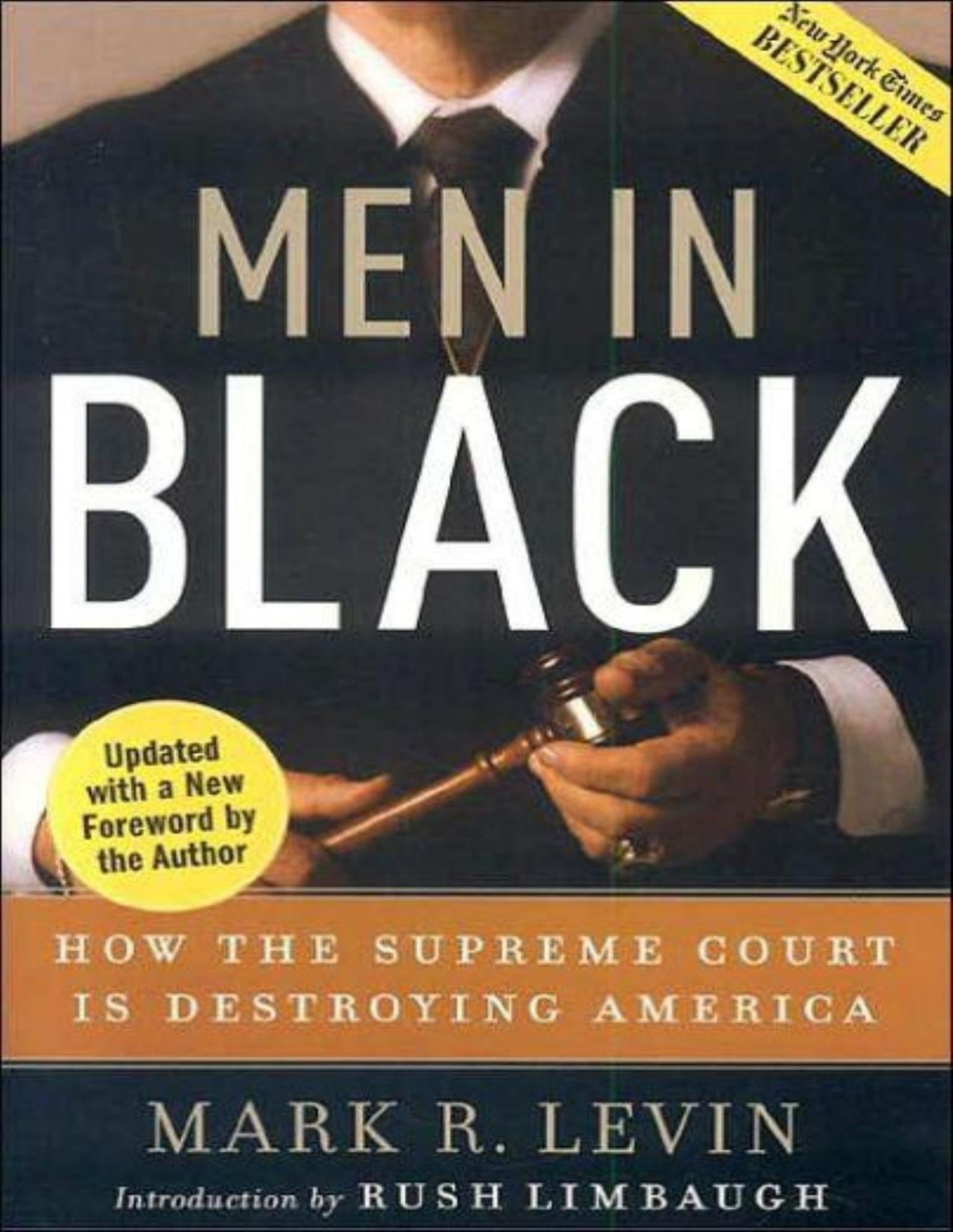
27 reviewsThe bestselling Men in Black-first time in paperback! Lawyer and hugely popular radio talk show host Mark Levin throws the book at out-of-control liberal judges who ignore the Constitution, dismantle the rights of American citizens, and make up their own coercive law from the bench.
Amazon.com ReviewConservative talk radio host, lawyer, and frequent National Review contributor Mark R. Levin comes out firing against the United States Supreme Court in Men in Black, accusing the institution of corrupting the ideals of America's founding fathers. The court, in Levin's estimation, pursues an ideology-based activist agenda that oversteps its authority within the government. Levin examines several decisions in the court's history to illustrate his point, beginning with the landmark Marbury v. Madison case, wherein the court granted itself the power to declare acts of the other branches of government unconstitutional. He devotes later chapters to other key cases culminating in modern issues such as same-sex marriage and the McCain-Feingold campaign finance reform bill. Like effective attorneys do, Levin packs in copious research material and delivers his points with tremendous vigor, excoriating the justices for instances where he feels strict constit utional constructivism gave way to biased interpretation. But Levin's definition of "activism" seems inconsistent. In the case of McCain-Feingold, the court declined to rule on a bill already passed by congress and signed by the president, but Levin, who thinks the bill violates the First Amendment, still accuses them of activism even when they were actually passive. To his talk-radio listeners, Levin's hard-charging style and dire warnings of the court's direction will strike a resonant tone of alarm, though the hyperbole may be a bit off-putting to the uninitiated. As an attack on the vagaries of decisions rendered by the Supreme Court and on some current justices, Men in Black scores points and will likely lead sympathetic juries to conviction. --John Moe
From Publishers WeeklyThe Supreme Court is speeding the country on the road to tyranny, according to this jeremiad from Levin, a conservative constitutional lawyer and radio talk show host. Levin argues that the Constitution is under siege by "judicial activists" obsessed with remaking America to reflect their personal political and moral philosophies. Liberal judges who view the Constitution as a document whose meaning evolves over time are at odds with the founding fathers' "clear and profound vision for what they wanted our federal government to be." "Activist judges," he says, "make, rather than interpret, the law." The author champions originalism, the conservative legal philosophy hinging on a narrow interpretation of the Constitution's text, and he contends that moving the judiciary back into the originalist fold could thwart the power grab by "radicals in robes." Levin traces trends in judicial activism through some of the Supreme Court's most famous cases, from Marbury v. Madison (1803), which enshrined the high court's power to weigh the constitutionality of presidential and congressional acts, to Roe v. Wade (1973). He also blasts affirmative action decisions, contending that the 14th Amendment's equal protection clause should be sufficient to combat racial discrimination. Levin is an ardent advocate, but at times his strident tone gets in the way of objective analyses of the system's flaws. Would the founders be as "appalled" by the present-day Supreme Court as Levin is? That's impossible to say, but many likeminded critics are certain to be galvanized by this spirited "clarion call," which is bookended by raves from conservative radio broadcaster Rush Limbaugh and former U.S. Attorney General Edwin Meese III.
Copyright © Reed Business Information, a division of Reed Elsevier Inc. All rights reserved.
5.0
21 reviews
4.4
5 reviews
4.4
17 reviews
4.8
21 reviews
4.6
12 reviews
4.5
18 reviews
4.5
32 reviews
4.4
32 reviews
4.6
5 reviews
4.8
31 reviews