logo
Product categories

EbookNice.com

Most ebook files are in PDF format, so you can easily read them using various software such as Foxit Reader or directly on the Google Chrome browser.
Some ebook files are released by publishers in other formats such as .awz, .mobi, .epub, .fb2, etc. You may need to install specific software to read these formats on mobile/PC, such as Calibre.

Please read the tutorial at this link.  https://ebooknice.com/page/post?id=faq


We offer FREE conversion to the popular formats you request; however, this may take some time. Therefore, right after payment, please email us, and we will try to provide the service as quickly as possible.


For some exceptional file formats or broken links (if any), please refrain from opening any disputes. Instead, email us first, and we will try to assist within a maximum of 6 hours.

EbookNice Team
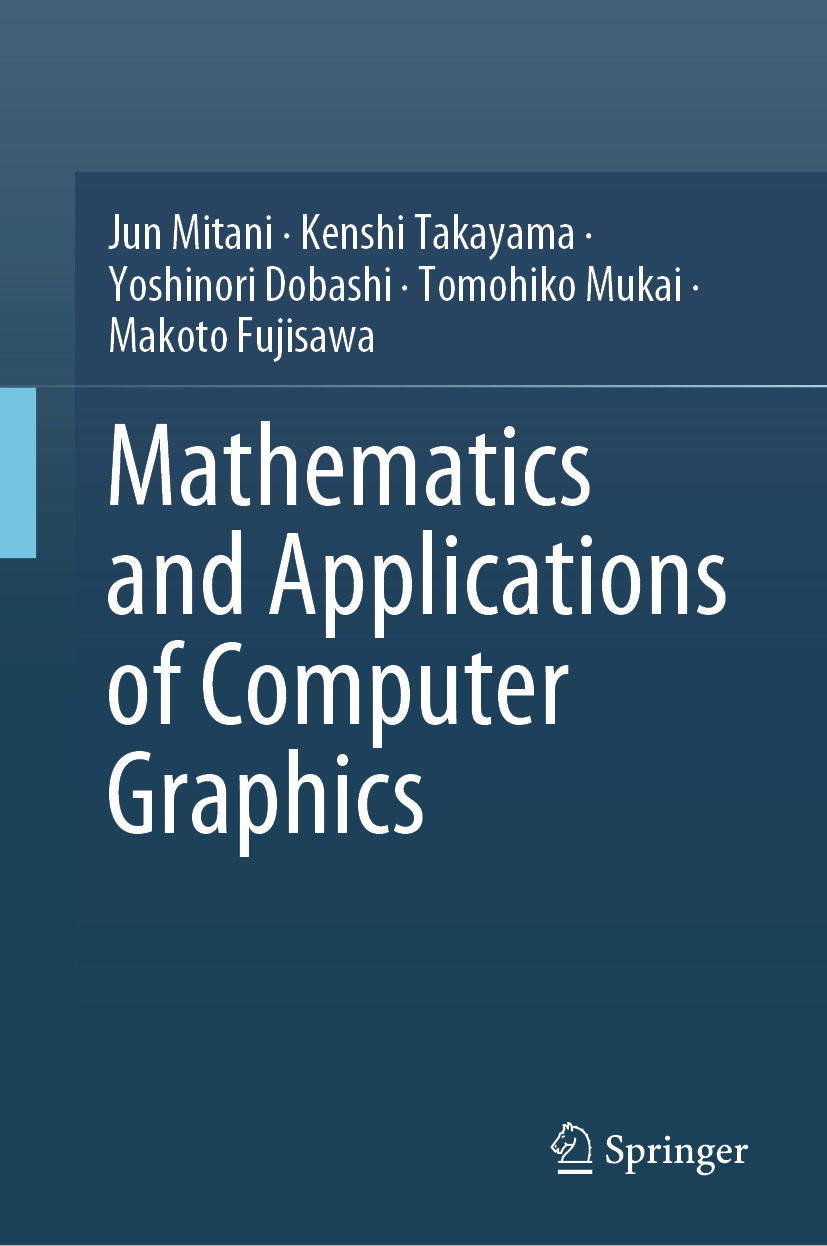
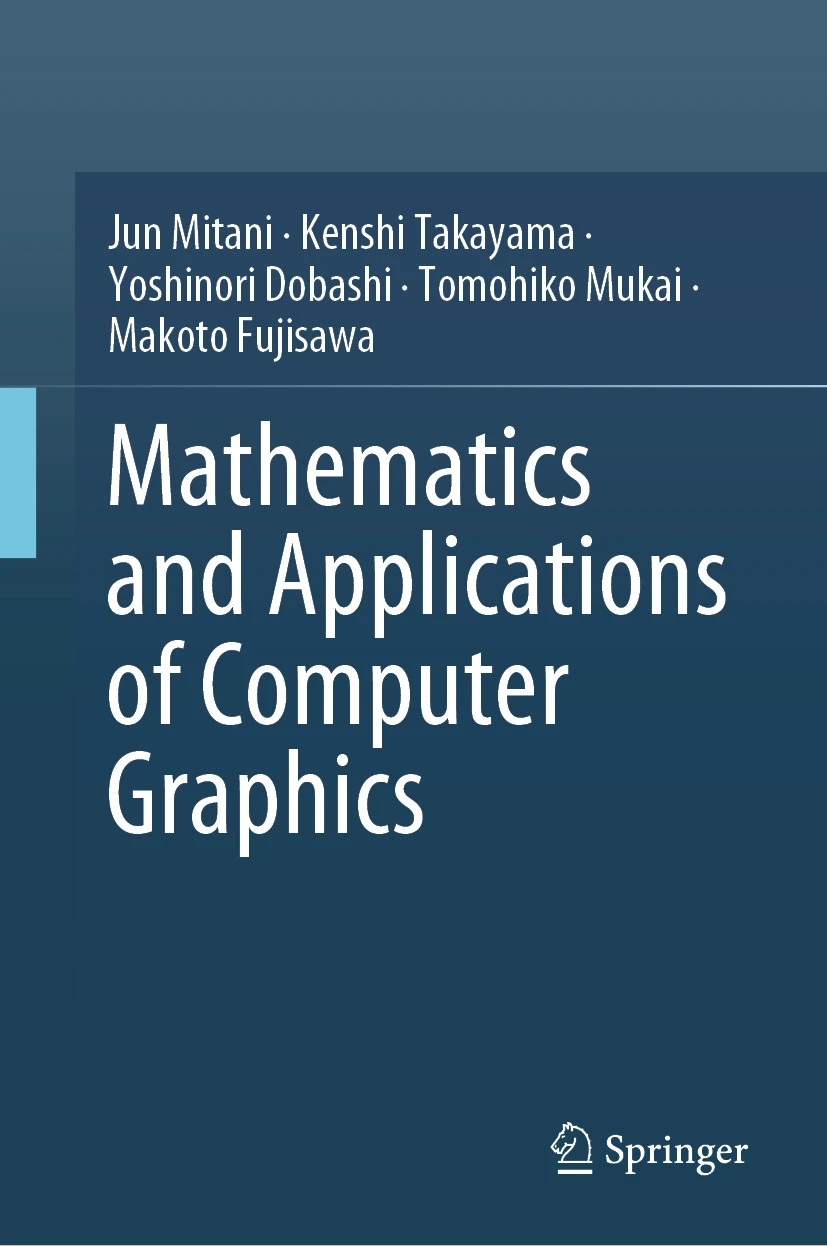
Mathematics and Applications of Computer Graphics by Jun Mitani & Kenshi Takayama & Yoshinori Dobashi & Tomohiko Mukai & Makoto Fujisawa ISBN 9789819629336, 9819629330 instant download

  • SKU: EBN-237197100
Zoomable Image
$ 32 $ 40 (-20%)

Status:

Available

4.5

39 reviews
Instant download (eBook) Mathematics and Applications of Computer Graphics after payment.
Authors:Jun Mitani & Kenshi Takayama & Yoshinori Dobashi & Tomohiko Mukai & Makoto Fujisawa
Pages:203 pages
Year:2025
Publisher:Springer Nature Singapore
Language:english
File Size:25.98 MB
Format:epub
ISBNS:9789819629336, 9819629330
Categories: Ebooks

Product desciption

Mathematics and Applications of Computer Graphics by Jun Mitani & Kenshi Takayama & Yoshinori Dobashi & Tomohiko Mukai & Makoto Fujisawa ISBN 9789819629336, 9819629330 instant download

This book equips readers with the fundamentals of 3DCG that support the advanced technologies. The content of this book is divided into four categories: modeling, rendering, character animation, and physical simulation, and each is explained in a separate chapter. In simpler terms, these four technologies can be described as creating shapes, creating images, creating motion, and reproducing the behavior of the natural world. The "Modeling" chapter describes the theory behind describing the shape of an object using surface meshes and then editing and manipulating them. The chapter "Rendering" focuses on the calculation of the luminance of an object's surface, and describes methods for calculating global illumination and generating fast images using precomputation to produce realistic images. Physical phenomena such as light scattering, which is necessary to improve realism, are also explained. The "Character Animation" chapter introduces the skeleton method, a standard technique in animation production, and describes various animation editing techniques for humanoid character models. Finally, the chapter on "Physical Simulation" describes methods to compute the behavior of complex natural phenomena, including not only hard objects but also flowing objects such as water and air. The four topics listed here are the fundamental elements that support 3DCG. The chapters were written by researchers who are active at the forefront of their respective fields. Each of the authors has a remarkable track record and can be said to have led the development of 3DCG technology in Japan with their wealth of experience and knowledge.
*Free conversion of into popular formats such as PDF, DOCX, DOC, AZW, EPUB, and MOBI after payment.

Related Products