Most ebook files are in PDF format, so you can easily read them using various software such as Foxit Reader or directly on the Google Chrome browser.
Some ebook files are released by publishers in other formats such as .awz, .mobi, .epub, .fb2, etc. You may need to install specific software to read these formats on mobile/PC, such as Calibre.
Please read the tutorial at this link. https://ebooknice.com/page/post?id=faq
We offer FREE conversion to the popular formats you request; however, this may take some time. Therefore, right after payment, please email us, and we will try to provide the service as quickly as possible.
For some exceptional file formats or broken links (if any), please refrain from opening any disputes. Instead, email us first, and we will try to assist within a maximum of 6 hours.
EbookNice Team
Status:
Available4.7
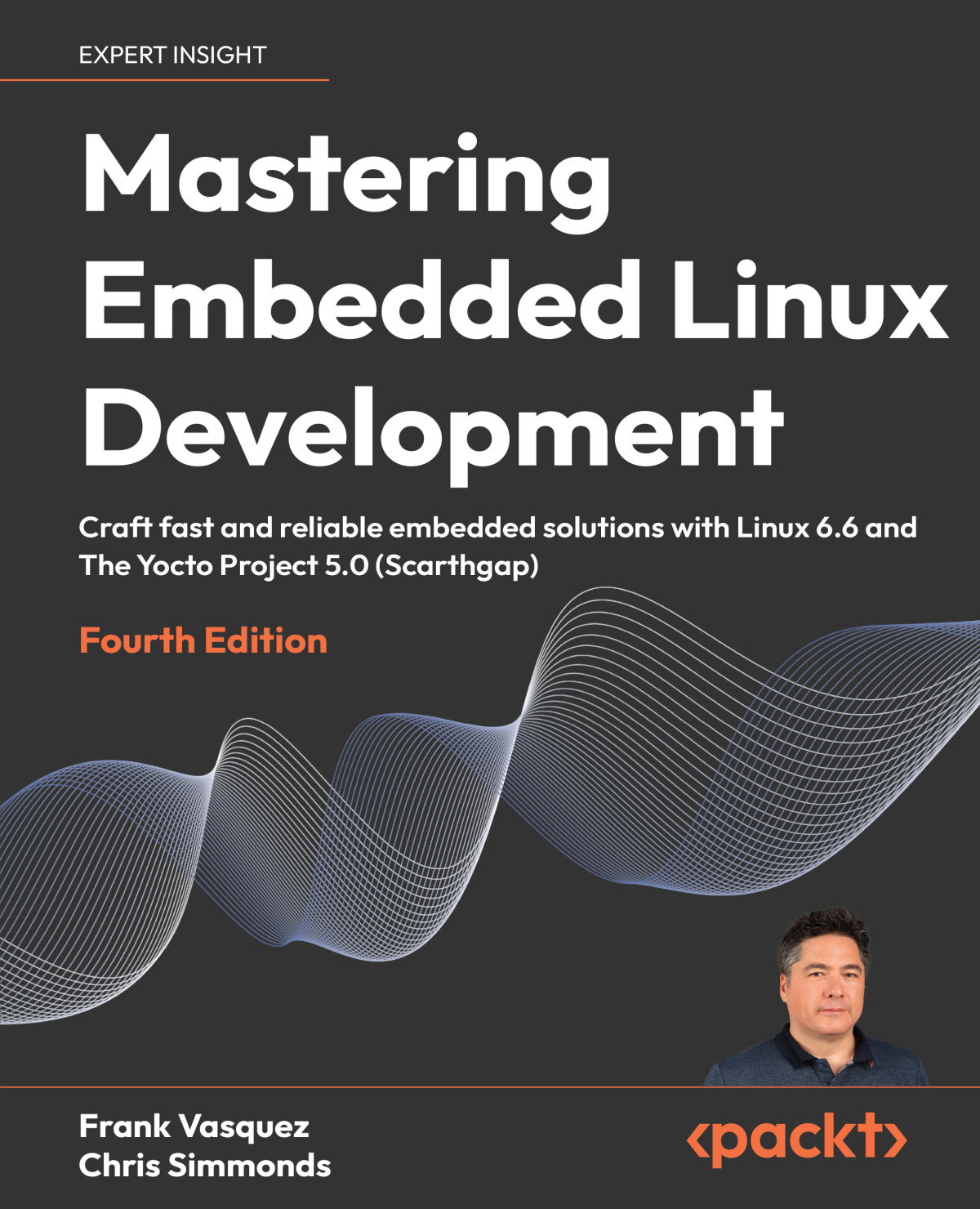
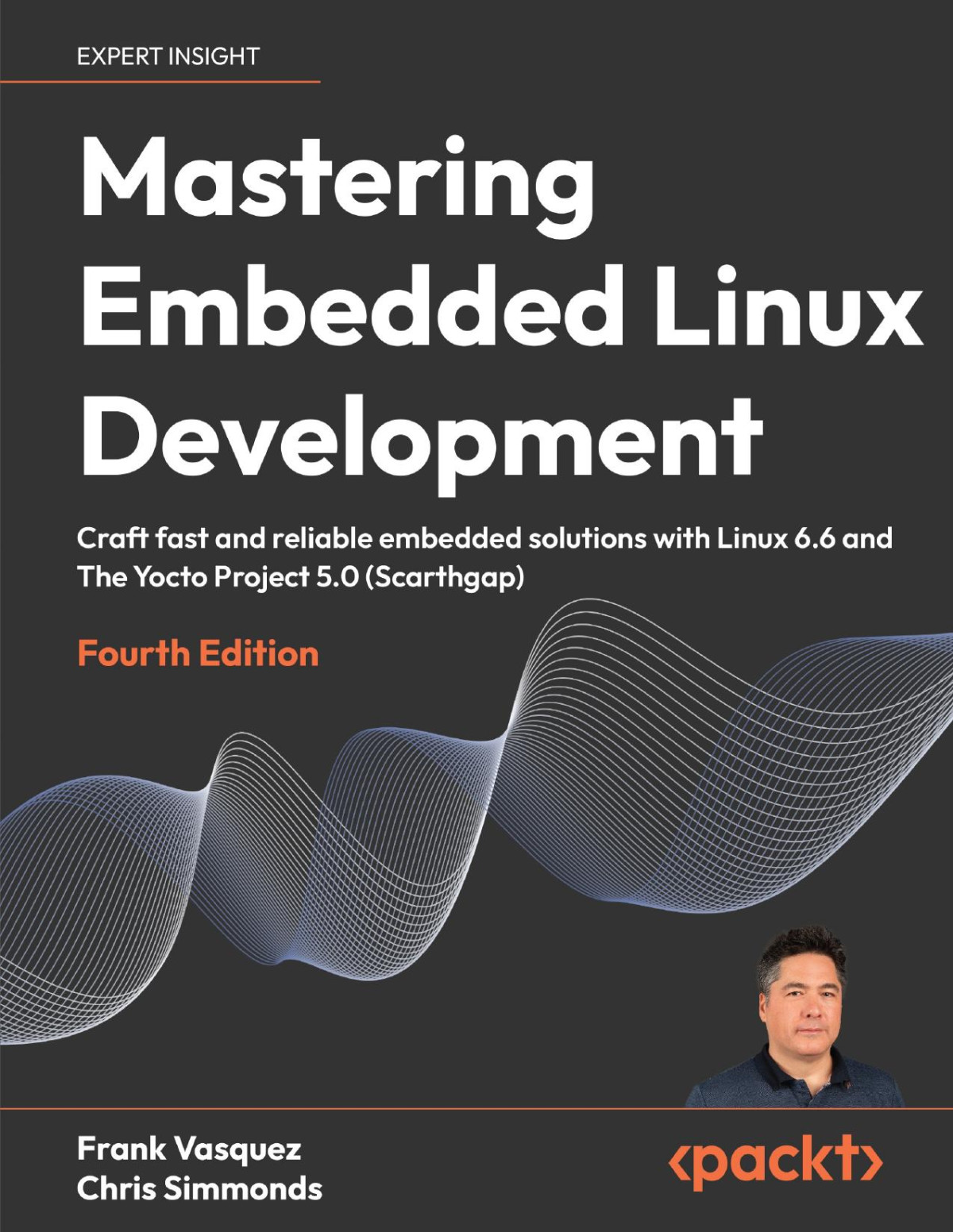
25 reviewsWritten by Frank Vasquez, an embedded Linux expert, this new edition enables you to harness the full potential of Linux to create versatile and robust embedded solutions
Key Features
Learn how to develop and configure reliable embedded Linux devices
Discover the latest enhancements in Linux 6.6 and the Yocto Project 5.0, codename Scarthgap
Explore different ways to debug and profile your code in both user space and the Linux kernel
Mastering Embedded Linux Development is designed to be both a learning resource and a reference for your embedded Linux projects.
This fourth edition highlights the fundamental elements that underpin all embedded Linux projects—the toolchain, the bootloader, the kernel, and the root filesystem. From downloading and installing a pre-built toolchain to cross-compiling each of the remaining three elements from scratch, this book sets up group for automating the process using Buildroot and the Yocto Project. The book covers over-the-air software updates and rapid prototyping with add-on boards.
Two new chapters focus on modern development practices, including Python packaging and deploying containerized applications, followed by a chapter on writing multithreaded code and another on techniques to manage memory efficiently. The final chapters show you how to debug your code, whether it resides in user space or in the Linux kernel itself. In addition to Gnu DeBugger (GDB), the book also covers the different tracers and profilers that are available for Linux so that you can quickly pinpoint any performance bottlenecks in your system.
By the end of this book, you will be able to create efficient and secure embedded devices with
…
5.0
27 reviews
4.7
28 reviews
4.5
15 reviews