logo
Product categories

EbookNice.com

Most ebook files are in PDF format, so you can easily read them using various software such as Foxit Reader or directly on the Google Chrome browser.
Some ebook files are released by publishers in other formats such as .awz, .mobi, .epub, .fb2, etc. You may need to install specific software to read these formats on mobile/PC, such as Calibre.

Please read the tutorial at this link.  https://ebooknice.com/page/post?id=faq


We offer FREE conversion to the popular formats you request; however, this may take some time. Therefore, right after payment, please email us, and we will try to provide the service as quickly as possible.


For some exceptional file formats or broken links (if any), please refrain from opening any disputes. Instead, email us first, and we will try to assist within a maximum of 6 hours.

EbookNice Team
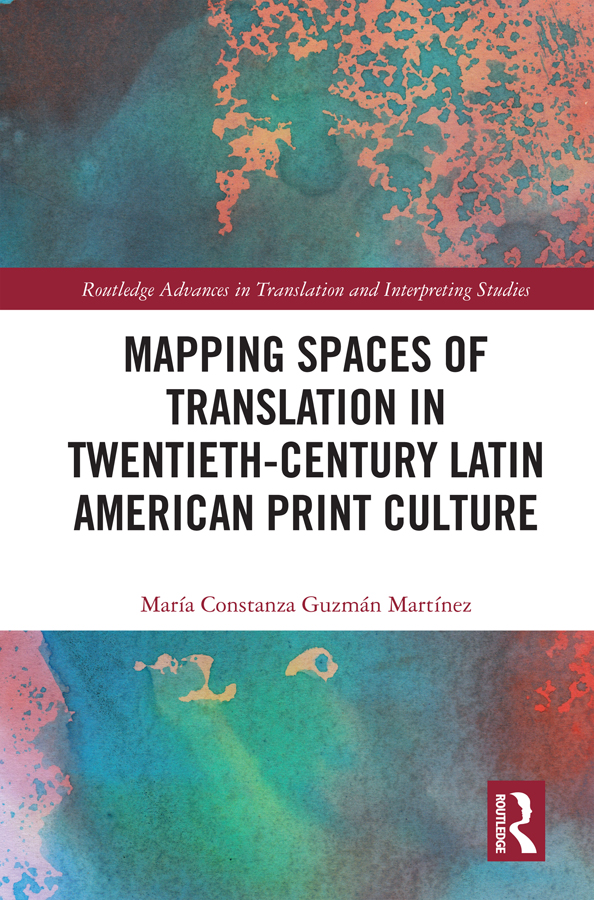
Mapping Spaces of Translation in Twentieth-Century Latin American Print Culture by María Constanza Guzmán Martínez instant download

  • SKU: EBN-237334910
Zoomable Image
$ 32 $ 40 (-20%)

Status:

Available

4.4

10 reviews
Instant download (eBook) Mapping Spaces of Translation in Twentieth-Century Latin American Print Culture after payment.
Authors:María Constanza Guzmán Martínez
Pages:updating ...
Year:2020
Publisher:Routledge
Language:english
File Size:2.3 MB
Format:epub
Categories: Ebooks

Product desciption

Mapping Spaces of Translation in Twentieth-Century Latin American Print Culture by María Constanza Guzmán Martínez instant download

This book reflects on translation praxis in twentieth-century Latin American print culture, tracing the trajectory of linguistic heterogeneity in the region and illuminating collective efforts to counteract the use of translation as a colonial tool and affirm cultural production in Latin America.
In investigating the interplay of translation and the Americas as a geopolitical site, Guzmán Martínez unpacks the complex tensions that arise in these “spaces of translation” as embodied in the output of influential publishing houses and periodicals during this time period, looking at translation as both a concept and a set of narrative practices. An exploration of these spaces not only allows for an in-depth analysis of the role of translation in these institutions themselves but also provides a lens through which to uncover linguistic plurality and hybridity past borders of seemingly monolingual ideologies. A concluding chapter looks ahead to the ways in which strategic and critical uses of translation can continue to build on these efforts and contribute toward decolonial narrative practices in translation and enhance cultural production in the Americas in the future.
This book will be of particular interest to scholars in translation studies, Latin American studies, and comparative literature.
*Free conversion of into popular formats such as PDF, DOCX, DOC, AZW, EPUB, and MOBI after payment.

Related Products