logo
Product categories

EbookNice.com

Most ebook files are in PDF format, so you can easily read them using various software such as Foxit Reader or directly on the Google Chrome browser.
Some ebook files are released by publishers in other formats such as .awz, .mobi, .epub, .fb2, etc. You may need to install specific software to read these formats on mobile/PC, such as Calibre.

Please read the tutorial at this link.  https://ebooknice.com/page/post?id=faq


We offer FREE conversion to the popular formats you request; however, this may take some time. Therefore, right after payment, please email us, and we will try to provide the service as quickly as possible.


For some exceptional file formats or broken links (if any), please refrain from opening any disputes. Instead, email us first, and we will try to assist within a maximum of 6 hours.

EbookNice Team
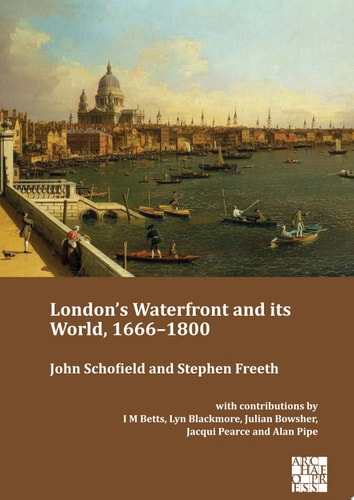
London’s Waterfront and its World, 1666–1800 by John Schofield, Stephen Freeth ISBN 9781803276557, 9781803276540, 180327655X, 1803276541 instant download

  • SKU: EBN-239921444
Zoomable Image
$ 32 $ 40 (-20%)

Status:

Available

4.9

27 reviews
Instant download (eBook) London’s Waterfront and its World, 1666–1800 after payment.
Authors:John Schofield, Stephen Freeth
Pages:302 pages
Year:2023
Edition:1
Publisher:Archaeopress Publishing Ltd
Language:english
File Size:19.57 MB
Format:pdf
ISBNS:9781803276557, 9781803276540, 180327655X, 1803276541
Categories: Ebooks

Product desciption

London’s Waterfront and its World, 1666–1800 by John Schofield, Stephen Freeth ISBN 9781803276557, 9781803276540, 180327655X, 1803276541 instant download

London’s Waterfront and its World, 1666–1800 presents the results of archaeological excavations of 1974 to 1983 in the central waterfront area of the City of London. The archaeology of the port of London is considered on a wide scale, from the City down the Thames to Deptford. The Great Fire of London in 1666 prompted some changes to the topography of streets and buildings, but there were also many continuities in life and work. 
-
The waterfront changed during the 18th century as warehousing replaced houses. This process is illustrated by archaeological excavation, documentary study and the survival of plans of properties surveyed for land-owning institutions. The artefacts and pottery recovered from these sites include many pieces from overseas, and London’s waterfront can be compared with those of other port cities in Europe, North America and the Caribbean. 
-
Perhaps in late 17th- and 18th-century London we can study urban tastes and consumption from an archaeological viewpoint. During this period London became the hub of the new British empire, but contributed to the exploitation of people from other lands known as slavery. 
-
The waterfront on both sides of the Thames was at the centre of the new empire.
*Free conversion of into popular formats such as PDF, DOCX, DOC, AZW, EPUB, and MOBI after payment.

Related Products

-20%

Martin John by Schofield Anakana instant download

5.0

36 reviews
$40 $32