logo
Product categories

EbookNice.com

Most ebook files are in PDF format, so you can easily read them using various software such as Foxit Reader or directly on the Google Chrome browser.
Some ebook files are released by publishers in other formats such as .awz, .mobi, .epub, .fb2, etc. You may need to install specific software to read these formats on mobile/PC, such as Calibre.

Please read the tutorial at this link.  https://ebooknice.com/page/post?id=faq


We offer FREE conversion to the popular formats you request; however, this may take some time. Therefore, right after payment, please email us, and we will try to provide the service as quickly as possible.


For some exceptional file formats or broken links (if any), please refrain from opening any disputes. Instead, email us first, and we will try to assist within a maximum of 6 hours.

EbookNice Team
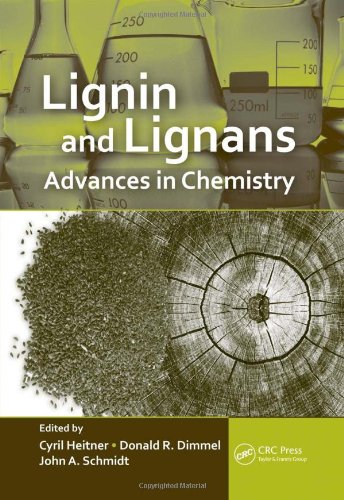
(Ebook) Lignin and Lignans: Advances in Chemistry by Cyril Heitner, Don Dimmel, John Schmidt ISBN 9781574444865, 1574444867

  • SKU: EBN-1671222
Zoomable Image
$ 32 $ 40 (-20%)

Status:

Available

4.8

11 reviews
Instant download (eBook) Lignin and Lignans: Advances in Chemistry after payment.
Authors:Cyril Heitner, Don Dimmel, John Schmidt
Pages:683 pages.
Year:2010
Editon:1
Publisher:CRC Press
Language:english
File Size:20.11 MB
Format:pdf
ISBNS:9781574444865, 1574444867
Categories: Ebooks

Product desciption

(Ebook) Lignin and Lignans: Advances in Chemistry by Cyril Heitner, Don Dimmel, John Schmidt ISBN 9781574444865, 1574444867

Over the past four decades, there has been immense progress in every area of lignin science, ranging from the enzymology of lignin biodegradation, to the delignification of wood fiber during pulping and bleaching, to advances in spectroscopy. Lignin and Lignans: Advances in Chemistry captures the developments that have been achieved by world-class scientists in the most critical aspects of this burgeoning field. Tools for the characterization of lignin and lignans After an overview of the topic, the book discusses the significance and comparative performances of the most commonly used chemical degradation methods and presents lignin structural information based on the use of these methods. Next, the book explores spectroscopic methods, including UV-visible absorption, fluorescence, Raman, infra red (IR), near-infrared (NIR), nuclear magenetic resonance (NMR), and heteronuclear NMR spectroscopy. It then compares the results of studies of lignin in situ with studies of isolated lignins. Predicting reactivity The authors discuss polymer properties related to thermal stability and molecular motion of lignin in the solid state. They describe applications of electronic structure calculations to the chemistry of lignin, and they explore lignin reactions that occur during the chemical pulping of wood by soda, kraft, AQ, and polysulfide processes. Chemistry associated with industrial processes The book describes chemical pulp bleaching, oxidative and reductive lignin-retaining bleaching, and lignin biodegradation. It also examines the application of microorganisms and the enzymes they produce in the manufacturing of chemical and mechanical pulp. The book closes with chapters on photodegradation and chromophore formation and the pharmacological properties of lignans. Highlighting significant developments on selected topics, this essential reference for those in industry and academia is designed to fuel further research and discovery in this specialized area, especially in the emerging field of biorefining.
*Free conversion of into popular formats such as PDF, DOCX, DOC, AZW, EPUB, and MOBI after payment.

Related Products