Most ebook files are in PDF format, so you can easily read them using various software such as Foxit Reader or directly on the Google Chrome browser.
Some ebook files are released by publishers in other formats such as .awz, .mobi, .epub, .fb2, etc. You may need to install specific software to read these formats on mobile/PC, such as Calibre.
Please read the tutorial at this link. https://ebooknice.com/page/post?id=faq
We offer FREE conversion to the popular formats you request; however, this may take some time. Therefore, right after payment, please email us, and we will try to provide the service as quickly as possible.
For some exceptional file formats or broken links (if any), please refrain from opening any disputes. Instead, email us first, and we will try to assist within a maximum of 6 hours.
EbookNice Team
Status:
Available4.7
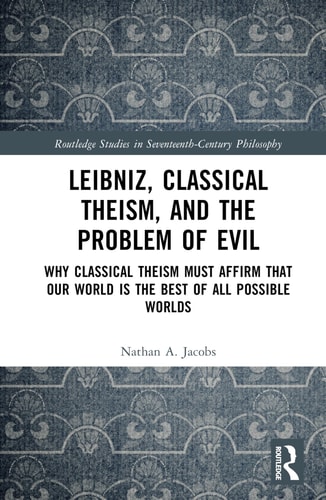
25 reviewsGottfried Leibniz is known for his “theodicy,” or defense of God's Goodness, Wisdom, and Justice despite the realities of evil in our world. This book argues that Leibniz’s optimism is inevitable for proponents of classical theism and even for many not-so-classical theists. The author’s argument is threefold. First, he demonstrates that Leibniz's theodicy is deeply rooted in the classical theist tradition, pagan and Christian, and shows that the philosopher of Leipzig is merely following these commitments to their logical conclusion, a conclusion that long precedes Leibniz. Second, he offers a novel rereading of Leibniz in the light of his philosophical and theological antecedents, a reading that, if correct, dispels ubiquitous but problematic assumptions about Leibniz's case, specifically those about divine and human freedom. Third, he demonstrates the analytic tether that connects classical theism to Leibniz’s conclusion, making his notorious optimism virtually inevitable for proponents of classical theism — and even for not-so-classical theists. This book demonstrates the ways in which Leibniz is relevant to not only classical theists and students of Modern philosophy but also to contemporary philosophers of religion more generally and philosophical theologians who are concerned with the problem of evil.
Leibniz, Classical Theism, and the Problem of Evil will appeal to scholars and graduate students interested in Leibniz, philosophy of religion, history of philosophy, philosophical theology, free will, and the problem of evil.

4.4
24 reviews
4.4
30 reviews
4.6
10 reviews
4.6
13 reviews

4.8
22 reviews
4.7
11 reviews