logo
Product categories

EbookNice.com

Most ebook files are in PDF format, so you can easily read them using various software such as Foxit Reader or directly on the Google Chrome browser.
Some ebook files are released by publishers in other formats such as .awz, .mobi, .epub, .fb2, etc. You may need to install specific software to read these formats on mobile/PC, such as Calibre.

Please read the tutorial at this link.  https://ebooknice.com/page/post?id=faq


We offer FREE conversion to the popular formats you request; however, this may take some time. Therefore, right after payment, please email us, and we will try to provide the service as quickly as possible.


For some exceptional file formats or broken links (if any), please refrain from opening any disputes. Instead, email us first, and we will try to assist within a maximum of 6 hours.

EbookNice Team
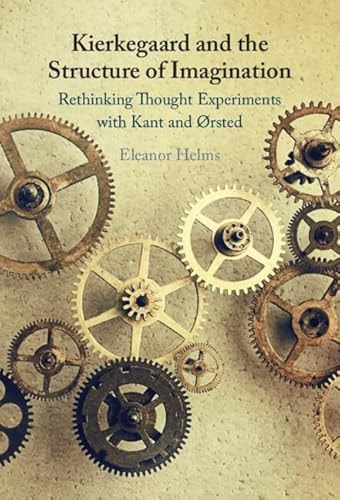
Kierkegaard and the Structure of Imagination: Rethinking Thought Experiments with Kant and Ørsted by Eleanor Helms ISBN 9781009594936, 9781009594974, 9781009594929, 1009594931, 1009594974, 1009594923 instant download

  • SKU: EBN-239238430
Zoomable Image
$ 32 $ 40 (-20%)

Status:

Available

5.0

37 reviews
Instant download (eBook) Kierkegaard and the Structure of Imagination: Rethinking Thought Experiments with Kant and Ørsted after payment.
Authors:Eleanor Helms
Pages:296 pages
Year:2025
Publisher:Cambridge University Press
Language:english
File Size:1.78 MB
Format:pdf
ISBNS:9781009594936, 9781009594974, 9781009594929, 1009594931, 1009594974, 1009594923
Categories: Ebooks

Product desciption

Kierkegaard and the Structure of Imagination: Rethinking Thought Experiments with Kant and Ørsted by Eleanor Helms ISBN 9781009594936, 9781009594974, 9781009594929, 1009594931, 1009594974, 1009594923 instant download

Thought experiments play an important role in philosophy and philosophical theorizing. In this book Eleanor Helms examines thought experiments and charts their use in the work of Danish thinkers Hans Christian Orsted (1777–1851) and Soren Kierkegaard (1813–55), arguing that both were influenced by Kant. She demonstrates how key Kantian concepts shape the methods of both thinkers, especially Kant's claim that regulative ideas like the self, God, and nature cannot be directly represented. Kant proposed some ways in which we can make sense of, or 'cognize,' these kinds of abstract ideas, and Ørsted and Kierkegaard take up the practical challenge of realizing Kant's optimism by designing thought experiments to make these big ideas meaningfully accessible to individual thinkers. Helms's book is the first comprehensive study of Kierkegaard's use of thought experiments as a method, and reveals its significance for our contemporary understanding of how thought experiments work.

The first comprehensive study of Kierkegaard's use of thought experiments as a method, revealing its significance for our contemporary understanding of how thought experiments work

Examines Ørsted's texts directly, providing primary-source evidence that challenges widespread misunderstandings of Ørsted

Widens the scholarly discussion of thought experiments beyond philosophy of science, and prior to the 1900s

DOI: 10.1017/9781009594929
*Free conversion of into popular formats such as PDF, DOCX, DOC, AZW, EPUB, and MOBI after payment.

Related Products