Most ebook files are in PDF format, so you can easily read them using various software such as Foxit Reader or directly on the Google Chrome browser.
Some ebook files are released by publishers in other formats such as .awz, .mobi, .epub, .fb2, etc. You may need to install specific software to read these formats on mobile/PC, such as Calibre.
Please read the tutorial at this link. https://ebooknice.com/page/post?id=faq
We offer FREE conversion to the popular formats you request; however, this may take some time. Therefore, right after payment, please email us, and we will try to provide the service as quickly as possible.
For some exceptional file formats or broken links (if any), please refrain from opening any disputes. Instead, email us first, and we will try to assist within a maximum of 6 hours.
EbookNice Team
Status:
Available4.7
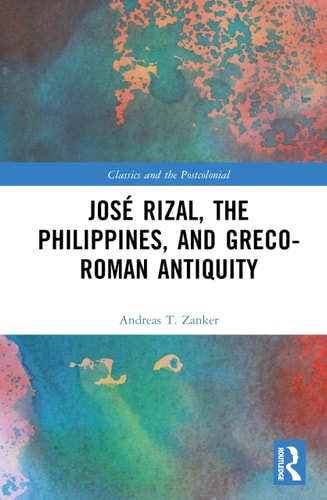
6 reviewsThis volume is the first extended investigation of the classicism of José Rizal (1861–1896), the de facto national hero of the Philippines, and explores how Greco-Roman antiquity was harnessed by Rizal and other Philippine artists and thinkers at the end of the Spanish colonial period.
Rizal lived at a crucial juncture in his nation’s history, and Zanker argues that Rizal’s writing and thought represents a rich and evolving example of late-colonial classical reception. The volume illustrates how the forms of knowledge associated with Greco-Roman antiquity were put to creative and powerful new tasks in the attempts of Rizal and his contemporaries to redefine the relationship between Spain and its most distant colony. It not only explores the presence of Greco-Roman antiquity in Rizal’s novels but also his lesser-known works in a roughly chronological order. Besides covering the entirety of Rizal’s surviving works, Zanker considers the role of antiquity in the paintings of Juan Luna and in Rizal’s parsing of his friendship with his Austrian collaborator, Ferdinand Blumentritt.
José Rizal, the Philippines, and Greco-Roman Antiquity is of interest to students and scholars of Classics, particularly Classical Reception, and the colonial-era Philippines, as well as Latin American Studies, Southeast Asian Studies, and Postcolonial Studies more broadly.
DOI: 10.4324/9781003465980
4.5
7 reviews
4.8
18 reviews
4.6
40 reviews
5.0
33 reviews
4.7
36 reviews