
Most ebook files are in PDF format, so you can easily read them using various software such as Foxit Reader or directly on the Google Chrome browser.
Some ebook files are released by publishers in other formats such as .awz, .mobi, .epub, .fb2, etc. You may need to install specific software to read these formats on mobile/PC, such as Calibre.
Please read the tutorial at this link. https://ebooknice.com/page/post?id=faq
We offer FREE conversion to the popular formats you request; however, this may take some time. Therefore, right after payment, please email us, and we will try to provide the service as quickly as possible.
For some exceptional file formats or broken links (if any), please refrain from opening any disputes. Instead, email us first, and we will try to assist within a maximum of 6 hours.
EbookNice Team
Status:
Available4.7
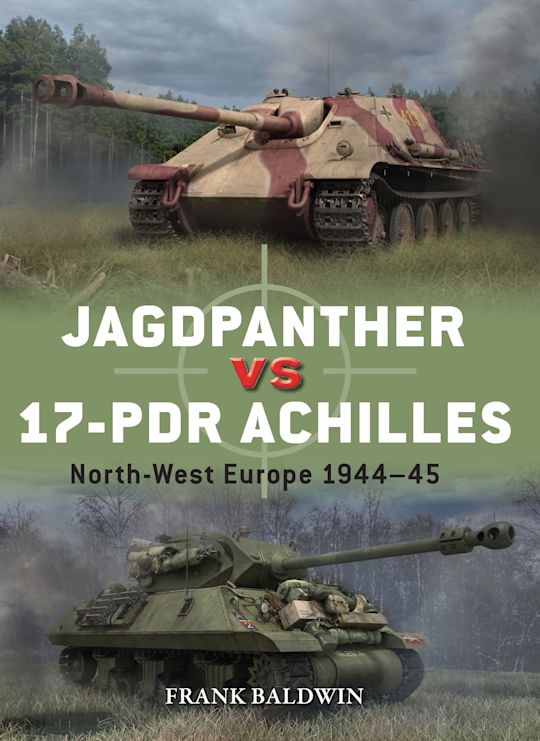
22 reviewsThis is the story of the 17-pdr Achilles and the Jagdpanther, two formidable tracked anti-tank guns that clashed in North-West Europe during 1944–45.
Both mounting their country's most effective anti-tank ordnance on a tracked chassis, the 17-pdr Achilles and the Jagdpanther were arguably the best self-propelled anti-tank guns used by the British, Canadian and German forces that fought in North-West Europe during 1944–45. Featuring specially commissioned artwork and carefully chosen photographs, this is the story of the two types' development, combat use and legacy in the closing stages of World War II in North-West Europe.
Based upon the mobile, lightly armoured M10 design originally developed for the US Army, the Achilles had its main armament, the 17-pounder QF anti-tank gun, mounted in a fully revolving turret. Conversely, the low-profile, heavily armoured Jagdpanther had its formidable 8.8cm PaK 43 cannon mounted in a fixed casemate.
Both crewed by artillerymen rather than tankers, the Achilles and the Jagdpanther were anti-tank guns, not tanks or assault guns; their main purpose was to knock out enemy tanks, not to engage infantry or lead an assault or pursuit. Sometimes they faced each other, notably in the Reichswald fighting of February 1945. Fully illustrated, this work tells the story of their development and tactical use as well as what happened when these two very different designs met in combat.

4.9
32 reviews
4.5
11 reviews
4.3
17 reviews
4.3
5 reviews
4.7
20 reviews
4.5
33 reviews
4.6
22 reviews
5.0
33 reviews