logo
Product categories

EbookNice.com

Most ebook files are in PDF format, so you can easily read them using various software such as Foxit Reader or directly on the Google Chrome browser.
Some ebook files are released by publishers in other formats such as .awz, .mobi, .epub, .fb2, etc. You may need to install specific software to read these formats on mobile/PC, such as Calibre.

Please read the tutorial at this link.  https://ebooknice.com/page/post?id=faq


We offer FREE conversion to the popular formats you request; however, this may take some time. Therefore, right after payment, please email us, and we will try to provide the service as quickly as possible.


For some exceptional file formats or broken links (if any), please refrain from opening any disputes. Instead, email us first, and we will try to assist within a maximum of 6 hours.

EbookNice Team
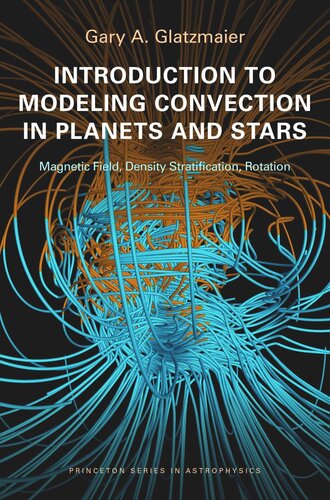
(Ebook) Introduction to Modeling Convection in Planets and Stars: Magnetic Field, Density Stratification, Rotation by Gary A. Glatzmaier ISBN 9781400848904

  • SKU: EBN-51955348
Zoomable Image
$ 32 $ 40 (-20%)

Status:

Available

4.8

35 reviews
Instant download (eBook) Introduction to Modeling Convection in Planets and Stars: Magnetic Field, Density Stratification, Rotation after payment.
Authors:Gary A. Glatzmaier
Pages:328 pages.
Year:2013
Editon:Course Book
Publisher:Princeton University Press
Language:english
File Size:7.52 MB
Format:pdf
ISBNS:9781400848904
Categories: Ebooks

Product desciption

(Ebook) Introduction to Modeling Convection in Planets and Stars: Magnetic Field, Density Stratification, Rotation by Gary A. Glatzmaier ISBN 9781400848904

This book provides readers with the skills they need to write computer codes that simulate convection, internal gravity waves, and magnetic field generation in the interiors and atmospheres of rotating planets and stars. Using a teaching method perfected in the classroom, Gary Glatzmaier begins by offering a step-by-step guide on how to design codes for simulating nonlinear time-dependent thermal convection in a two-dimensional box using Fourier expansions in the horizontal direction and finite differences in the vertical direction. He then describes how to implement more efficient and accurate numerical methods and more realistic geometries in two and three dimensions. In the third part of the book, Glatzmaier demonstrates how to incorporate more sophisticated physics, including the effects of magnetic field, density stratification, and rotation. Featuring numerous exercises throughout, this is an ideal textbook for students and an essential resource for researchers. Describes how to create codes that simulate the internal dynamics of planets and stars Builds on basic concepts and simple methods Shows how to improve the efficiency and accuracy of the numerical methods Describes more relevant geometries and boundary conditions Demonstrates how to incorporate more sophisticated physics
*Free conversion of into popular formats such as PDF, DOCX, DOC, AZW, EPUB, and MOBI after payment.

Related Products