
Most ebook files are in PDF format, so you can easily read them using various software such as Foxit Reader or directly on the Google Chrome browser.
Some ebook files are released by publishers in other formats such as .awz, .mobi, .epub, .fb2, etc. You may need to install specific software to read these formats on mobile/PC, such as Calibre.
Please read the tutorial at this link. https://ebooknice.com/page/post?id=faq
We offer FREE conversion to the popular formats you request; however, this may take some time. Therefore, right after payment, please email us, and we will try to provide the service as quickly as possible.
For some exceptional file formats or broken links (if any), please refrain from opening any disputes. Instead, email us first, and we will try to assist within a maximum of 6 hours.
EbookNice Team
Status:
Available4.9
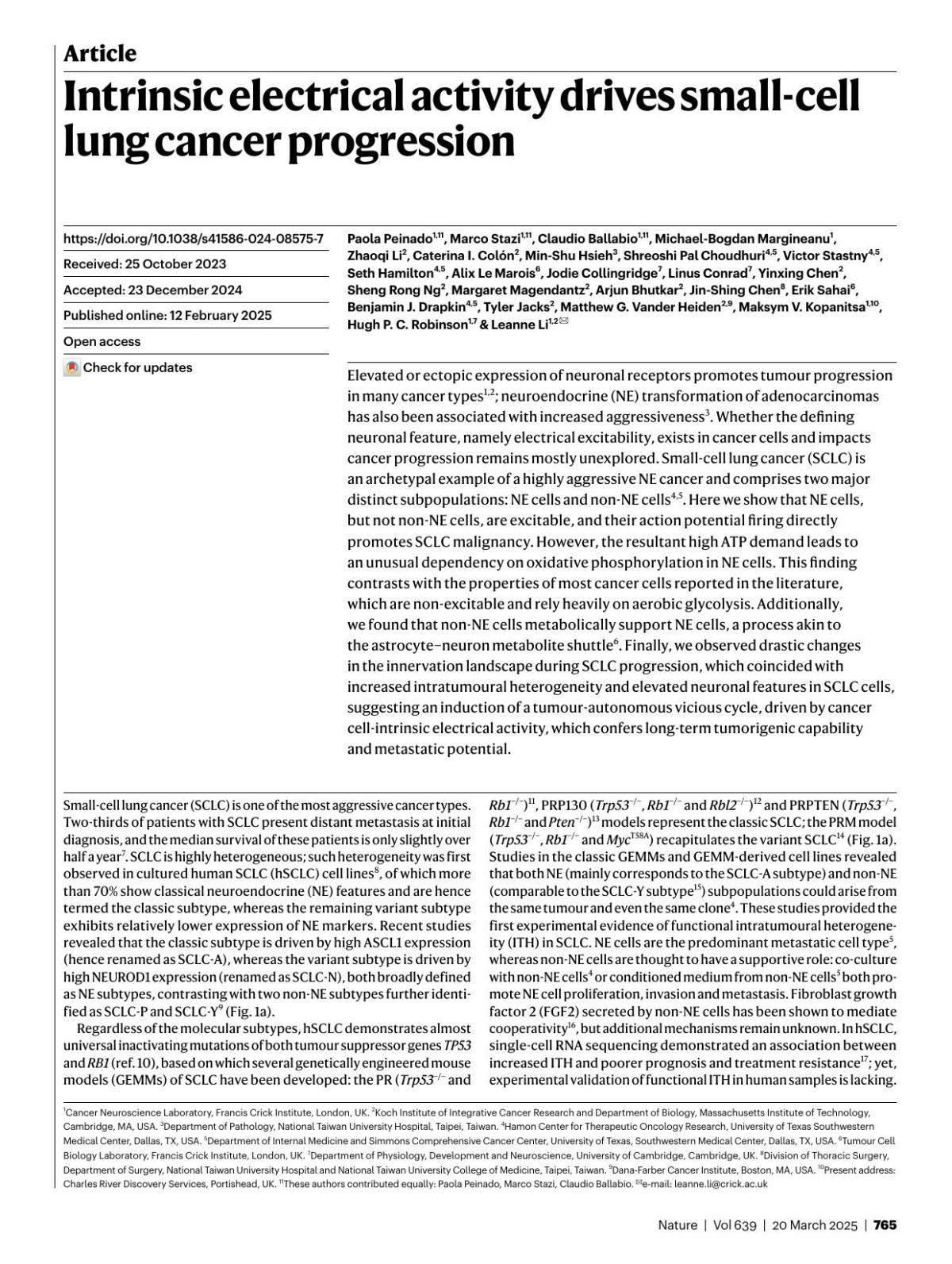
8 reviewsElevated or ectopic expression of neuronal receptors promotes tumour progression in many cancer types1,2; neuroendocrine (NE) transformation of adenocarcinomas has also been associated with increased aggressiveness3. Whether the defning neuronal feature, namely electrical excitability, exists in cancer cells and impacts cancer progression remains mostly unexplored. Small-cell lung cancer (SCLC) is an archetypal example of a highly aggressive NE cancer and comprises two major distinct subpopulations: NE cells and non-NE cells4,5. Here we show that NE cells, but not non-NE cells, are excitable, and their action potential fring directly promotes SCLC malignancy. However, the resultant high ATP demand leads to an unusual dependency on oxidative phosphorylation in NE cells. This fnding contrasts with the properties of most cancer cells reported in the literature, which are non-excitable and rely heavily on aerobic glycolysis. Additionally, we found that non-NE cells metabolically support NE cells, a process akin to the astrocyte–neuron metabolite shuttle6. Finally, we observed drastic changes in the innervation landscape during SCLC progression, which coincided with increased intratumoural heterogeneity and elevated neuronal features in SCLC cells, suggesting an induction of a tumour-autonomous vicious cycle, driven by cancer cell-intrinsic electrical activity, which confers long-term tumorigenic capability and metastatic potential.
4.8
5 reviews
4.4
9 reviews
4.7
22 reviews
4.5
13 reviews
4.9
6 reviews
4.3
41 reviews
4.8
19 reviews
4.6
37 reviews
4.6
27 reviews
4.5
16 reviews