Most ebook files are in PDF format, so you can easily read them using various software such as Foxit Reader or directly on the Google Chrome browser.
Some ebook files are released by publishers in other formats such as .awz, .mobi, .epub, .fb2, etc. You may need to install specific software to read these formats on mobile/PC, such as Calibre.
Please read the tutorial at this link. https://ebooknice.com/page/post?id=faq
We offer FREE conversion to the popular formats you request; however, this may take some time. Therefore, right after payment, please email us, and we will try to provide the service as quickly as possible.
For some exceptional file formats or broken links (if any), please refrain from opening any disputes. Instead, email us first, and we will try to assist within a maximum of 6 hours.
EbookNice Team
Status:
Available4.5
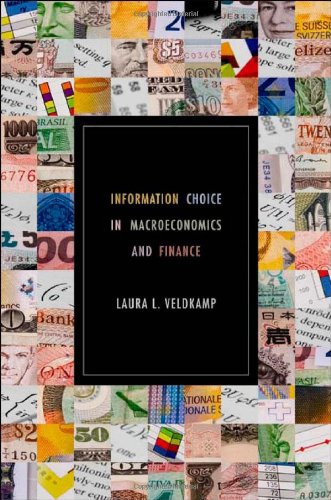
21 reviewsMost theories in economics and finance predict what people will do, given what they know about the world around them. But what do people know about their environments? The study of information choice seeks to answer this question, explaining why economic players know what they know--and how the information they have affects collective outcomes. Instead of assuming what people do or don't know, information choice asks what people would choose to know. Then it predicts what, given that information, they would choose to do. In this textbook, Laura Veldkamp introduces graduate students in economics and finance to this important new research.
The book illustrates how information choice is used to answer questions in monetary economics, portfolio choice theory, business cycle theory, international finance, asset pricing, and other areas. It shows how to build and test applied theory models with information frictions. And it covers recent work on topics such as rational inattention, information markets, and strategic games with heterogeneous information.
4.8
28 reviews
4.5
31 reviews


4.4
26 reviews