
Most ebook files are in PDF format, so you can easily read them using various software such as Foxit Reader or directly on the Google Chrome browser.
Some ebook files are released by publishers in other formats such as .awz, .mobi, .epub, .fb2, etc. You may need to install specific software to read these formats on mobile/PC, such as Calibre.
Please read the tutorial at this link. https://ebooknice.com/page/post?id=faq
We offer FREE conversion to the popular formats you request; however, this may take some time. Therefore, right after payment, please email us, and we will try to provide the service as quickly as possible.
For some exceptional file formats or broken links (if any), please refrain from opening any disputes. Instead, email us first, and we will try to assist within a maximum of 6 hours.
EbookNice Team
Status:
Available4.8
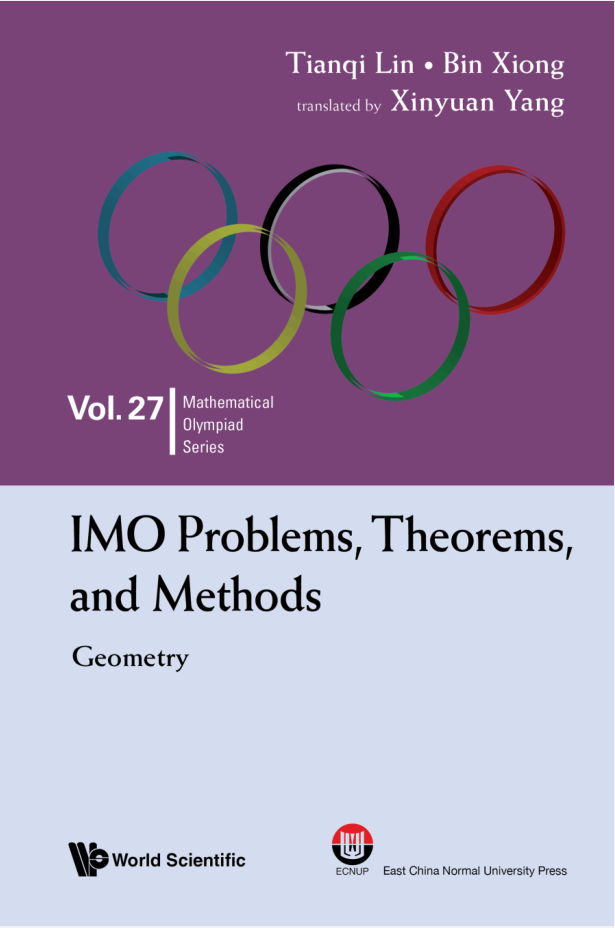
25 reviewsTianqi Lin and Bin Xiong's "IMO Problems, Theorems, and Methods: Geometry" is an exceptional and rigorous volume in the esteemed Mathematical Olympiad Series. It stands not as a gentle introduction, but as a sophisticated arsenal for the serious contestant aiming for the highest levels of competition, particularly the International Mathematical Olympiad (IMO).
The book's structure is its greatest strength. It masterfully departs from the traditional problem-solution format by first building a formidable theoretical foundation. The initial chapters systematically present a curated collection of powerful theorems and methods—from well-known gems like Pascal's Theorem and the Miquel point to more advanced techniques like spiral similarity and inversion. This approach equips the reader with the necessary tools before challenging them to apply this knowledge.
The problem selection is impeccable, featuring numerous classic and challenging IMO problems. Each problem is followed by a detailed, multi-layered solution that often demonstrates multiple approaches. The authors excel at highlighting the crucial "Aha!" moment in a proof, explaining the heuristic that leads to selecting a particular method over another. This focus on problem-solving strategy and the underlying thought process is what truly elevates the book from a mere solution manual to a masterclass in geometric reasoning.
While its concise style assumes a strong existing background in Euclidean geometry, for its intended audience—dedicated olympiad students and coaches—it is nothing short of invaluable. It is a dense, challenging, and ultimately profoundly rewarding work that will sharpen the skills of any mathematician seeking to conquer the world's hardest geometry problems.