
Most ebook files are in PDF format, so you can easily read them using various software such as Foxit Reader or directly on the Google Chrome browser.
Some ebook files are released by publishers in other formats such as .awz, .mobi, .epub, .fb2, etc. You may need to install specific software to read these formats on mobile/PC, such as Calibre.
Please read the tutorial at this link. https://ebooknice.com/page/post?id=faq
We offer FREE conversion to the popular formats you request; however, this may take some time. Therefore, right after payment, please email us, and we will try to provide the service as quickly as possible.
For some exceptional file formats or broken links (if any), please refrain from opening any disputes. Instead, email us first, and we will try to assist within a maximum of 6 hours.
EbookNice Team
Status:
Available4.9
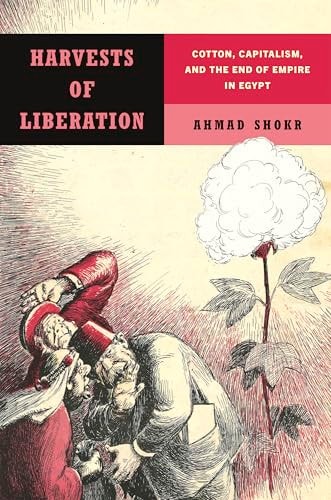
15 reviewsAhmad Shokr tells a story of decolonization through the lens of cotton, Egypt's prized export. He follows a range of actors—colonial advisors, nationalist leaders, agrarian reformers, merchant-financiers, landowners, and rural workers—whose interactions moved the levers of the cotton trade from institutions that facilitated accumulation on an imperial scale to new sites of control within the nation-state. Amidst depression and war, the transformation of Egypt's cotton economy prompted nationalists to embrace policies of land reform and industrialization and adopt a new conception of history. Ultimately, Shokr argues, these efforts set the stage for the construction of a postcolonial republic under Gamal Abdel Nasser, where national liberation became equated with national development.
"Harvests of Liberation recasts the history of decolonization in modern Egypt. Attentive to both contingency and conditions of possibility, Ahmad Shokr brilliantly assembles a panoply of actors, institutions, and ideas to center agrarian capitalism and historicize distinct scales of accumulation—imperial and national—through the prism of cotton. Essential reading for all historians of capitalism."
—Omnia El Shakry, Yale University
Ahmad Shokr is Associate Professor of History at Swarthmore College.
4.6
27 reviews
4.5
27 reviews
4.4
8 reviews

4.4
10 reviews
5.0
34 reviews
4.4
12 reviews