logo
Product categories

EbookNice.com

Most ebook files are in PDF format, so you can easily read them using various software such as Foxit Reader or directly on the Google Chrome browser.
Some ebook files are released by publishers in other formats such as .awz, .mobi, .epub, .fb2, etc. You may need to install specific software to read these formats on mobile/PC, such as Calibre.

Please read the tutorial at this link.  https://ebooknice.com/page/post?id=faq


We offer FREE conversion to the popular formats you request; however, this may take some time. Therefore, right after payment, please email us, and we will try to provide the service as quickly as possible.


For some exceptional file formats or broken links (if any), please refrain from opening any disputes. Instead, email us first, and we will try to assist within a maximum of 6 hours.

EbookNice Team
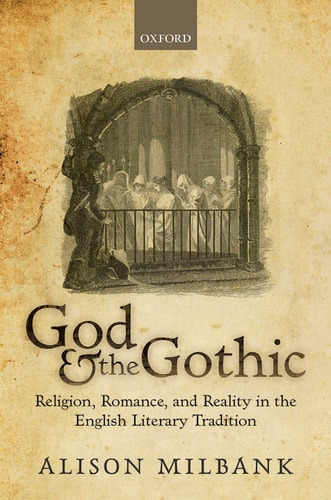
God and the Gothic: Religion, Romance, and Reality in the English Literary Tradition by Alison Milbank ISBN 9780198824466, 9780191863257, 0198824467, 0191863254 instant download

  • SKU: EBN-239746364
Zoomable Image
$ 32 $ 40 (-20%)

Status:

Available

0.0

0 reviews
Instant download (eBook) God and the Gothic: Religion, Romance, and Reality in the English Literary Tradition after payment.
Authors:Alison Milbank
Pages:365 pages
Year:2018
Publisher:Oxford University Press
Language:english
File Size:2.16 MB
Format:pdf
ISBNS:9780198824466, 9780191863257, 0198824467, 0191863254
Categories: Ebooks

Product desciption

God and the Gothic: Religion, Romance, and Reality in the English Literary Tradition by Alison Milbank ISBN 9780198824466, 9780191863257, 0198824467, 0191863254 instant download

God and the Gothic undertakes a complete reimagining of the Gothic literary canon to examine its engagement with theological ideas, tracing its origins to the apocalyptic critique of the Reformation female martyrs, and to the Dissolution of the Monasteries, now seen as usurpation of power by the authorities. A double gesture of repudiation and regret is evident in the consequent search for political, aesthetic, and religious mediation, which characterizes the aftermath of the Glorious Revolution and Whig Providential discourse. Part I interprets eighteenth-century Gothic novels in terms of this Whig debate about the true heir, culminating in Ann Radcliffe’s melancholic theology which uses distance and loss to enable a new mediation. Part II traces the origins of the doppelgänger in Calvinist anthropology and establishes that its employment by a range of Scottish writers offers a productive mode of subjectivity, necessary in a culture equally concerned with historical continuity. In Part III, Irish Gothic is shown to be seeking ways to mediate between Catholic and Protestant identities through models of sacrifice and ecumenism, while in Part IV, nineteenth-century Gothic is read as increasingly theological, responding to materialism by a project of re-enchantment. Ghost-story writers assert the metaphysical priority of the supernatural to establish the material world. Arthur Machen and other Order of the Golden Dawn members explore the double and other Gothic tropes as modes of mystical ascent, while raising the physical to the spiritual through magical control, and the M. R. James circle restores the sacramental and psychical efficacy of objects.

DOI: 10.1093/oso/9780198824466.001.0001
*Free conversion of into popular formats such as PDF, DOCX, DOC, AZW, EPUB, and MOBI after payment.

Related Products