
Most ebook files are in PDF format, so you can easily read them using various software such as Foxit Reader or directly on the Google Chrome browser.
Some ebook files are released by publishers in other formats such as .awz, .mobi, .epub, .fb2, etc. You may need to install specific software to read these formats on mobile/PC, such as Calibre.
Please read the tutorial at this link. https://ebooknice.com/page/post?id=faq
We offer FREE conversion to the popular formats you request; however, this may take some time. Therefore, right after payment, please email us, and we will try to provide the service as quickly as possible.
For some exceptional file formats or broken links (if any), please refrain from opening any disputes. Instead, email us first, and we will try to assist within a maximum of 6 hours.
EbookNice Team
Status:
Available0.0
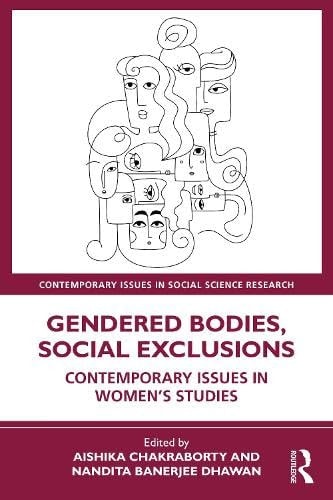
0 reviewsUsing feminist perspectives, the book challenges the hegemonic and patriarchal logic of heteronormativity by contextualizing verbal abuse, violence in the private sphere, and the tensions between women's and men's rights across the continuum of family, community, and state. The essays in this volume examine the (im)possibilities of creating violence-free, caring, and affordable living space on the one hand, and seek to understand the gendered experience of violence in the context of migration, as well as cultural and sexual labour on the other. In addition to interrogating the cultural taboos that restrict women's autonomy and rights, the essays prioritise a diverse range of voices, including those of dancers in the entertainment industry, sexual and gender minorities, urban poor populations living in slums, and disabled women. They also document and archive the academic agency of staff and students working to address injustices within higher education institutions.
Part of the Contemporary Issues in Social Science Research series, this volume will be of significant interest to scholars and researchers in gender studies, women’s studies, history, political science, sociology, social anthropology, development studies, law, media studies and South Asia studies.