
Most ebook files are in PDF format, so you can easily read them using various software such as Foxit Reader or directly on the Google Chrome browser.
Some ebook files are released by publishers in other formats such as .awz, .mobi, .epub, .fb2, etc. You may need to install specific software to read these formats on mobile/PC, such as Calibre.
Please read the tutorial at this link. https://ebooknice.com/page/post?id=faq
We offer FREE conversion to the popular formats you request; however, this may take some time. Therefore, right after payment, please email us, and we will try to provide the service as quickly as possible.
For some exceptional file formats or broken links (if any), please refrain from opening any disputes. Instead, email us first, and we will try to assist within a maximum of 6 hours.
EbookNice Team
Status:
Available5.0
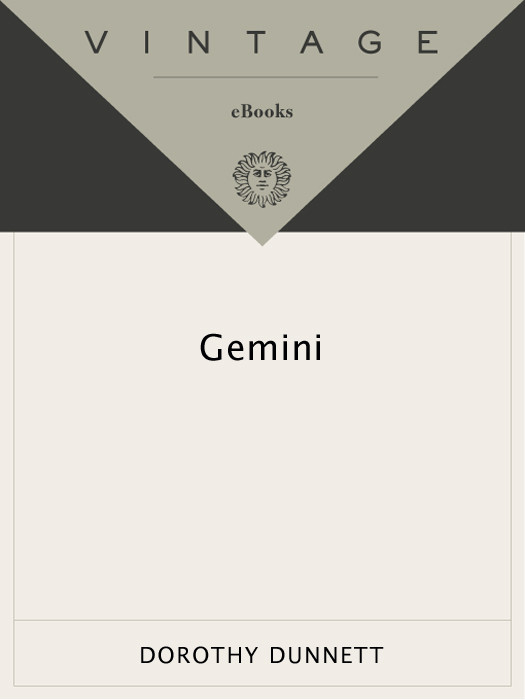
20 reviewsScotland, 1477: Nicholas de Fleury, former banker and merchant, has re-appeared in the land that, four years earlier, he had brought very close to ruin in the course of an intense commercial and personal war with secret enemies--and, indeed, with his clever wife Gelis.
Now the opportunity for redemption is at hand, but Nicholas soon finds himself pursuing his objectives amid a complex, corrosive power struggle centering on the Scottish royal family but closely involving the powerful merchants of Edinburgh, the gentry, the clergy, the English (ever seeking an excuse to pounce on their neighbor to the north), the French, the Burgundians. His presence soon draws Gelis and their son Jodi to Scotland, as well as Nicholas's companions and subordinates in many a past endeavor--Dr. Tobias and his wife Clmence, Mick Crackbene, John le Grant, and Andro Wodman among them. Here, too, Nicholas meets again with others who have had an influence, for good or evil, in his life: King James III of Scotland and his rebellious siblings; the St. Pols: Jordan, Simon, and young Henry; Mistress Bel of Cuthilgurdy and David de Salmeton; Anselm Adorne and Kathi his niece. Caught up in, and sometimes molding, the course of great events, Nicholas exhibits by turns the fierce silence with which he masks his secrets, and the explosive, willful gaiety that binds men, women, and children to him. And as the secrets of his birth and heritage come to light, Nicholas has to decide whether he desires to establish a future in Scotland for himself and his family, and a home for his descendants.
Gemini brings to a dazzling conclusion Dorothy Dunnett's House of Niccol series (synopsized in this volume), in which this peerless novelist has vividly re-created the dramatic, flamboyant world of the early Renaissance in historical writing of scrupulous authenticity and in the entrancing portrait of her visionary hero. Now, in a book infused with wit and poetry, emotion and humor, action and mystery, she brings Nicholas de Fleury at last to choose his heart's home, where he can exercise all his skills as an advisor to kings and statesmen, as a husband, a father, and a leader of men--and where, perhaps, we will discern a connection between him and that other remarkable personality, Francis Crawford, whose exploits Lady Dunnett recorded so memorably in The Lymond Chronicles.
Amazon.com ReviewA marvel of storytelling and historical imagination, Gemini just may be Dorothy Dunnett's pièce de résistance. This culminating installment of the House of Niccolò series is set in Scotland in 1477--and more specifically, in the world of international trade and commerce, which can deal fatal blows to those unfamiliar with its intricacies. When Nicholas de Fleury returns to Edinburgh after a four-year absence, speculation runs rampant about why he closed all his ventures in Scotland and deserted his friends. Struggling to fend off various assassination attempts, Nicholas rejoins the fledgling court of young King James III. Yet he soon discovers that the squabbles between the monarch and his double-dealing siblings are no less dangerous than the intrigues he has left behind. Dunnett recounts the whole story with typically ornate and pungent prose, and delineates her massive cast of characters with a Holbein-like attention to physical detail.
Nicholas in particular is a splendidly rounded creation. And by placing him at the center of her sprawling narrative, Dunnett helps us to navigate the many convolutions of the plot. Her female characters, too, are distinctive. However, it is the sheer breadth of Dunnett's ambitions that takes the breath away, along with her exhilarating set pieces:
The sword point bit into his cloak and grated across the cuirass underneath, bringing the swordsman close for a moment, his face blank with surprise. Nicholas kicked him under the chin, so that he blundered back and hit someone else, while Nicholas dragged out his own sword. The horse wasn't his, but it was a powerful beast and alarmed enough to be ready to rear. Nicholas wrapped the reins around one wrist and hauled, using the bit to drag the horse threshing onto its haunches, and then allowing it to plunge forward again.
En garde, Dunnett fans! Those who have made the long trek with our sword-brandishing hero will find this a perfectly orchestrated finale. --Barry Forshaw
From Publishers WeeklyFew literary projects these days rival in scope Dunnett's dazzling House of Niccol , a series of well-researched historical novels (each running over 500 pages) that propels its 15th-century hero across Turkey, Poland, Italy, France, Flanders, the Sahara desert and Scotland in search of gold, legitimacy, glory and family. This eighth and final installment finds the former banker Nicholas de Fleury back in Edinburgh, grappling with a whirlwind of royal machinations, business deals, family vendettas and empire-building challenges. Despite an absence of four years, the charming, shrewd Nicholas quickly insinuates himself back into the court of King James Stewart III, striking up a friendship with James's rebellious brother Sandy and spying for the king's coterie of advisors. Meanwhile, Nicholas must keep watchful eye on the wealthy St. Pol family, which has long hated him for claiming to be Simon de St. Pol's son. (The family insists he's the bastard child of Simon's promiscuous ex-wife.) Will the tempestuous adolescent Henry de St. Pol discover that he is Nicholas's child, not Simon's? Will France help Sandy topple the weak King James? Will the nefarious David de Salmeton, a religious procurator, be able to assassinate Nicholas? Can Nicholas and his wife, Gelis, maintain their hard-won happiness? These are just a few of the questions that underlie this intrigue-ridden epic. Considering the vast cast of characters (a list of them runs 13 tightly spaced pages), it's remarkably easy for the neophyte to enter Dunnett's adventurous world, for the author does an outstanding job of keeping each personality distinct and each of the innumerable subplots coherent. But despite the bounty of suspenseful sword fights, feasts, battles and closed-door negotiations, the real pleasure here lies in the reams of artful repartee, which can rival Jane Austen's for wit and subtlety. Despite a few minor flaws (the wives are too good, the peasant girls too compliant, a few historical distortions), Dunnett's work sits triumphantly at the top of a crowded field: it is a sensational, emotionally resonant epic. Introduction by Judith Wilt. (July)
Copyright 2000 Reed Business Information, Inc.
4.4
35 reviews
4.8
22 reviews
4.5
9 reviews
4.7
9 reviews
5.0
28 reviews
4.7
23 reviews



4.8
14 reviews