
Most ebook files are in PDF format, so you can easily read them using various software such as Foxit Reader or directly on the Google Chrome browser.
Some ebook files are released by publishers in other formats such as .awz, .mobi, .epub, .fb2, etc. You may need to install specific software to read these formats on mobile/PC, such as Calibre.
Please read the tutorial at this link. https://ebooknice.com/page/post?id=faq
We offer FREE conversion to the popular formats you request; however, this may take some time. Therefore, right after payment, please email us, and we will try to provide the service as quickly as possible.
For some exceptional file formats or broken links (if any), please refrain from opening any disputes. Instead, email us first, and we will try to assist within a maximum of 6 hours.
EbookNice Team
Status:
Available0.0
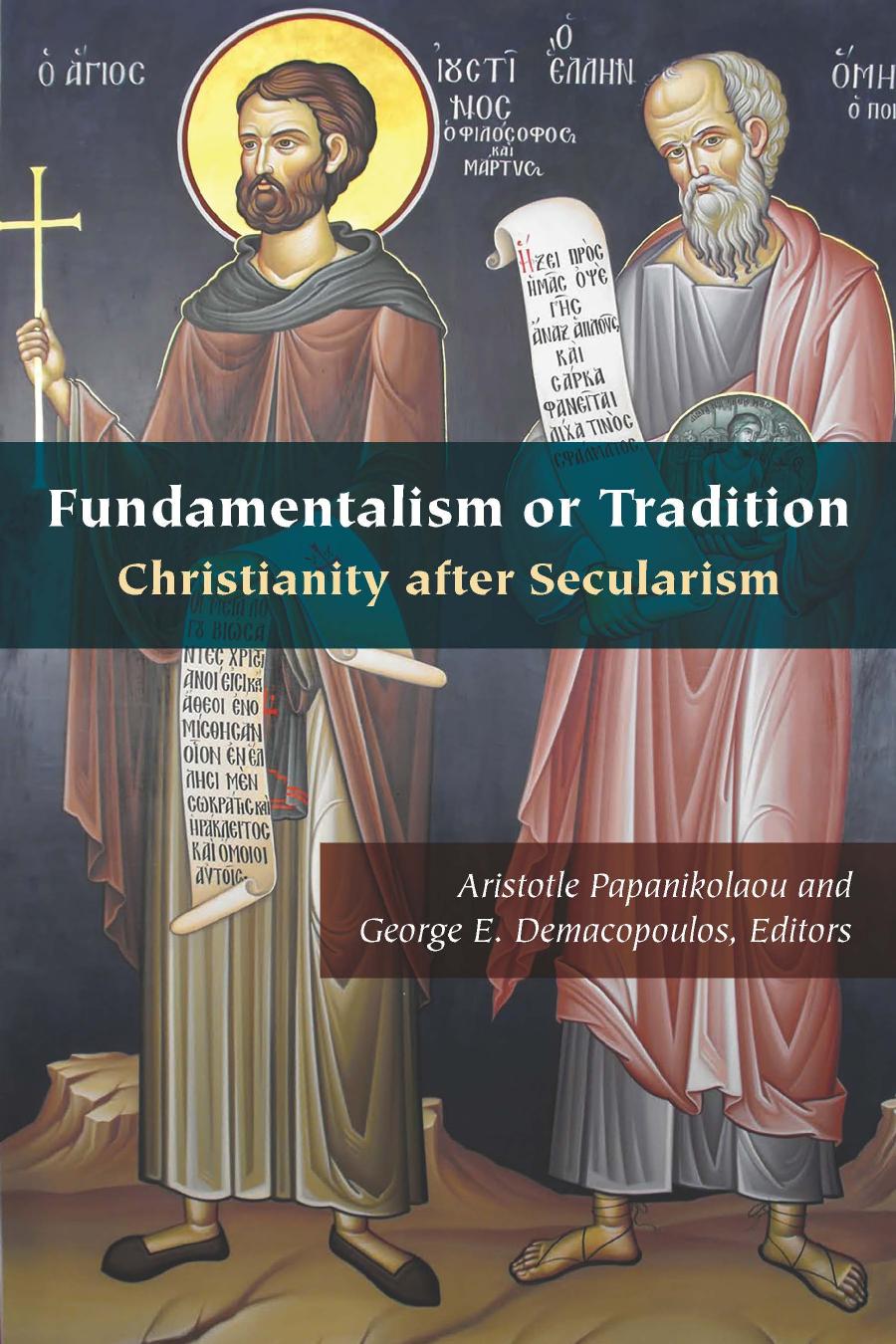
0 reviewsTraditional, secular, and fundamentalist―all three categories are contested, yet in their contestation they shape our sensibilities and are mutually implicated, the one with the others. This interplay brings to the foreground more than ever the question of what it means to think and live as Tradition. The Orthodox theologians of the twentieth century, in particular, have emphasized Tradition not as a dead letter but as a living presence of the Holy Spirit. But how can we discern Tradition as living discernment from fundamentalism? What does it mean to live in Tradition when surrounded by something like the “secular”? These essays interrogate these mutual implications, beginning from the understanding that whatever secular or fundamentalist may mean, they are not Tradition, which is historical, particularistic, in motion, ambiguous and pluralistic, but simultaneously not relativistic.
Contributors: R. Scott Appleby, Nikolaos Asproulis, Brandon Gallaher, Paul J. Griffiths, Vigen Guroian, Dellas Oliver Herbel, Edith M. Humphrey, Slavica Jakelić, Nadieszda Kizenko, Wendy Mayer, Brenna Moore, Graham Ward, Darlene Fozard Weaver
A rich collection of essays examining the complex relation between tradition, secularization and fundamentalism within Orthodox and Catholic Christianity. It illuminates the varied forms of renewal and reformulation of Orthodox Christian thought in our contemporary global age." ---José Casanova, Georgetown University
Christian tradition eludes precise definitions and comprehensive formulations for the simple reason that it is a living thing, encompassing every dimension of spiritual life and aspiration. Religious fundamentalism emerges only when tradition has begun to die or has suffered assault. The secular age is a crisis for Christian communities not merely because it entails a cultural rejection of Christian tradition, but because it corrupts the tradition from within with the beguiling but deeply destructive “fundamentalist option.” The e
4.8
22 reviews
4.8
39 reviews
4.5
40 reviews
4.9
7 reviews
4.5
18 reviews
4.4
18 reviews
4.6
36 reviews