
Most ebook files are in PDF format, so you can easily read them using various software such as Foxit Reader or directly on the Google Chrome browser.
Some ebook files are released by publishers in other formats such as .awz, .mobi, .epub, .fb2, etc. You may need to install specific software to read these formats on mobile/PC, such as Calibre.
Please read the tutorial at this link. https://ebooknice.com/page/post?id=faq
We offer FREE conversion to the popular formats you request; however, this may take some time. Therefore, right after payment, please email us, and we will try to provide the service as quickly as possible.
For some exceptional file formats or broken links (if any), please refrain from opening any disputes. Instead, email us first, and we will try to assist within a maximum of 6 hours.
EbookNice Team
Status:
Available0.0
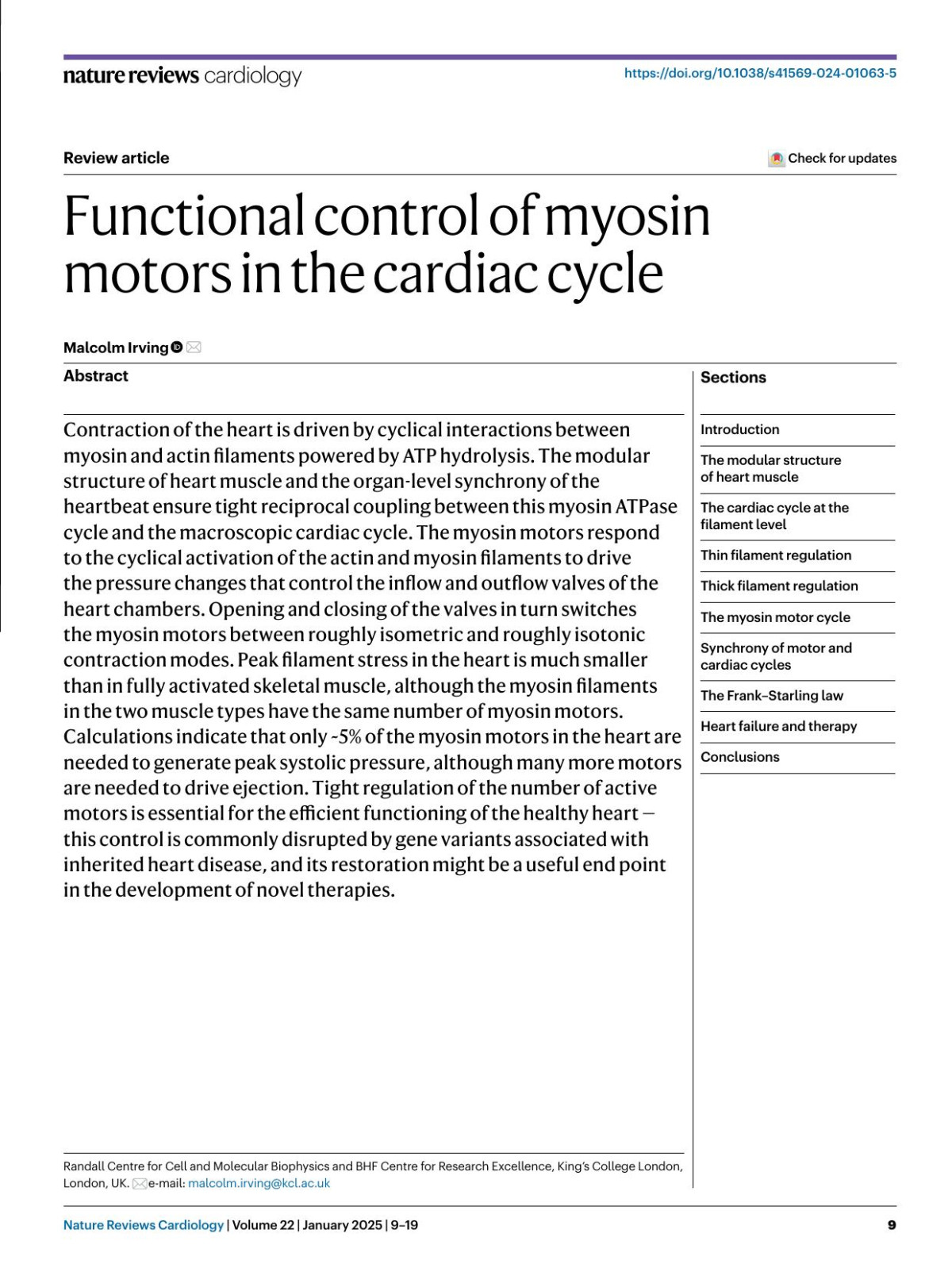
0 reviewsContraction of the heart is driven by cyclical interactions between Introductionmyosin and actin flaments powered by ATP hydrolysis. The modular The modular structure structure of heart muscle and the organ-level synchrony of the of heart muscleheartbeat ensure tight reciprocal coupling between this myosin ATPase The cardiac cycle at the filament levelcycle and the macroscopic cardiac cycle. The myosin motors respond to the cyclical activation of the actin and myosin flaments to drive Thin filament regulationthe pressure changes that control the infow and outfow valves of the Thick filament regulationheart chambers. Opening and closing of the valves in turn switches The myosin motor cyclethe myosin motors between roughly isometric and roughly isotonic Synchrony of motor and contraction modes. Peak flament stress in the heart is much smaller cardiac cyclesthan in fully activated skeletal muscle, although the myosin flaments The Frank–Starling lawin the two muscle types have the same number of myosin motors. Heart failure and therapyCalculations indicate that only ~5% of the myosin motors in the heart are needed to generate peak systolic pressure, although many more motors Conclusionsare needed to drive ejection. Tight regulation of the number of active motors is essential for the efcient functioning of the healthy heart — this control is commonly disrupted by gene variants associated with inherited heart disease, and its restoration might be a useful end point in the development of novel therapies.



4.8
7 reviews
4.8
24 reviews


4.3
34 reviews
4.4
11 reviews
4.3
6 reviews
4.8
15 reviews