
Most ebook files are in PDF format, so you can easily read them using various software such as Foxit Reader or directly on the Google Chrome browser.
Some ebook files are released by publishers in other formats such as .awz, .mobi, .epub, .fb2, etc. You may need to install specific software to read these formats on mobile/PC, such as Calibre.
Please read the tutorial at this link. https://ebooknice.com/page/post?id=faq
We offer FREE conversion to the popular formats you request; however, this may take some time. Therefore, right after payment, please email us, and we will try to provide the service as quickly as possible.
For some exceptional file formats or broken links (if any), please refrain from opening any disputes. Instead, email us first, and we will try to assist within a maximum of 6 hours.
EbookNice Team
Status:
Available0.0
0 reviewsISBN 10: 1498728952
ISBN 13: 9781498728959
Author: Christophe Champod, Chris Lennard, Pierre Margot, Milutin Stoilovic
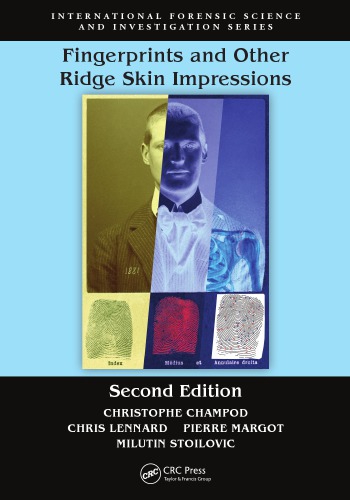
Since its publication, the first edition of Fingerprints and Other Ridge Skin Impressions has become a classic in the field. This second edition is completely updated, focusing on the latest technology and techniques—including current detection procedures, applicable processing and analysis methods—all while incorporating the expansive growth of literature on the topic since the publication of the original edition. Forensic science has been challenged in recent years as a result of errors, courts and other scientists contesting verdicts, and changes of a fundamental nature related to previous claims of infallibility and absolute individualization. As such, these factors represent a fundamental change in the way training, identifying, and reporting should be conducted. This book addresses these questions with a clear viewpoint as to where the profession—and ridge skin identification in particular—must go and what efforts and research will help develop the field over the next several years. The second edition introduces several new topics, including Discussion of ACE-V and research results from ACE-V studies Computerized marking systems to help examiners produce reports New probabilistic models and decision theories about ridge skin evidence interpretation, introducing Bayesnet tools Fundamental understanding of ridge mark detection techniques, with the introduction of new aspects such as nanotechnology, immunology and hyperspectral imaging Overview of reagent preparation and application Chapters cover all aspects of the subject, including the formation of friction ridges on the skin, the deposition of latent marks, ridge skin mark identification, the detection and enhancement of such marks, as well the recording of fingerprint evidence. The book serves as an essential reference for practitioners working in the field of fingermark detection and identification, as well as legal and police professionals and anyone studying forensic science with a view to understanding current thoughts and challenges in dactyloscopy.
Chapter 1 Friction Ridge Skin and Prints
1.1 Structure of the Skin
1.2 Morphogenesis of Friction Ridge Skin: Primary Dermal Ridge Development
1.3 Factors Affecting the General Pattern and the Configuration of Minutiæ
1.4 Morphogenesis of Friction Ridge Skin: Secondary Dermal Ridge Development and Dermal Papillae
1.5 Other Features than Major Epidermal Papillary Lines on Friction Ridge Skin
1.6 Abnormal Friction Ridge Skin
1.7 Summary of the Stages of Friction Ridge Skin Morphogenesis
1.8 Relationship with Permanency and Alterations
1.9 Relationship with Selectivity
References
Chapter 2 Friction Ridge Identification Process
2.1 Analysis
2.1.1 Purpose of the Analysis
2.1.2 Factors Considered during Analysis
2.1.3 Documentation of the Analysis
2.1.4 Quality Metrics for Marks
2.1.5 Decisions Reached Following Analysis
2.1.6 Variability in the Conclusions Reached Following the Analysis Phase
2.2 Search Heuristics to Facilitate the Comparison
2.2.1 Predicting the Finger Number of the Hand at the Source of a Mark
2.2.2 Predicting the Source Area of the Finger or the Palm
2.2.3 Predicting Gender and Other Characteristics of the Donor
2.3 Comparison
2.4 Evaluation
2.4.1 The Weight to Be Assigned to the Observations
2.4.2 Decisions Reached Following Evaluation
2.4.2.1 Identification
2.4.2.2 Exclusion
2.4.2.3 Inconclusive
2.4.3 Left, Touched or Handled: The Hierarchy of Propositions
2.4.4 Reliability of the Evaluation Process
2.5 Verification
2.6 How Many Similarities Are Required for an Identification?
2.6.1 Historical Milestones
2.6.2 Current Views and Practices
2.6.2.1 Predetermined Minimum Number of Minutiæ: An Empirical Standard
2.6.2.2 No Predetermined Numerical Standard: A Holistic Approach
2.7 Probability Models Applied to Fingermarks
2.8 An LR-Based Reporting Scheme
References
Chapter 3 Chemistry, Light, and Photography
3.1 Standard Weights and Measures
3.2 Chemistry Theory
3.3 Light Theory
3.3.1 Introduction
3.3.2 Wave Theory
3.3.3 Particle Theory
3.3.4 White Light and Colored Light
3.3.5 Spectral Sensitivity of the Human Eye
3.3.6 Absorption and Reflection of Light
3.3.7 Polarization of Light
3.3.8 Photoluminescence
3.3.9 Optical Filters
3.3.10 Absorption Mode
3.3.11 Diffused Reflection Mode
3.3.12 Episcopic Coaxial Illumination
3.3.13 Photoluminescence Mode
3.3.14 Polarized Light Examinations
3.3.15 Ultraviolet Illumination Techniques
3.4 Forensic Light Sources
3.4.1 Conventional Light Sources
3.4.2 LED-Based Light Sources
3.4.3 FLS Requirements
3.5 Photography
3.5.1 Introduction
3.5.2 Basic Image Formation and Capture
3.5.3 Digital Cameras
3.5.3.1 Image Sensors
3.5.3.2 Digital Single-Lens Reflex Camera
3.5.3.3 Camera Lenses
3.5.3.4 Camera Settings
3.5.3.5 Sensitivity and Noise
3.5.3.6 Choosing a Digital Camera
3.5.3.7 Photography in the Luminescence Mode
3.6 Digital Imaging
3.6.1 Introduction
3.6.2 Data Compression and File Formats
3.6.3 Image Processing Techniques
3.6.4 Legal Requirements
3.7 Hyperspectral Imaging
References
Chapter 4 Fingermark Detection and Enhancement
4.1 Types of Fingermarks
4.1.1 Visible Fingermarks
4.1.2 Latent Fingermarks
4.2 Surface Characteristics
4.2.1 Porous Surfaces
4.2.2 Nonporous Surfaces
4.2.3 Semiporous Surfaces
4.3 Optical Detection Techniques
4.3.1 Absorption
4.3.2 Luminescence
4.3.3 Diffused Reflection
4.3.4 Ultraviolet Imaging
4.3.5 Near-Infrared Imaging
4.3.6 Visible Hyperspectral Imaging
4.4 Detection Techniques for Porous Surfaces
4.4.1 Ninhydrin
4.4.1.1 General
4.4.1.2 Ninhydrin Formulations
4.4.1.3 Secondary Metal Salt Treatment
4.4.2 Ninhydrin Analogs
4.4.3 Diazafluorenone
4.4.4 Indanedione
4.4.5 Other Amino Acid Reagents
4.4.6 Physical Developer
4.4.7 Lipid Stains
4.4.7.1 Oil Red O
4.4.7.2 Nile Red
4.4.8 Recommended Detection Sequence
4.5 Detection Techniques for Nonporous Surfaces
4.5.1 Fingerprint Powders
4.5.2 Powder Suspensions
4.5.2.1 Small Particle Reagent
4.5.2.2 Thick Powder Suspensions
4.5.3 Cyanoacrylate Fuming
4.5.3.1 Conventional Cyanoacrylate Fuming
4.5.3.2 Portable Fuming Systems
4.5.3.3 Vacuum Cyanoacrylate Fuming
4.5.3.4 Enhancement of CA-Developed Marks
4.5.4 Vacuum Metal Deposition
4.5.5 Recommended Detection Sequence
4.6 Nanoparticle-Based Detection Methods
4.6.1 Nanopowders
4.6.2 Multimetal Deposition
4.6.3 Single-Metal Deposition
4.6.4 Quantum Dots
4.6.5 Silica-Based Nanocomposites
4.6.6 Health and Safety Concerns
4.7 Miscellaneous Techniques
4.7.1 Iodine–Benzoflavone
4.7.2 Dimethylaminocinnamaldehyde
4.7.3 Ruthenium Tetroxide
4.7.4 Silver Nitrate
4.7.5 Sudan Black
4.8 Novel Approaches to Fingermark Detection
4.8.1 Upconverters
4.8.2 Immunology: Antibodies and Aptamers
4.8.3 Mass Spectrometric Imaging
4.9 Fingermark Detection on Semiporous Surfaces
4.10 Fingermark Detection on Human Skin
4.10.1 General
4.10.2 Powdering
4.10.3 Transfer Techniques
4.10.4 Iodine Fuming
4.10.5 Cyanoacrylate
4.10.6 Ruthenium Tetroxide
4.10.7 Fingermarks in Blood on Skin
4.10.8 Recommended Detection Sequence
4.11 Fingermark Detection on Adhesive Surfaces
4.11.1 Gentian Violet
4.11.2 Powder Suspensions
4.11.3 Cyanoacrylate Fuming
4.11.4 Miscellaneous Techniques
4.11.5 Recommended Detection Sequence
4.12 Fingermark Detection on Thermal Paper
4.13 Fingermark Detection on Fabrics
4.14 Fingermark Detection on Firearms and Cartridge Cases
4.14.1 Cyanoacrylate Fuming
4.14.2 Gun Blue
4.14.3 Miscellaneous Techniques
4.14.4 Recommended Detection Sequence
4.15 Enhancement of Fingermarks in Blood
4.15.1 Optical Techniques
4.15.2 Protein Stains
4.15.3 Diaminobenzidine
4.15.4 Miscellaneous Techniques
4.15.5 Recommended Detection Sequence
4.16 Fingermark Detection at the Crime Scene
4.17 Effects of Fingermark Detection Techniques on Subsequent Forensic Analyses
4.17.1 Document Examination
4.17.2 DNA Profiling
4.17.3 Recovery and Analysis of Explosive Residues
4.18 Standards for Fingermark Detection Research
4.19 Health and Safety Considerations
4.19.1 Hazardous Substances
4.19.2 Light Sources
References
Chapter 5 Issues Related to the Exploitation of Fingerprints and Fingermarks
5.1 Terminology
5.2 Use of Fingerprints
5.2.1 Print-to-Print Comparison
5.2.2 Trace-to-Record or Trace-to-Print Comparison
5.2.3 Trace-to-Trace Comparison
5.2.4 Combining Evidence Types
5.2.5 Identification Decision in Other Forums than the Court
5.3 Relevance
5.4 Age Estimation of Marks
5.5 Forged and Fabricated Fingerprint Evidence
5.5.1 Forgeries Committed by Law Enforcement Personnel
5.5.2 Forgeries Committed by Criminals
5.5.3 Detection of Forged Marks
5.6 Errors
5.6.1 Error Types
5.6.2 Quality Assurance
5.6.2.1 Fingerprint Examiner
5.6.2.2 Processes
5.6.2.3 The Product
References
Chapter 6 Conclusions
6.1 Fingermark Detection
6.2 Fingerprint Identification
fingerprints and other ridge skin impressions
forensic fingerprint identification book
champod lennard margot fingerprints
ridge skin impressions forensic science
fingerprint evidence textbook
Tags: Fingerprints, skin impressions, Christophe Champod, Chris Lennard, Pierre Margot, Milutin



4.6
12 reviews
4.7
9 reviews

4.7
14 reviews

4.4
12 reviews
4.7
38 reviews