logo
Product categories

EbookNice.com

Most ebook files are in PDF format, so you can easily read them using various software such as Foxit Reader or directly on the Google Chrome browser.
Some ebook files are released by publishers in other formats such as .awz, .mobi, .epub, .fb2, etc. You may need to install specific software to read these formats on mobile/PC, such as Calibre.

Please read the tutorial at this link.  https://ebooknice.com/page/post?id=faq


We offer FREE conversion to the popular formats you request; however, this may take some time. Therefore, right after payment, please email us, and we will try to provide the service as quickly as possible.


For some exceptional file formats or broken links (if any), please refrain from opening any disputes. Instead, email us first, and we will try to assist within a maximum of 6 hours.

EbookNice Team
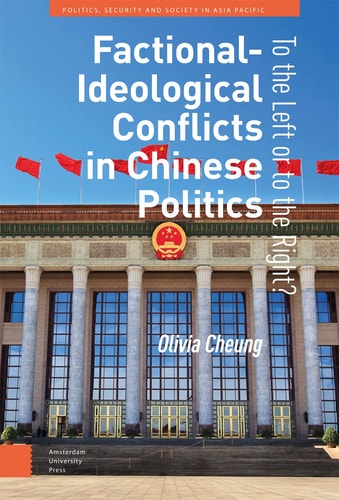
Factional-Ideological Conflicts in Chinese Politics by Olivia Cheung ISBN 9789463720298, 9789048557080, 9463720294, 9048557089 instant download

  • SKU: EBN-239585470
Zoomable Image
$ 32 $ 40 (-20%)

Status:

Available

0.0

0 reviews
Instant download (eBook) Factional-Ideological Conflicts in Chinese Politics after payment.
Authors:Olivia Cheung
Pages:191 pages
Year:2023
Edition:1
Publisher:Amsterdam University Press
Language:english
File Size:2.85 MB
Format:epub
ISBNS:9789463720298, 9789048557080, 9463720294, 9048557089
Categories: Ebooks

Product desciption

Factional-Ideological Conflicts in Chinese Politics by Olivia Cheung ISBN 9789463720298, 9789048557080, 9463720294, 9048557089 instant download

This book reconstructs the factional-ideological conflicts surrounding socialist transformation and political reform in China that were played out through 'factional model-making', a norm-bound mechanism for elites of the Chinese Communist Party to contest the party line publicly. Dazhai, Anhui, Nanjie, Shekou, Shenzhen, Guangdong and Chongqing were cultivated into factional models by party elites before Xi Jinping came to power in 2012. 
-
Although factional model-making undermined party discipline, it often did not threaten regime security and even contributed to regime resilience through strengthening collective leadership and other means. This follows that the suppression of factional model-making under Xi might undermine longer-term regime resilience. However, Xi believes that regime security rests on his strongman rule, not any benefits that factional model-making may contribute. It is in this spirit that he grooms Zhejiang into a party model for his policy programme of common prosperity, which is designed to legitimize his vision of socialism.
*Free conversion of into popular formats such as PDF, DOCX, DOC, AZW, EPUB, and MOBI after payment.

Related Products