Most ebook files are in PDF format, so you can easily read them using various software such as Foxit Reader or directly on the Google Chrome browser.
Some ebook files are released by publishers in other formats such as .awz, .mobi, .epub, .fb2, etc. You may need to install specific software to read these formats on mobile/PC, such as Calibre.
Please read the tutorial at this link. https://ebooknice.com/page/post?id=faq
We offer FREE conversion to the popular formats you request; however, this may take some time. Therefore, right after payment, please email us, and we will try to provide the service as quickly as possible.
For some exceptional file formats or broken links (if any), please refrain from opening any disputes. Instead, email us first, and we will try to assist within a maximum of 6 hours.
EbookNice Team
Status:
Available0.0
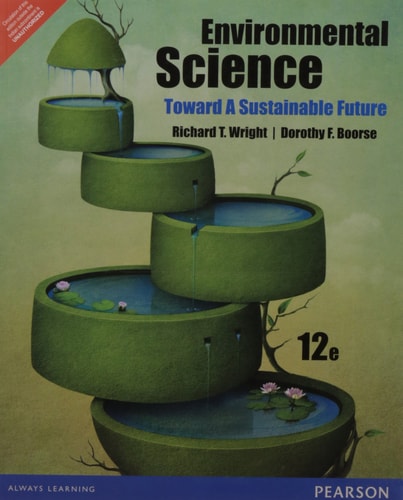
0 reviewsFor introductory courses in Environmental Science, Environmental Studies, and Environmental Biology.
With dramatically revised illustrations, the Twelfth Edition of Environmental Science: Toward a Sustainable Future is even more student-friendly while retaining the currency and accuracy that has made Wright/Boorse a best seller. The text and media program continue to help you understand the science behind environmental issues and what you can do to build a more sustainable future, with further exploration of the hallmark core themes: Science, Sustainability, and Stewardship.
\"With dramatically revised illustrations and an expansion of Mastering Environmental Science activities, the Twelfth Edition of Environmental Science: Toward a Sustainable Future is even more student-friendly while retaining the currency and accuracy that has made Wright/Boorse a best seller. The text and media program continue to help students understand the science behind environmental issues and what they can do to build a more sustainable future, with further exploration of the hallmark core themes: Science, Sustainability, and Stewardship\". --Publisher This text focuses on the question \"What will it take to move our civilization toward a long-term sustainable relationship with the natural world?\" Its goal is to engage and inform students so they can critically evaluate environmental issues and make informed decisions about their environment.
4.9
40 reviews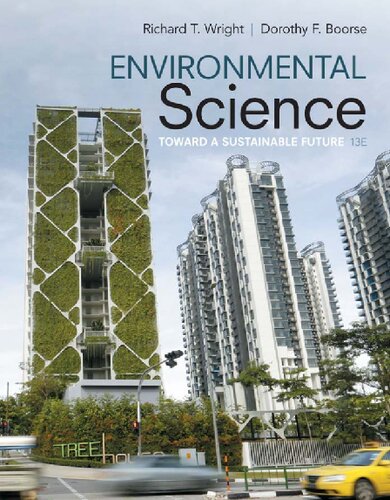
4.5
36 reviews
4.6
17 reviews
4.5
19 reviews
4.5
11 reviews
4.5
15 reviews
4.6
12 reviews