Most ebook files are in PDF format, so you can easily read them using various software such as Foxit Reader or directly on the Google Chrome browser.
Some ebook files are released by publishers in other formats such as .awz, .mobi, .epub, .fb2, etc. You may need to install specific software to read these formats on mobile/PC, such as Calibre.
Please read the tutorial at this link. https://ebooknice.com/page/post?id=faq
We offer FREE conversion to the popular formats you request; however, this may take some time. Therefore, right after payment, please email us, and we will try to provide the service as quickly as possible.
For some exceptional file formats or broken links (if any), please refrain from opening any disputes. Instead, email us first, and we will try to assist within a maximum of 6 hours.
EbookNice Team
Status:
Available4.8
24 reviews
ISBN 10: 1306207096
ISBN 13: 9781306207096
Author: Dawud Fadai, Helmut Kohlert, Hans Ulrich Sachs
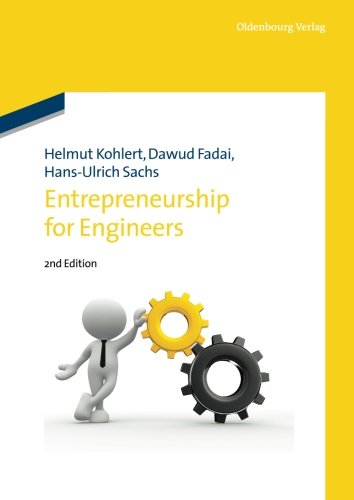
The objective of this book is to provide future entrepreneurs in start-up companies, medium-sized enterprises, and corporations with knowledge and a set of tools that they can immediately use to develop their entrepreneurial mindset. The book has a clear focus on the needs of engineers; it covers business cases, experiences from entrepreneurs, and examples from industry to optimize the learning benefit.
1 The Spirit of Entrepreneurship
1.1 Entrepreneurship Today
1.1.1 Entrepreneurship – Term out of Fashion or Imperative?
1.1.2 The Process of Entrepreneurship
1.2 The Entrepreneurial Ecosystem
1.2.1 The Economic Relevance of Entrepreneurship
1.2.2 Societal Entrepreneurial Ecosystem
1.2.3 Personal Entrepreneurial Ecosystem
1.3 The Entrepreneurial Mind
1.3.1 Critical Success Factors to be an Entrepreneur
1.3.2 Components of an Entrepreneurial Mindset
1.3.3 Possibility of Teaching an Entrepreneurial Mind
1.4 Entrepreneurship meets Innovation
1.4.1 Invention, Innovation, and Imitation
1.4.2 Entrepreneurs in the Innovation Process
1.4.3 The Entrepreneur and the Commercialization of Innovations
2 Entrepreneurship Reconsidered
2.1 The Team as Hero
2.1.1 Importance of Teams and the Special Role of the CEO
2.1.2 Assembling the Management Team
2.2 Collaboration with Others
2.2.1 Cooperation to Achieve Common Objectives
2.2.2 Importance of Networks
2.3 Diagnosing the Internal Capabilities
2.3.1 Knowing the own Strengths
2.3.2 Knowing the Key for Market and Customer Access
2.3.3 Appropriability and Complementary Assets
2.4 Understanding the Industry Dynamics
2.4.1 Indicators for Upcoming Dynamics in the Industry
2.4.2 Porter’s 5-Forces to Analyze the Competitive Environment
2.4.3 Classical Competitive Analysis
3 Building a New Business
3.1 Walking through the Innovation Funnel
3.1.1 Generation of a New Business Idea
3.1.2 Pre-Field Assessment of the Business Idea
3.2 Important Components of the Concept
3.2.1 Turn the Innovative Idea into a Concept
3.2.2 Innovative Market Offering meets Customer
3.2.3 Customer Value
3.2.4 Seizing the Entrepreneurial Opportunity
3.3 Sales Function in the Business Building Process
3.3.1 Development of a Sales Process
3.3.2 Customer Understanding as a Critical Part of the Sales Process
3.3.3 Addressing the Business Initiatives of the Customer
3.3.4 Business Opportunity Analysis
3.3.5 Sales Strategy to Win the Contract
3.3.6 Monitoring the Execution
3.4 The New Business Model
3.4.1 Value Proposition as Key Concept
3.4.2 Concept of the Business Model
3.4.3 Outcomes of the Business Model Analysis
3.4.4 Reflection of the Business Model with Innovations
4 Entrepreneurial Strategies
4.1 Strategic Thrust of the Entrepreneurial Company
4.1.1 Entrepreneurial “Big Picture”-Perspective
4.1.2 OSA-Process
4.1.3 Leading with Key Performance Indicators
4.2 Process of Market Segmentation
4.2.1 Strategic Questions in the Segmentation Process
4.2.2 Market Segmentation
4.2.3 Targeting the Right Market Segments
4.2.4 Differentiation and Positioning of the Market Offering
4.3 Strategic Options for Entrepreneurs
4.3.1 Entrepreneurial Strategies
4.3.2 Complementary Strategies
4.3.3 Competitive Strategies
4.4 Back to Basics in Customer Understanding
4.5 Developing the Entrepreneurial Strategy
5 Formulating the Business Plan
5.1 Pre-Field Work to the Business Plan
5.2 Business Plan as Roadmap
5.2.1 Business Plan as the Key Document
5.2.2 Contents of a Business Plan
5.2.3 The “First Cut” of a Business Plan
5.3 Projected Economics
5.4 Risk Management in Entrepreneurial Companies
5.4.1 Identification and Evaluation of Risks
5.4.2 Risk Controlling
6 Get Started
6.1 Lessons Learned for Entrepreneurs
6.2 Recommendations for Entrepreneurs by Entrepreneurs
7 Outlook on Entrepreneurship
Bibliography
Index 181
Tags: Dawud Fadai, Helmut Kohlert, Hans Ulrich Sachs, Entrepreneurship, engineers


4.6
12 reviews

4.7
9 reviews

5.0
27 reviews
4.3
19 reviews
5.0
39 reviews