
Most ebook files are in PDF format, so you can easily read them using various software such as Foxit Reader or directly on the Google Chrome browser.
Some ebook files are released by publishers in other formats such as .awz, .mobi, .epub, .fb2, etc. You may need to install specific software to read these formats on mobile/PC, such as Calibre.
Please read the tutorial at this link. https://ebooknice.com/page/post?id=faq
We offer FREE conversion to the popular formats you request; however, this may take some time. Therefore, right after payment, please email us, and we will try to provide the service as quickly as possible.
For some exceptional file formats or broken links (if any), please refrain from opening any disputes. Instead, email us first, and we will try to assist within a maximum of 6 hours.
EbookNice Team
Status:
Available4.3
11 reviews
ISBN 10: 0429190999
ISBN 13: 9780429190995
Author: Zhifeng Yang
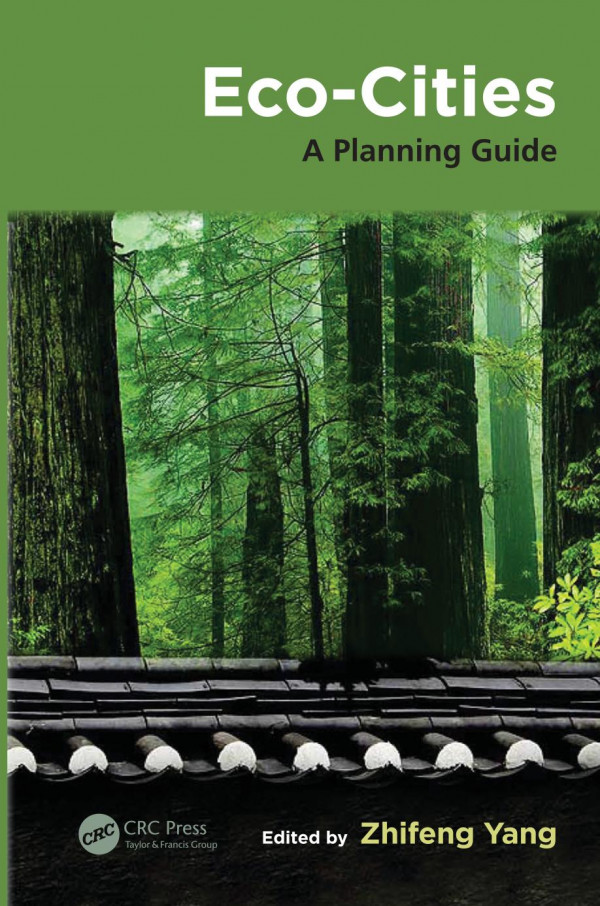
As cities undergo vast changes due to industrialization, urbanization, and globalization, environmental considerations assume a growing importance in the urban planning processes of an increasing number of governments around the world. Several cities and regions around the world have already enacted policies that signal the emergence of a paradigm of sustainability in eco-cities planning. Providing an overview of urban ecosystem structure, function, and change, Eco-Cities: A Planning Guide addresses how to successfully accomplish eco-city planning that meets government requirements. It adds a new dimension to the understanding and application of the concept of urban sustainability, based on hypotheses about feedback between social and biogeophysical processes.
Emphasizing integration, the first part of the book discusses various aspects of planning theory. It presents three innovative theories for socioeconomic models: a theory on the locational choices made by households and firms, an urban version of the stream continuum concept, and an application of metacommunity theory to the fragmented urban biota. These theories raise new urban planning questions and stimulate integrated modeling. The book also introduces urban planning modeling that uses existing social, vegetation, ecohydrological, and ecosystem service modules but is refined and operated for enhanced cross-disciplinary integration and prediction. The second part of the book consists of several case studies of Chinese eco-cities covering a majority of the urban development patterns that offer in-depth examples of planning practices currently in use.
Drawing on experimentation, comparison, long-term measurement, and modeling, this fascinating guide helps readers better understand eco-cities and eco-landscapes as integrated, spatially extensive, complex adaptive systems. It lays a solid foundation for engagement between urban planners, researchers, educators, policy makers, and citizens as they work to adapt to changing environmental, social, and economic conditions.
Theoretical Bases
Eco-city Planning Theories and Thoughts
Integrated Urban Ecosystem Assessments
Planning of Ecological Spatial System
Planning of Industry System
Planning of Sustainable Energy and Air Pollution Prevention
Urban Water Environment Quality Improvement Plan
Eco-Habitat and Eco-Cultural System Planning
Urban Ecological Planning Regulation
Case Studies
Eco-City Guangzhou Plan
Eco-City Xiamen Plan
Eco-City Baotou Plan
Eco-City Wuyishan Plan
Eco-City Wanzhou Plan
Eco-City Jingdezhen Plan
Assessment of Sustainability for a City by Application of a Work Energy Balance and a Carbon Cycling Model
eco city planning
eco-cities a planning guide
eco cities examples
eco urban planning
eco cities definition
Tags: Zhifeng Yang, Eco Cities, Planning Guide


4.6
12 reviews

4.7
9 reviews

4.4
37 reviews
4.6
24 reviews