Most ebook files are in PDF format, so you can easily read them using various software such as Foxit Reader or directly on the Google Chrome browser.
Some ebook files are released by publishers in other formats such as .awz, .mobi, .epub, .fb2, etc. You may need to install specific software to read these formats on mobile/PC, such as Calibre.
Please read the tutorial at this link. https://ebooknice.com/page/post?id=faq
We offer FREE conversion to the popular formats you request; however, this may take some time. Therefore, right after payment, please email us, and we will try to provide the service as quickly as possible.
For some exceptional file formats or broken links (if any), please refrain from opening any disputes. Instead, email us first, and we will try to assist within a maximum of 6 hours.
EbookNice Team
Status:
Available4.4
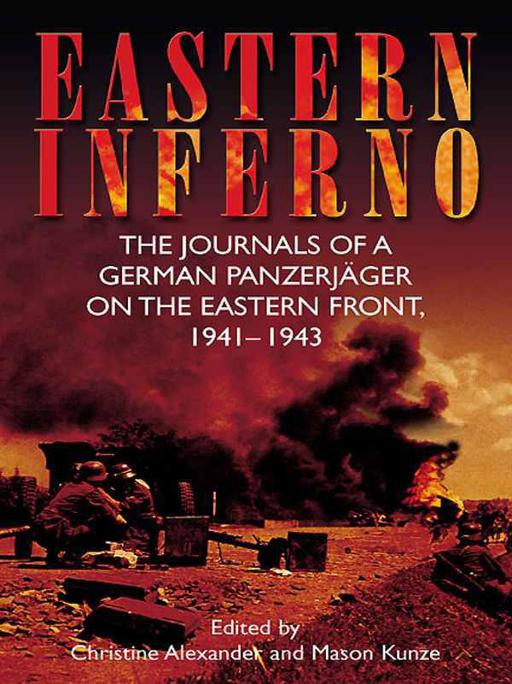
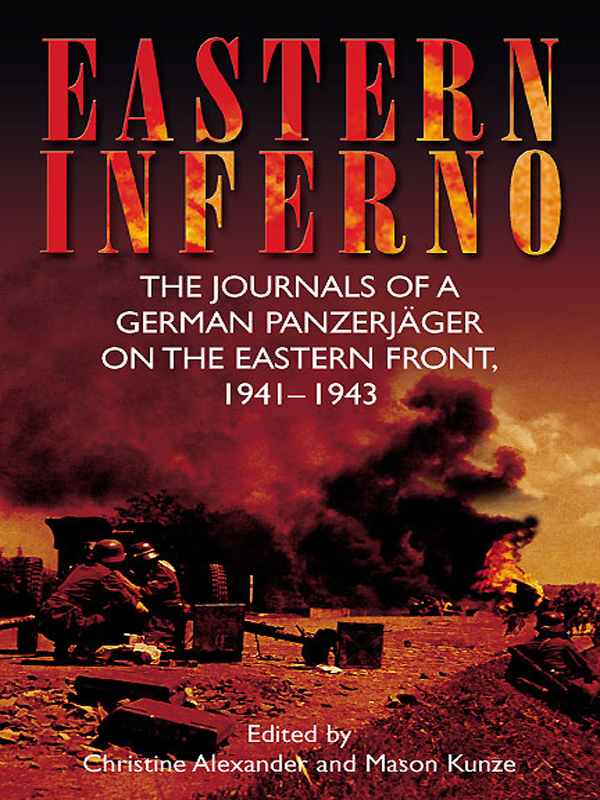
30 reviews"Remarkable personal journals . . revealing the combat experience of the German-Russian War as seldom seen before . . . a harrowing yet poignant story" (Military Times).
Hans Roth was a member of the anti-tank panzerjager battalion, 299th Infantry Division, attached to the Sixth Army, as the invasion of Russia began. As events transpired, he recorded the tension as the Germans deployed on the Soviet frontier in June 1941. Then, a firestorm broke loose as the Wehrmacht tore across the front, forging into the primitive vastness of the East.
During the Kiev encirclement, Roth's unit was under constant attack as the Soviets desperately tried to break through the German ring. At one point, after the enemy had finally been beaten, a friend serving with the SS led him to a site—possibly Babi Yar—where he witnessed civilians being massacred. After suffering through a brutal winter against apparently endless Russian reserves, his division went on the offensive again when the Germans drove toward Stalingrad.
In these journals, attacks and counterattacks are described in you-are-there detail. Roth wrote privately, as if to keep himself sane, knowing his honest accounts of the horrors in the East could never pass Wehrmacht censors. When the Soviet counteroffensive of winter 1942 begins, his unit is stationed alongside the Italian 8th Army, and his observations of its collapse, as opposed to the reaction of the German troops sent to stiffen its front, are of special fascination.
Roth's three journals were discovered many years after his disappearance, tucked away in the home of his brother. After his brother's death, his family discovered them and sent them to Rosel, Roth's wife. In time, Rosel handed down the journals to Erika, Roth's only daughter, who had emigrated to America. Roth was likely working on a fourth journal before he was reported missing in action in July 1944.
4.4
17 reviews
5.0
35 reviews
4.3
32 reviews
4.4
37 reviews
4.6
6 reviews
4.8
7 reviews
4.8
32 reviews