logo
Product categories

EbookNice.com

Most ebook files are in PDF format, so you can easily read them using various software such as Foxit Reader or directly on the Google Chrome browser.
Some ebook files are released by publishers in other formats such as .awz, .mobi, .epub, .fb2, etc. You may need to install specific software to read these formats on mobile/PC, such as Calibre.

Please read the tutorial at this link.  https://ebooknice.com/page/post?id=faq


We offer FREE conversion to the popular formats you request; however, this may take some time. Therefore, right after payment, please email us, and we will try to provide the service as quickly as possible.


For some exceptional file formats or broken links (if any), please refrain from opening any disputes. Instead, email us first, and we will try to assist within a maximum of 6 hours.

EbookNice Team
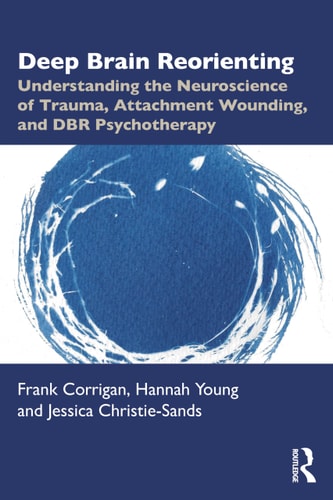
Deep Brain Reorienting: Understanding the Neuroscience of Trauma, Attachment Wounding, and DBR Psychotherapy by Frank M. Corrigan, Hannah Young, Jessica Christie-Sands ISBN 9781032556253, 9781032556260, 1032556250, 1032556269 instant download

  • SKU: EBN-238366712
Zoomable Image
$ 32 $ 40 (-20%)

Status:

Available

4.7

30 reviews
Instant download (eBook) Deep Brain Reorienting: Understanding the Neuroscience of Trauma, Attachment Wounding, and DBR Psychotherapy after payment.
Authors:Frank M. Corrigan, Hannah Young, Jessica Christie-Sands
Pages:266 pages
Year:2025
Publisher:Routledge
Language:english
File Size:7.9 MB
Format:pdf
ISBNS:9781032556253, 9781032556260, 1032556250, 1032556269
Categories: Ebooks

Product desciption

Deep Brain Reorienting: Understanding the Neuroscience of Trauma, Attachment Wounding, and DBR Psychotherapy by Frank M. Corrigan, Hannah Young, Jessica Christie-Sands ISBN 9781032556253, 9781032556260, 1032556250, 1032556269 instant download

Deep Brain Reorienting introduces a novel, evidence-based approach to the treatment of trauma-related disorders. Steeped in neuroscience, this book builds on recent scientific contributions to the effects of shock, trauma, and neglect on the brain at the deepest levels. Enhanced by detailed case material and underpinned by a strong theoretical framework, the authors give special attention to clinically significant forms of dissociation, as well as attachment wounding and its treatment. This neurobiologically informed focus offers fresh perspectives, reaching beneath the level of cognitive, affective, and defensive components of traumatic responding.

Written at the interface of neuroscience and psychotherapy, this book will be invaluable to psychotherapists whose clinical practice is calling for new ways to work with the effects of traumatic experiences. In addition, several hypotheses will appeal to research-oriented psychotherapists and clinically-led researchers in a range of fields.
*Free conversion of into popular formats such as PDF, DOCX, DOC, AZW, EPUB, and MOBI after payment.

Related Products