logo
Product categories

EbookNice.com

Most ebook files are in PDF format, so you can easily read them using various software such as Foxit Reader or directly on the Google Chrome browser.
Some ebook files are released by publishers in other formats such as .awz, .mobi, .epub, .fb2, etc. You may need to install specific software to read these formats on mobile/PC, such as Calibre.

Please read the tutorial at this link.  https://ebooknice.com/page/post?id=faq


We offer FREE conversion to the popular formats you request; however, this may take some time. Therefore, right after payment, please email us, and we will try to provide the service as quickly as possible.


For some exceptional file formats or broken links (if any), please refrain from opening any disputes. Instead, email us first, and we will try to assist within a maximum of 6 hours.

EbookNice Team
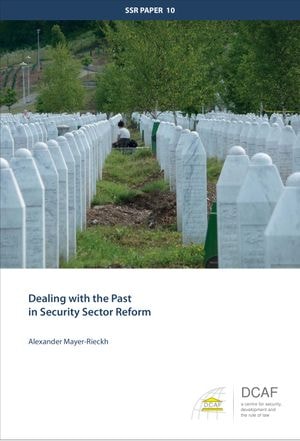
Dealing with the Past in Security Sector Reform by Alexander Mayer-Rieckh ISBN 9781911529378, 1911529374 instant download

  • SKU: EBN-239352310
Zoomable Image
$ 32 $ 40 (-20%)

Status:

Available

4.8

12 reviews
Instant download (eBook) Dealing with the Past in Security Sector Reform after payment.
Authors:Alexander Mayer-Rieckh
Pages:79 pages
Year:2013
Edition:2
Publisher:Ubiquity Press
Language:english
File Size:1.41 MB
Format:pdf
ISBNS:9781911529378, 1911529374
Categories: Ebooks

Product desciption

Dealing with the Past in Security Sector Reform by Alexander Mayer-Rieckh ISBN 9781911529378, 1911529374 instant download

Security sector reform (SSR) and transitional justice processes often occur alongside each other in societies emerging from conflict or authoritarian rule, involve many of the same actors, are supported by some of the same partner countries and impact on each other. Yet the relationship between SSR and transitional justice, or “dealing with the past” (DwP) as it is also called, remains underexplored and is often marked by ignorance and resistance. While SSR and transitional justice processes can get into each other’s way, this paper argues that SSR and DwP are intrinsically linked and can complement each other. SSR can make for better transitional justice and vice versa. Transitional justice needs SSR to prevent a recurrence of abuses, an essential element of justice. SSR can learn from transitional justice not only that it is better to deal with rather than ignore an abusive past but also how to address an abusive legacy in the security sector. The validity of these assumptions is tested in two case studies: the police reform process in Bosnia and Herzegovina after 1995 and the SSR process in Nepal after 2006.
*Free conversion of into popular formats such as PDF, DOCX, DOC, AZW, EPUB, and MOBI after payment.

Related Products