Most ebook files are in PDF format, so you can easily read them using various software such as Foxit Reader or directly on the Google Chrome browser.
Some ebook files are released by publishers in other formats such as .awz, .mobi, .epub, .fb2, etc. You may need to install specific software to read these formats on mobile/PC, such as Calibre.
Please read the tutorial at this link. https://ebooknice.com/page/post?id=faq
We offer FREE conversion to the popular formats you request; however, this may take some time. Therefore, right after payment, please email us, and we will try to provide the service as quickly as possible.
For some exceptional file formats or broken links (if any), please refrain from opening any disputes. Instead, email us first, and we will try to assist within a maximum of 6 hours.
EbookNice Team
Status:
Available4.7
39 reviews
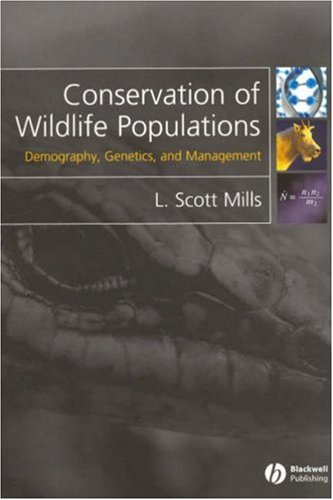
ISBN 10: 1405121467
ISBN 13: 9781405121460
Author: Scott Mills
Professor L. Scott Mills has been named a 2009 Guggenheim Fellow by the board of trustees of the John Simon Guggenheim Memorial Foundation.
Conservation of Wildlife Populations provides an accessible introduction to the most relevant concepts and principles for solving real-world management problems in wildlife and conservation biology. Bringing together insights from traditionally disparate disciplines, the book shows how population biology addresses important questions involving the harvest, monitoring, and conservation of wildlife populations.
Artwork from the book is available to instructors online at www.blackwellpublishing.com/mills. An Instructor manual CD-ROM for this title is available. Please contact our Higher Education team at [email protected] for more information.
Chapter1 : Introduction
Chapter 2: Content
Chapter 3: Conclusion
Chapter 4: Appendices
Chapter 5: Glossary
Chapter 6: References
Chapter 7: Index
conservation of wildlife populations demography genetics and management pdf
wildlife population analysis
wildlife conservation statistics
genetics and demography in biological conservation
conservation genetic methods
Tags: Scott Mills, Wildlife Populations, Genetics and Management

4.6
12 reviews
5.0
18 reviews
4.7
34 reviews
5.0
18 reviews