
Most ebook files are in PDF format, so you can easily read them using various software such as Foxit Reader or directly on the Google Chrome browser.
Some ebook files are released by publishers in other formats such as .awz, .mobi, .epub, .fb2, etc. You may need to install specific software to read these formats on mobile/PC, such as Calibre.
Please read the tutorial at this link. https://ebooknice.com/page/post?id=faq
We offer FREE conversion to the popular formats you request; however, this may take some time. Therefore, right after payment, please email us, and we will try to provide the service as quickly as possible.
For some exceptional file formats or broken links (if any), please refrain from opening any disputes. Instead, email us first, and we will try to assist within a maximum of 6 hours.
EbookNice Team
Status:
Available4.9
18 reviewsNiall Ferguson is professor of history at Harvard, a fellow of the Hoover Institution and the author of numerous books, most recently Civilization: The West and the Rest and *The Ascent of Money: A Financial History of the World. *
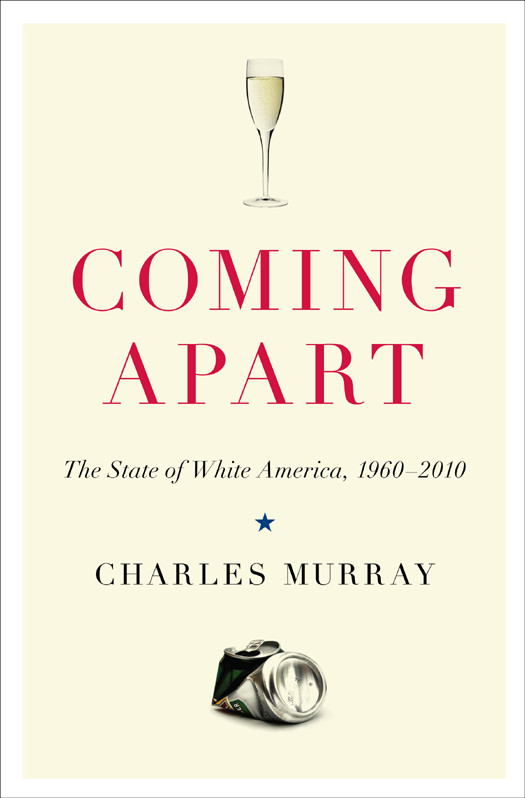
Since the advent of "Occupy Wall Street," there has been a tendency to assume that only the Left worries about inequality in America. Charles Murray's Coming Apart shows that conservatives, too, need to be concerned.
This is an immensely important and utterly gripping book. It deserves to be as much talked about as Murray's most controversial work (co-authored with Richard J. Herrnstein), The Bell Curve. Quite unjustly, that book was anathematized as "racist" because it pointed out that, on average, African-Americans had lower IQ scores than white Americans.
No doubt the same politically correct critics will complain about this book, because it is almost entirely devoted to the problem of social polarization within "white America." They will have to ignore one of Coming Apart's most surprising findings: that race is not a significant determinant of social polarization in today's America. It is class that really matters.
Murray meticulously chronicles and measures the emergence of two wholly distinct classes: a new upper class, first identified in The Bell Curve as "the cognitive elite," and a new "lower class," which he is too polite to give a name. And he vividly localizes his argument by imagining two emblematic communities: Belmont, where everyone has at least one college degree, and Fishtown, where no one has any. (Read: Tonyville and Trashtown.)
The key point is that the four great social trends of the past half-century--the decline of marriage, of the work ethic, of respect for the law and of religious observance--have affected Fishtown much more than Belmont. As a consequence, the traditional bonds of civil society have atrophied in Fishtown. And that, Murray conclude
5.0
22 reviews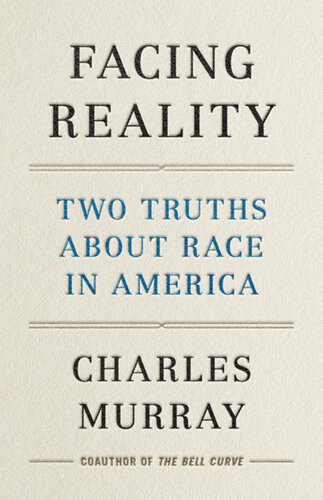

4.9
41 reviews

4.6
10 reviews
4.8
27 reviews
4.9
38 reviews