logo
Product categories

EbookNice.com

Most ebook files are in PDF format, so you can easily read them using various software such as Foxit Reader or directly on the Google Chrome browser.
Some ebook files are released by publishers in other formats such as .awz, .mobi, .epub, .fb2, etc. You may need to install specific software to read these formats on mobile/PC, such as Calibre.

Please read the tutorial at this link.  https://ebooknice.com/page/post?id=faq


We offer FREE conversion to the popular formats you request; however, this may take some time. Therefore, right after payment, please email us, and we will try to provide the service as quickly as possible.


For some exceptional file formats or broken links (if any), please refrain from opening any disputes. Instead, email us first, and we will try to assist within a maximum of 6 hours.

EbookNice Team
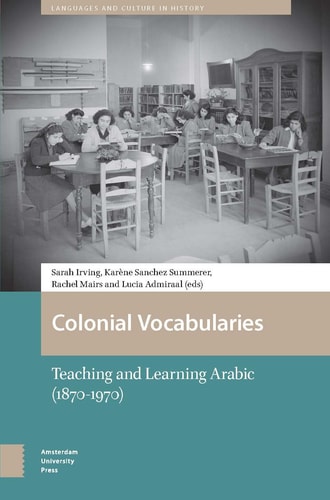
Colonial Vocabularies: Teaching and Learning Arabic, 1870-1970 by Sarah Irving, Karène Sanchez Summerer, Rachel Mairs, Lucia Admiraal ISBN 9781041177197, 9781003692799, 9789048560394, 1041177194, 1003692796, 904856039X instant download

  • SKU: EBN-239942350
Zoomable Image
$ 32 $ 40 (-20%)

Status:

Available

0.0

0 reviews
Instant download (eBook) Colonial Vocabularies: Teaching and Learning Arabic, 1870-1970 after payment.
Authors:Sarah Irving, Karène Sanchez Summerer, Rachel Mairs, Lucia Admiraal
Pages:283 pages
Year:2025
Publisher:Amsterdam University Press
Language:english
File Size:14.66 MB
Format:pdf
ISBNS:9781041177197, 9781003692799, 9789048560394, 1041177194, 1003692796, 904856039X
Categories: Ebooks

Product desciption

Colonial Vocabularies: Teaching and Learning Arabic, 1870-1970 by Sarah Irving, Karène Sanchez Summerer, Rachel Mairs, Lucia Admiraal ISBN 9781041177197, 9781003692799, 9789048560394, 1041177194, 1003692796, 904856039X instant download

Language teaching and learning were crucial to Europeans' colonial, national, and individual enterprises in the Levant, and in these processes, "Oriental language teachers" - as they were termed prior to the Second World War - were fundamental. European state nationalisms influenced and increasingly competed with each other by promoting their languages and cultures abroad, by means of both private and governmental actors. At the same time, learning Arabic became more prominent around the Mediterranean. The first half of the twentieth century corresponded with the emergence of new media; language was thought of as a cultural product to be exported into new cultural spaces. However, many blind spots remain in the history of linguistic thought and practices, including the forgotten and neglected voices of those involved in learning and teaching Arabic. This volume aims to revisit aspects of this linguistic encounter, including its vision, profile, priorities, trajectories, and practices.
*Free conversion of into popular formats such as PDF, DOCX, DOC, AZW, EPUB, and MOBI after payment.

Related Products