logo
Product categories

EbookNice.com

Most ebook files are in PDF format, so you can easily read them using various software such as Foxit Reader or directly on the Google Chrome browser.
Some ebook files are released by publishers in other formats such as .awz, .mobi, .epub, .fb2, etc. You may need to install specific software to read these formats on mobile/PC, such as Calibre.

Please read the tutorial at this link.  https://ebooknice.com/page/post?id=faq


We offer FREE conversion to the popular formats you request; however, this may take some time. Therefore, right after payment, please email us, and we will try to provide the service as quickly as possible.


For some exceptional file formats or broken links (if any), please refrain from opening any disputes. Instead, email us first, and we will try to assist within a maximum of 6 hours.

EbookNice Team
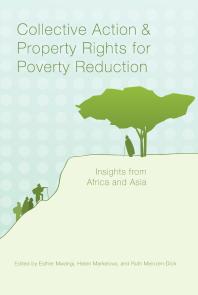
(Ebook) Collective Action and Property Rights for Poverty Reduction : Insights from Africa and Asia by Esther Mwangi; Helen Markelova; Ruth Meinzen-Dick ISBN 9780812207873, 0812207874

  • SKU: EBN-51425510
Zoomable Image
$ 32 $ 40 (-20%)

Status:

Available

5.0

17 reviews
Instant download (eBook) Collective Action and Property Rights for Poverty Reduction : Insights from Africa and Asia after payment.
Authors:Esther Mwangi; Helen Markelova; Ruth Meinzen-Dick
Pages:450 pages.
Year:2012
Editon:1
Publisher:University of Pennsylvania Press
Language:english
File Size:2.46 MB
Format:pdf
ISBNS:9780812207873, 0812207874
Categories: Ebooks

Product desciption

(Ebook) Collective Action and Property Rights for Poverty Reduction : Insights from Africa and Asia by Esther Mwangi; Helen Markelova; Ruth Meinzen-Dick ISBN 9780812207873, 0812207874

To improve their well-being, the poor in developing countries have used both collective action through formal and informal groups and property rights to natural resources. Collective Action and Property Rights for Poverty Reduction: Insights from Africa and Asia examines how these two types of institutions, separately and together, influence quality of life and how they can be strengthened to improve the livelihoods of the rural poor. The product of a global research study by the Systemwide Program on Collective Action and Property Rights (CAPRi) of the Consultative Group on International Agricultural Research, this book draws on case studies from East Africa and South and Southeast Asia to investigate how collective action and property rights have contributed to poverty reduction. The book extends the analysis of these institutions beyond their frequently studied role in natural resource management by also examining how they can reduce vulnerability to different types of shocks. Essays in the volume identify opportunities and risks present in the institutions of collective action and property rights. For example, property rights to natural resources can offer a variety of advantages, providing individuals and groups not only with benefits and incomes but also with assets that can counter the negative effects of shocks such as drought, and can make collective action easier. The authors also demonstrate that collective action has the potential to reduce poverty if it includes more vulnerable groups such as women, ethnic minorities, and the very poor. Preventing exclusion of these often-marginalized groups and guaranteeing genuinely inclusive collective action might require special rules and policies. Another danger to the poor is the capture of property rights by elites, which can be the result of privatization and decentralization policies; case studies and analysis identify actions to prevent such elite capture.
*Free conversion of into popular formats such as PDF, DOCX, DOC, AZW, EPUB, and MOBI after payment.

Related Products